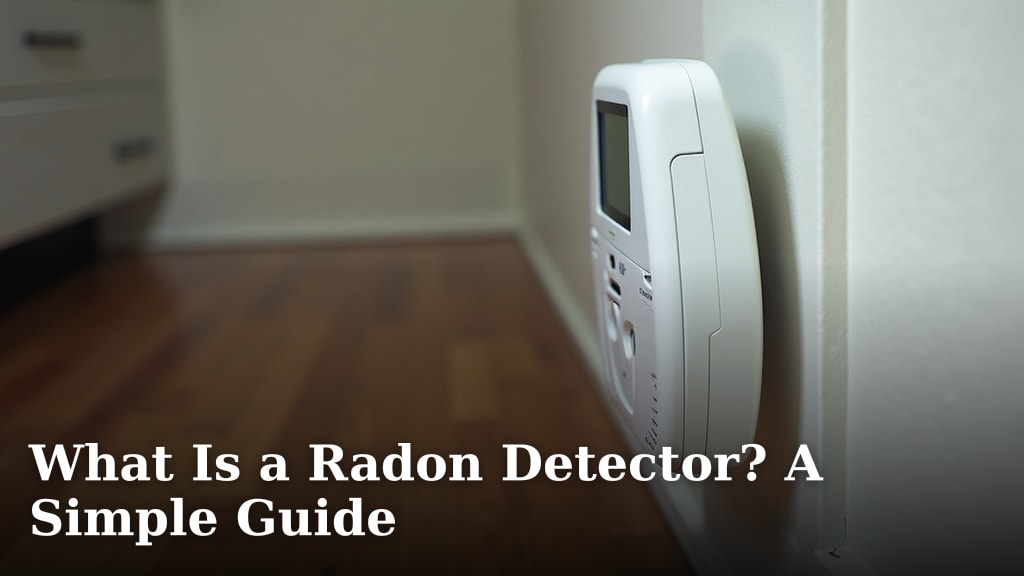
What Is a Radon Detector? A Simple Guide
A radon detector is a device designed to measure the levels of radon gas in your home. Radon is a colorless, odorless radioactive gas. It can seep into homes from the ground. Knowing your radon levels is important for your family’s health and safety.
Radon can be a silent threat. It is the second leading cause of lung cancer in the United States. Many homes have some level of radon. You can’t see it or smell it. That’s why using a radon detector is a smart and simple step. It helps you understand your home’s air quality.
- A radon detector measures radon gas levels.
- Radon is a dangerous, invisible gas.
- Detectors help you know if your home needs mitigation.
- Testing is the only way to find out radon levels.
- Early detection protects your family’s health.
Let’s get into what a radon detector is and why it matters for your home.
Understanding Your Home’s Invisible Gas: What Radon Detectors Do
So, what exactly is a radon detector? Think of it as your home’s personal air quality monitor. Its main job is to measure the amount of radon gas present in your living space. You can’t see, smell, or taste radon. That’s why having a device to check for it is so important. It’s the only way to know if this invisible gas is making your home unsafe.
How Radon Gas Enters Your Home
Radon comes from the natural decay of uranium in soil, rock, and water. This decay happens everywhere. Uranium breaks down over time, releasing radon gas. This gas can then travel through tiny cracks and openings in your home’s foundation. It can seep into basements, crawl spaces, and even upper floors. It’s like water finding its way through small leaks. Many homes, regardless of age or location, can have elevated radon levels (Environmental Protection Agency).
Why Radon Detection Matters for Your Health
The concern with radon is its radioactivity. When inhaled, radon can damage lung tissue. Over time, this damage can lead to an increased risk of lung cancer. In fact, radon is the second leading cause of lung cancer in the United States, after smoking (Centers for Disease Control and Prevention). It’s estimated to cause thousands of deaths each year. Testing for radon is a simple way to protect yourself and your loved ones from this silent health risk. It’s a step many health organizations recommend.
Types of Radon Detectors Available
When you’re looking for a radon detector, you’ll find a few main types. Each works a bit differently, but they all aim to give you a reading of your radon levels. The choice often comes down to cost, how long you want to test, and how precise you need the results to be. Let’s look at the common options you might encounter.
Charcoal Canister Detectors (Short-Term Testing)
These are very common and often used for initial screening. You place a charcoal canister in a room for a few days. The charcoal absorbs radon gas from the air. You then mail the canister to a lab for analysis. These give you a reading over a short period, usually 2 to 7 days. They are a good way to get a quick idea of your radon levels. They are generally inexpensive.
Electret Ion Chamber Detectors (Long-Term Testing)
These detectors are designed for longer-term testing, often 60 days or more. They use a positively charged disk that attracts negatively charged ions. Radon decays and releases alpha particles, which ionize the air. This creates ions that reduce the charge on the disk. The longer the detector is exposed, the more its charge changes. This type provides a more accurate average radon level over time. Long-term testing is generally recommended for making decisions about mitigation because radon levels can fluctuate daily and seasonally.
Continuous Radon Monitors (Digital Detectors)
These are electronic devices that provide real-time or near-real-time radon readings. They continuously measure radon levels and often display the results on a screen. Some can even store data over days, weeks, or months. They offer the most detailed information and immediate feedback. While often more expensive upfront, they can be a convenient option if you want ongoing monitoring. They can alert you to sudden changes.
How to Use Your Radon Detector Correctly
Getting accurate results from your radon detector depends on following the instructions carefully. Radon gas tends to concentrate in the lower levels of a home. It’s often highest in basements and crawl spaces. For testing, it’s usually recommended to place the detector in the lowest lived-in level of your home. This might be a basement if it’s finished and used frequently. If the basement is unfinished and only used for storage, you might test the next level up.
Choosing the Right Testing Location
Place your detector in a room where you spend a lot of time, like a bedroom or living area. Avoid placing it in kitchens or bathrooms. These areas have more airflow from fans and open windows. Also, keep the detector away from drafts, vents, and open windows. The goal is to measure the radon that has naturally accumulated in the air. You want to mimic typical living conditions. It should be at least 20 inches off the floor. It should also be at least 12 inches from any exterior walls (EPA guidelines).
Maintaining Good Testing Conditions
For short-term tests, it’s important to keep your windows and doors closed as much as possible. You should maintain “closed-home conditions” for at least 12 hours before and during the test. This ensures radon can accumulate. If you’re using a long-term detector, you don’t need to worry as much about closed-home conditions. The device measures over a longer period, capturing natural fluctuations. Always follow the specific instructions provided by the manufacturer of your chosen detector.
Interpreting Your Radon Test Results
Once you have your results, you’ll need to understand what they mean. Radon levels are measured in picocuries per liter of air (pCi/L). The U.S. Environmental Protection Agency (EPA) has set action levels. If your test result is 4 pCi/L or higher, the EPA recommends taking steps to reduce your radon levels. Levels between 2 and 4 pCi/L are also a concern. It’s wise to consider mitigation even at these lower levels (EPA).
Here’s a quick guide to understanding the numbers:
- Below 2 pCi/L: Generally considered safe. No immediate action needed.
- 2 to 4 pCi/L: Consider fixing your home.
- 4 pCi/L and above: Fix your home.
If you get a high reading from a short-term test, it’s a good idea to confirm it. You can do this with a follow-up test. A second short-term test or a long-term test can provide more certainty. Radon levels can change. Long-term testing is often the most reliable for determining if mitigation is needed.
When to Test for Radon
You might be wondering if there’s a best time to test. Ideally, you should test your home when it’s mostly closed up. This usually happens during the colder months, like fall and winter. During these times, people tend to keep windows and doors shut more often. This allows radon gas to build up naturally. However, radon can be a problem year-round. So, if you haven’t tested your home before, now is a good time to start. If you’ve done mitigation, retesting is also important.
What Happens After Testing: Next Steps
If your radon detector shows elevated levels, don’t panic. The good news is that radon problems can be fixed. The process is called radon mitigation. It involves installing a system to vent radon gas from beneath your home to the outside. These systems are designed to keep radon from entering your living space. A qualified radon mitigation professional can assess your home and recommend the best solution for your specific situation. They can also provide an estimate for the work.
Making Radon Testing a Habit
Testing your home for radon is a simple step that offers significant peace of mind. It’s not a one-time fix. Because radon levels can change over time due to environmental factors or home changes, retesting is a good idea. Many experts recommend retesting every few years, especially if you’ve lived in the home for a while. If you’ve done any major renovations, like adding a new foundation or altering ventilation, it’s also wise to test again. Making radon testing a part of your home maintenance routine is a responsible choice for your family’s health.
Your Radon Detector Checklist
Here’s a quick rundown to help you get started or manage your testing:
- Choose your detector type: Short-term, long-term, or continuous monitor.
- Follow placement instructions: Place in the lowest occupied level, away from drafts.
- Maintain closed-home conditions: For short-term tests, keep windows and doors shut.
- Understand the results: Know the EPA’s action levels (4 pCi/L or higher).
- Retest if needed: Confirm high readings with a follow-up test.
- Consider mitigation: If levels are high, consult a professional.
Conclusion
You’ve learned that a radon detector is your key tool for understanding your home’s air quality. It’s the only way to find out if this invisible, radioactive gas is present. Knowing your radon levels, measured in pCi/L, is vital for protecting your family’s health. If tests show levels of 4 pCi/L or higher, it’s time to consider professional mitigation. Don’t let radon be a silent threat; take the simple step to test your home. Your next step should be to purchase a radon detector and begin testing, especially if you haven’t done so before.
Frequently Asked Questions
How often should I test my home for radon?
It’s recommended to test your home for radon at least once. If levels are high and mitigation is done, retesting is important every few years. You should also retest after major home renovations that could affect airflow or foundation integrity.
Can I use a cheap radon detector, or are they all expensive?
Radon detectors vary in price. Short-term charcoal canister tests are generally the most affordable for initial screening. Long-term detectors and continuous monitors tend to be more expensive but offer more detailed and accurate long-term readings.
Do radon levels change throughout the year?
Yes, radon levels can fluctuate. They are often higher during colder months when homes are sealed more tightly. Long-term testing is best for capturing these seasonal variations and getting an average reading.
What is the difference between a short-term and a long-term radon test?
Short-term tests typically run for 2 to 7 days and give a quick snapshot of radon levels. Long-term tests run for 60 days or more, providing a more accurate average reading that reflects daily and seasonal changes.
Is it possible to completely get rid of radon in my home?
While you can’t completely eliminate radon, a radon mitigation system can significantly reduce radon levels in your home. These systems are designed to vent radon gas safely away from your living space.