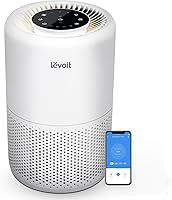
Air Purifiers for the House: Complete Buying Guide
The best air purifier for the house depends on room size, air concerns and filter care. Match CADR and coverage to the room where you spend time, then choose the filter type, noise level and controls you can maintain.
On this page (15 sections)
- What does an air purifier do in a house?
- Which type of air purifier is best for home use?
- How do you choose room coverage?
- Which air purifier size fits each room?
- Which features matter in a home room air purifier?
- How do you maintain an air purifier?
- Should you choose a permanent filter or replaceable filter?
- Can an air purifier make you sick?
- Do air purifiers use a lot of electricity?
- Air purifier, air conditioner or fan: what is the difference?
- Which brands and product types should you compare?
- How should you compare the 4 home air purifiers here?
- What should you check before buying an air purifier for the house?
- Explore air purifiers by topic
- Final decision: which air purifier is right for your home?
The best air purifier for the house depends on room size, air concerns and filter care. Match CADR and coverage to the room where you spend time, then choose the filter type, noise level and controls you can maintain.
A single portable unit does not clean every closed room equally. A bedroom, living room, basement or open floor plan may each need a different approach based on airflow and the pollutants you want to reduce.
This guide explains how home room air purifiers work, how to compare room coverage, and which features matter before you buy.
What does an air purifier do in a house?
An air purifier pulls room air through filters and returns cleaner air to the same room. It can reduce airborne particles such as dust, pollen, smoke particles and pet dander, while activated carbon may help with some odors and gases.
An air purifier does not replace ventilation, cleaning, moisture control or fixing the source of pollution. It also does not remove every contaminant from every surface.
For a broader explanation of performance and limits, read do air purifiers work. If you are comparing an air purifier with a furnace or HVAC filter, see air purifier vs air filter.
The main reasons people choose an in house air purifier include:
- Dust and fine particles in bedrooms or living rooms
- Pollen brought indoors through doors and windows
- Pet hair and dander
- Smoke from cooking, cigarettes or wildfires
- Everyday odors and some volatile organic compounds
- A desire to filter air in a room where someone spends many hours
The air purifier benefits guide covers these use cases in more detail. Keep expectations practical.
The unit must move enough air through a suitable filter, and it must run often enough to make a difference.
Which type of air purifier is best for home use?
The best type depends on the problem you want to address. For particles, start with a mechanical filter system that uses a pre-filter and a fine particle filter; add activated carbon when odors or some gases matter.
HEPA and HEPA-grade particle filters
HEPA-style systems are designed to capture very small airborne particles. A pre-filter usually catches larger hair and lint before air reaches the finer filter.
Some product descriptions use “HEPA-grade” rather than “True HEPA.” Read the exact wording and compare the unit's CADR, filter design and room coverage.
Our best HEPA air purifier guide explains what to check.
Activated carbon filters
Activated carbon is used to absorb some odors and gases. It can be useful in a kitchen, near pets or where smoke odors are a concern.
Carbon performance depends on the amount and design of carbon, the airflow and the pollutant. A purifier is not a substitute for removing a gas leak, smoke source or chemical spill.
Washable pre-filters
A washable pre-filter can catch larger particles and hair before they reach the main filter. Cleaning it can help maintain airflow, but it does not mean the main filter never needs replacement.
A purifier with a permanent or washable component may suit buyers who want less frequent disposable-filter shopping. Compare best air purifiers with permanent filters before choosing.
Filterless and electronic designs
Some units use technologies such as ionization or other electronic methods. If you want an air purifier no filter needed, check how it handles ozone, maintenance and actual particle removal before buying.
A filterless design may reduce replacement tasks, but it can involve different trade-offs. Look for clear safety information and a use case that matches your home.
How do you choose room coverage?
Choose coverage from the actual room or open area where the purifier will run, not the total square footage of the house. A unit rated for a large area may be a poor fit if its airflow is blocked or if the rating uses a different air-change assumption.
CADR means Clean Air Delivery Rate. Higher CADR generally means the unit delivers more cleaned air, but compare smoke, dust and pollen figures when they are available.
The Levoit Core 300-P has CADR ratings of 143 CFM for smoke, 153 CFM for dust and 167 CFM for pollen. Its stated coverage includes 222 ft² with 4.8 air changes per hour and 1,073 ft² with 1 air change per hour.
The difference between those coverage figures matters. A smaller room gets more frequent air cleaning, while the larger figure describes a slower air-change rate.
For small bedrooms, offices and dorm rooms, compare best small room air purifiers for home. For a larger living room or open area, see best air purifier for large rooms.
Room coverage questions to ask
Before buying, measure the room's length and width. Then consider whether an open doorway, high ceiling or connected dining area increases the air volume the purifier must serve.
Ask these questions:
- Is the room closed or connected to other spaces?
- Will the purifier run on a low, medium or high speed?
- Is the stated area based on one air change per hour or several?
- Does the unit have a CADR for the pollutant you care about?
- Can you place it where air can flow freely?
A purifier rated for a very large area may still be useful in a smaller room, but it can take more floor space and may cost more to operate. A small purifier may be quiet and easy to place, yet underpowered for a large living room.
Which air purifier size fits each room?
Small units suit bedrooms, offices and other limited spaces. Large units make more sense for open rooms, high traffic areas and homes with pets when their coverage and airflow match the space.
The product options below show different size and feature trade-offs.
Small bedroom or office
The Levoit Core Mini-P is a compact choice for a bedroom, kitchen or office. Its stated dimensions are 6.5 x 6.5 x 10.4 in, with a 7W rated power and a noise range of 27 to 45 dB.
It uses a pre-filter and main filter for lint, hair, pet dander, fine airborne pollutants and smoke particles. It also has an auto-off display and Sleep Mode.
Because the stated dimensions and power are modest, it is easier to place on a small surface or in a tight room. It is not the natural choice for a large open floor plan.
For a compact portable option, compare best portable HEPA air purifier. If you want a quieter model, review best quiet air purifier.
Medium bedroom or living area
The Levoit Core 300-P is a step up for a bedroom, office or smaller living area. It has an 8.7 x 8.7 x 14.2 in footprint, a 56W motor and a stated 143 CFM smoke CADR.
It includes a pre-installed 3-stage Original Filter, a quick start guide and a user manual. Levoit recommends replacing its filters every 6 to 8 months.
Its 24 dB Sleep Mode, timer settings and display-light control suit people who want nighttime operation without a bright display. The unit uses touch control and a 120V AC power source for use in the United States.
Large room or open-concept area
The Levoit Vital 200S-P is designed for large rooms up to 1,875 ft², with CADR ratings of 250 CFM for smoke, 254 CFM for dust and 289 CFM for pollen.
Its 15.6 x 8.5 x 19.8 in dimensions and 13.2 lb weight require more floor space than a compact bedroom purifier. The traditional and U-shaped air inlets are designed to help trap pet hair and odors without easy clogging.
The included filtration system has a washable pre-filter and pre-installed middle and activated carbon filters. Levoit also describes optional replacement filters for toxin absorption, smoke removal or pet allergies.
If you want brand-specific comparisons, read best air purifier levoit, best air purifier winix and best coway air purifier.
Very large stated coverage
The MOOKA KJ190H has 2200 ft² in its title and uses a larger front inlet plus wider dual-side inlets. It is described for pet hair, odors, wildfire smoke, floating ash, smog, PM2.5, pollen and pet dander.
Its dimensions are 6.1 x 12.2 x 15.75 in and its weight is 6.7 lb. It has a washable pre-filter, a 3-stage filtration design, activated carbon pellets, a filter reminder and 2, 4, 6 or 8 hour timers.
The unit also includes a child lock and an aromatherapy pad. MOOKA says the purifier releases no ozone and uses no UV light.
Remove the protective plastic bag from the filter before use.
Which features matter in a home room air purifier?
The most useful features are the ones that match your daily routine. Prioritize airflow, filter access, noise control and clear maintenance reminders before choosing app features or extra modes.
CADR and air changes
CADR gives you a way to compare cleaned airflow. Use the rating that matches your concern, such as smoke for fine smoke particles or pollen for seasonal allergens.
Coverage numbers can be presented at different air-change rates. Always compare the room size, CADR and stated air-change rate together.
Noise
Noise matters most in bedrooms, nurseries and work areas. A Sleep Mode may reduce fan speed and sound, but lower airflow can also mean slower cleaning.
The products here state different low-noise figures. The Core 300-P lists 24 dB in Sleep Mode, the Vital 200S-P lists 27 dB, the Core Mini-P has a 27 to 45 dB range, and the MOOKA unit lists 20 dB in Sleep Mode.
Controls and smart features
Manual buttons are simple and do not depend on an app. App control can help if you want remote operation or schedules, but confirm that the exact model includes smart connectivity.
The Vital 200S-P uses app control and includes an air quality monitor. The MOOKA unit has a PM2.5 display and Auto Mode.
The Core 300-P uses touch control and does not include the smart connectivity described for the Core 300S-P.
For more connected options, see best smart air purifier and smart air purifier table. If you prefer a table or fan in the same appliance, compare best air purifier and fan combo.
Odor and smoke handling
For smoke, choose a unit with suitable particle filtration and enough airflow for the room. Activated carbon can help with some odors, but no purifier should be used as the only response to a fire, gas leak or dangerous indoor source.
Compare best air purifier for smoke and best air purifier for odor control if those are your main concerns.
Pet hair and allergens
Pet hair is larger than fine airborne particles, so a washable or accessible pre-filter can be useful. Dander and pollen require the main particle filter.
For pet homes, compare best air purifier for pets, best air purifier for dust and best air purifier for allergies. Levoit also has a focused comparison of best levoit air purifier for pets.
Mold concerns
Air purifiers can capture some airborne mold spores, but they do not remove mold growth or fix a damp building. Correct the moisture source and clean affected materials safely.
Read best air purifier that removes mold for a focused look at airborne spores and filtration limits.
How do you maintain an air purifier?
Air purifier maintenance is mostly filter care, airflow checks and safe placement. A dirty filter can restrict airflow and make the unit work less effectively.
Follow these general steps:
- Turn the purifier off before cleaning it.
- Wipe the outside with a dry or lightly damp cloth as appropriate for the instructions.
- Clean a washable pre-filter only when the product instructions allow it.
- Replace the main filter on schedule or when its indicator signals a change.
- Keep intake and outlet vents clear of curtains, furniture and dust.
- Reset the filter reminder after installing a replacement filter.
- Keep moisture away from the electrical parts.
Use the correct replacement filter for the model. The Core 300-P description recommends official Levoit filters and gives a 6 to 8 month replacement recommendation.
The MOOKA unit has a filter reminder after 2,000 hours and directs users to its official replacement filters.
Compare best air purifier replacement filters before the original filter becomes difficult to find. A unit that is cheap to run but hard to maintain may be less useful over time.
Should you choose a permanent filter or replaceable filter?
Choose a permanent or washable filter when reducing disposable-filter changes is your main goal. Choose replaceable filters when you want a clear renewal cycle and a fine filter that can be changed after collecting particles.
A washable pre-filter is not the same as a washable HEPA filter. Check which layer can be cleaned and which layer must be replaced.
Permanent filters also need regular cleaning. Dust that remains on the filter can reduce airflow, and a dirty filter may create more maintenance work than expected.
If you are considering a purifier for a basement, moisture control comes first. Compare which dehumidifier to buy and best dehumidifier on sale when humidity is part of the problem.
For a basement with both airborne particles and high humidity, see basement air purifier and dehumidifier. One appliance does not automatically solve both air cleaning and moisture control.
Can an air purifier make you sick?
An air purifier should not make you sick when it is used and maintained correctly, but poor placement, dirty filters, strong scents or ozone-producing technology can create concerns.
Replace dirty filters, avoid blocking the vents and stop using a unit if the power cord or plug is damaged. If a purifier includes an ionizer or another electronic technology, check its ozone information before use.
Aromatherapy features are not necessary for air cleaning. Use them only as directed and avoid adding oils if anyone in the home reacts to fragrances.
Read can air purifiers make you sick for more safety points. Keep the purifier away from wet areas and make sure children and pets cannot pull on the cord.
Do air purifiers use a lot of electricity?
Electricity use depends on the motor, speed, schedule and time the purifier runs. A lower-power compact unit generally uses less electricity, while a larger purifier may move more air but draw more power.
The Levoit Core 300-P uses a 56W high-torque motor. The Levoit Core Mini-P lists 7W rated power.
MOOKA states that running its unit at maximum wind speed for 24 hours consumes 0.63 kWh.
Use the lowest speed that still provides useful cleaning for the room. Timers can reduce operation when the room is empty, but turning a purifier off for long periods also stops filtration.
For a closer comparison of running costs and habits, read do air purifiers use a lot of electricity.
Air purifier, air conditioner or fan: what is the difference?
An air purifier filters airborne contaminants. An air conditioner changes temperature and may remove some moisture, while a fan mainly moves air.
Choose an air purifier for particle filtration, an air conditioner for cooling, and a fan for air movement. Some combination units offer more than one function, but compare each function separately.
An air conditioner does not automatically provide the same particle filtration as a dedicated purifier. A fan can spread clean air around a room, but it does not remove particles by itself.
Read air purifier vs air conditioner before buying one appliance to solve a different problem.
Which brands and product types should you compare?
Brand comparisons are useful after you know your room size and air concern. Start with the specifications, then use brand names to narrow the control style, filter availability and form factor.
For brand-specific research, compare best Shark air purifier, best air purifier Honeywell, best air purifier LG, best air purifier Xiaomi, best Dreo HEPA air purifier reviews and best air purifier Blueair.
These comparisons should not replace checking the exact model. A brand can sell compact, medium and large units with different filters, controls and maintenance needs.
How should you compare the 4 home air purifiers here?
The 4 products suit different home needs, so the highest stated coverage is not automatically the best choice. Pick by room size and routine first, then compare noise, controls, filter care and the pollutant you want to address.
The Levoit Core 300-P is a balanced choice for smaller rooms, with AHAM verification, 143 CFM smoke CADR, 3-stage filtration and a 24 dB Sleep Mode.
The Levoit Vital 200S-P is better suited to large rooms and pet households that want app control, an air quality monitor, a washable pre-filter and stated coverage up to 1,875 ft².
The Levoit Core Mini-P fits buyers who need a compact purifier for a bedroom, dorm room, kitchen or office and prefer a 7W model with Sleep Mode and an auto-off display.
The MOOKA KJ190H suits buyers who want stated 2200 ft² coverage, a PM2.5 display, Auto Mode, 4 fan speeds, a washable pre-filter and a 20 dB Sleep Mode.
What should you check before buying an air purifier for the house?
Check these details before you choose:
- Measure the room and connected spaces.
- Compare CADR with the pollutant you want to reduce.
- Check whether the coverage figure assumes one or several air changes per hour.
- Confirm the filter layers and replacement schedule.
- Look for an accessible pre-filter if you have pets or heavy dust.
- Compare Sleep Mode noise with the room's purpose.
- Check power requirements and cord placement.
- Confirm whether app control, Auto Mode or an air quality display comes with the exact model.
- Leave clearance around the air intake and outlet.
- Plan where replacement filters will come from.
- Do not use an air purifier as a response to a gas leak, active fire or severe mold growth.
- Control moisture at the source instead of expecting filtration to dry a room.
You can also make a temporary box-fan filter for some situations. Read how to DIY air purifier for the limits and safety points before trying one.
Explore air purifiers by topic
- Best Air Purifiers on Sale
- Best Air Purifier and Humidifier Combos
Final decision: which air purifier is right for your home?
Choose the Levoit Core Mini-P for a compact bedroom, dorm room, kitchen or office. Choose the Levoit Core 300-P for a smaller room where stronger airflow, touch controls and quiet Sleep Mode matter.
Choose the Levoit Vital 200S-P for a large room, pet household or open home where app control, an air quality monitor and a washable pre-filter are useful. Choose the MOOKA KJ190H when its stated 2200 ft² coverage, PM2.5 display, Auto Mode, timers and 20 dB Sleep Mode fit your routine.
The right air purifier for the house is the one sized for the room you will actually clean and maintained on schedule. Start with CADR and filter care, then use noise, controls and special features to make the final choice.
Frequently asked questions
What is the best air purifier for the house?
The best air purifier for the house is the model that matches the room size, pollutant and cleaning schedule. Use CADR and stated coverage to compare performance, then choose a filter system you can replace or clean on time.
A large home may need separate room units instead of one purifier.
Should I buy one air purifier for the whole house?
One portable air purifier usually works best in one room or an open area rather than throughout a closed home. Choose coverage for the space where it will run, keep doors and airflow in mind, and use more than one unit if bedrooms and living areas need cleaning at different times.
What filter is best for an air purifier?
A HEPA or HEPA-grade particle filter is a strong choice for dust, pollen, smoke particles and pet dander. Activated carbon can help with some odors and gases.
A pre-filter catches larger hair and lint, which helps protect the finer filter and makes routine care easier.
How often should an air purifier filter be changed?
Change the filter on the schedule for your model, or sooner when the filter indicator shows a need. Dust, pets, smoke and long daily run times can shorten filter life.
Clean a washable pre-filter as directed, but don't wash a filter unless the instructions specifically allow it.
Where should I place an air purifier at home?
Place an air purifier where air can enter and leave freely, with clearance around its vents. Keep it in the room you want to clean, away from blocked corners, curtains and wet areas.
Put bedroom units where their noise and display light won't disturb sleep.