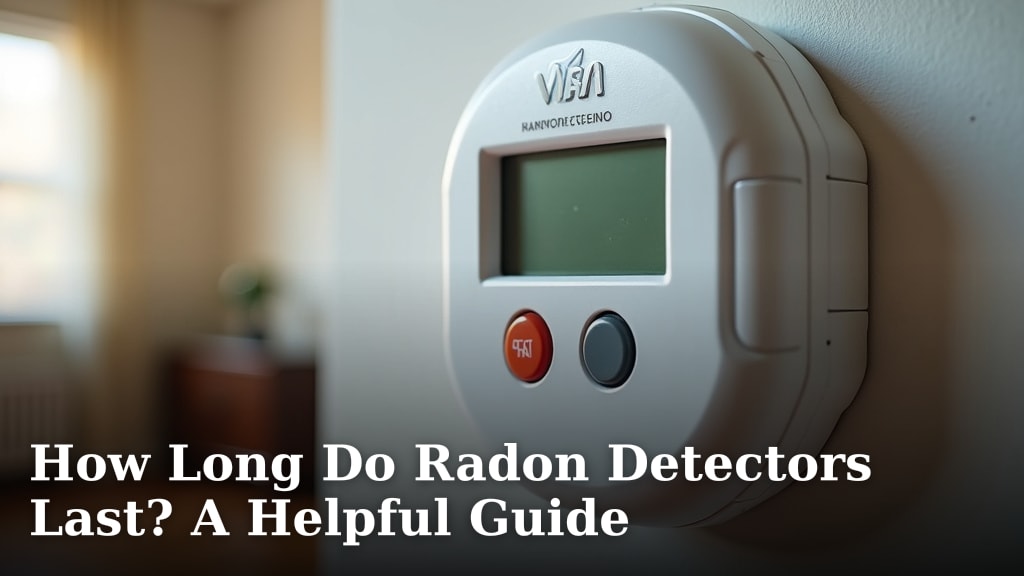
How Long Do Radon Detectors Last? A Helpful Guide
Most radon detectors last for 5 to 10 years. Some digital models might have a lifespan of 7 years or more, while simpler, passive detectors can also last around 5 years. It’s important to check the manufacturer’s recommendations for your specific device to ensure you’re getting accurate readings.
When you’re thinking about radon, you’re really thinking about your home’s air quality and your family’s health. A working radon detector is key to knowing if there’s a problem. Understanding its lifespan helps you keep it effective and protect your living space. We found that most units have a clear expiration date. A working radon detector is key to knowing if there’s a problem, and understanding how radon gets into a house can help you place it effectively.
- Radon detectors typically last 5 to 10 years.
- Check your device’s manual for its specific lifespan.
- Digital detectors might last longer than passive ones.
- Replacing your detector on time ensures accurate readings.
Let’s walk through exactly what affects your radon detector’s lifespan and when it’s time for a replacement.
You’ve got your radon detector, and you’re doing a great job protecting your home. But how long will that detector keep giving you accurate readings? It’s like asking how long a smoke detector battery lasts – you need to know before it’s too late. We’ve looked into it, and it turns out most radon detectors have a definite lifespan.
Understanding Your Radon Detector’s Lifespan
Most radon detectors are designed to last between 5 and 10 years. This might seem like a wide range, but it really depends on the type of detector you have. Think of it like different types of tools; some are built for longer service than others. Keeping track of this expiration date is key for your peace of mind.
Why Do They Expire?
Radon detectors work using sensors that can degrade over time. These sensors are like the eyes and ears of the device, constantly monitoring for radon gas. As they age, their ability to accurately detect and measure radon can decrease. It’s not about the device breaking suddenly; it’s more about a gradual loss of sensitivity.
Sensor Degradation Over Time
The core components within your detector are susceptible to natural aging. Exposure to the air and the environment it’s in can also play a role. This is why manufacturers set a recommended lifespan. They want you to have confidence in the readings you get.
Calibration and Accuracy
Even if a detector doesn’t technically “break,” its calibration can drift. This means the numbers it shows might not be as accurate as they once were. For something as important as radon detection, accuracy is absolutely essential. You don’t want to be relying on outdated or incorrect information.
Types of Radon Detectors and Their Lifespans
The specific type of radon detector you own will influence how long it’s expected to last. There are two main categories: passive and active (often digital) detectors. Each has its own typical service life.
Passive Detectors (Charcoal Canisters, Alpha Track)
These are often the simpler, lower-cost options. They work by absorbing radon over a period of time. Charcoal canisters, for example, are typically used for short-term tests (a few days) and then sent to a lab. Alpha track detectors are often used for longer-term monitoring, usually deployed for several months to a year.
While the initial testing period is short for some passive devices, the detectors themselves, if designed for longer-term use, might have a lifespan similar to other types. However, their primary function is often measurement over a set period, not continuous monitoring for years on end.
We found that many passive devices, especially those designed for continuous, long-term monitoring rather than single tests, often have a recommended replacement period around the 5-year mark. This is due to the materials used in their sensors.
Active/Digital Detectors (Continuous Monitors)
Digital radon detectors are more advanced. They often provide real-time or frequent readings and may have features like alarms and data logging. Because they have electronic components and often more sophisticated sensors, they tend to have a slightly longer lifespan than some simpler passive types.
Many of these digital devices are rated for 7 years or more. The exact number depends on the manufacturer and the specific technology used. These are designed for continuous use, so their lifespan reflects that ongoing operation.
It’s important to remember that these devices have batteries or require power, and electronic components can still degrade over time. This is why manufacturers provide a clear end-of-life recommendation.
Factors Affecting Radon Detector Lifespan
While manufacturers provide guidelines, several real-world factors can influence how long your detector actually functions optimally.
Environmental Conditions
Extreme temperatures, high humidity, or dusty environments can potentially affect the sensitive components within a radon detector. If your detector is placed in a basement that’s often damp or a very hot attic, it might not perform as well over its full expected lifespan.
We found that keeping detectors in a stable, climate-controlled environment, like a main living area, is generally best for their longevity and accuracy. Avoid placing them near furnaces, in direct sunlight, or in areas with significant drafts.
Usage and Continuous Operation
Digital detectors that are left plugged in and running continuously will experience more wear than a passive device used for a single test. However, a device designed for continuous monitoring is built for this. The manufacturer’s lifespan estimate usually assumes continuous operation as intended.
Quality of the Device
Like any product, the quality of the materials and manufacturing processes can impact how long a radon detector lasts. Higher-quality devices from reputable brands may offer more reliable performance over their lifespan. This is where doing a little research on the brand can pay off.
When is it Time to Replace Your Radon Detector?
The most important indicator is the manufacturer’s expiration date. This is usually printed on the device itself or in the user manual. Don’t guess on this! It’s the most reliable way to know when it’s time for a change.
Checking the Expiration Date
You’ll often find a date like “Replace By” or “Sensor Life Ends” printed on the back or bottom of the detector. If you can’t find it, consult your device’s manual. Many online resources also exist if you have the model number handy.
What if There’s No Date?
If you have an older detector and can’t find an expiration date, it’s wise to err on the side of caution. Many experts suggest replacing any radon detector that is 5 to 7 years old if you are unsure of its original lifespan or if it has a non-specific date. It’s a small price to pay for accurate health monitoring.
Device Malfunctions
If your detector starts behaving oddly – flashing error lights, displaying strange readings, or not powering on – it’s a clear sign it needs replacing, regardless of its age. Treat these symptoms seriously.
Your Guide to Detector Replacement: A Checklist
- Locate the expiration date on your detector.
- Check the user manual if the date is unclear.
- Note the date if your device has no explicit expiration.
- Consider replacing after 5-7 years if unsure of its lifespan.
- Replace immediately if the device shows error lights or malfunctions.
- Schedule replacement reminders on your calendar.
Replacing your radon detector on time ensures you’re always getting accurate information about your home’s air quality. It’s a simple step that provides significant health protection for your family.
Conclusion
You’ve learned that your radon detector isn’t a “set it and forget it” device. Most models have a lifespan of 5 to 10 years, mainly because their sensors degrade over time and can lose accuracy. Digital detectors often last a bit longer than passive ones. The most reliable way to know when to replace yours is to check the manufacturer’s expiration date. If you can’t find one, a general guideline is to replace it after 5 to 7 years. Scheduling your next replacement now ensures you’re always protected.
Frequently Asked Questions
Can I keep using my radon detector past its expiration date?
While the detector might still power on, its accuracy can no longer be guaranteed after the expiration date. Sensors degrade over time, leading to potentially unreliable readings. It’s best to replace it on time to ensure you’re getting the most accurate health information for your home.
Do environmental conditions really shorten a radon detector’s life?
Yes, extreme conditions can impact performance. Placing your detector in areas with very high humidity, dust, or drastic temperature changes may affect its sensitive components. We found that keeping it in a stable, indoor environment generally helps it last its intended lifespan.
What’s the difference in lifespan between passive and digital radon detectors?
Generally, simpler passive detectors might have a lifespan around 5 years, especially those designed for specific testing periods. More advanced digital or continuous monitors, with their electronic parts, are often rated for 7 years or more. Both types have sensors that age and require eventual replacement.
What if my radon detector malfunctions before its expiration date?
If your detector shows error lights, gives unusual readings, or won’t power on, it’s a sign of malfunction. You should replace it immediately, regardless of the printed expiration date. These symptoms indicate the device is no longer reliable for monitoring your home’s air quality.
How can I best remember when to replace my radon detector?
The simplest way is to write the expiration date in a few places: on the detector itself (if there’s space), in your phone’s calendar, or on your home maintenance checklist. Some people even set a recurring reminder a month before the date to give themselves time to order a new one.