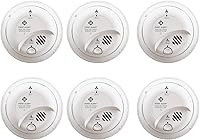
9 Best First Alert Smoke Alarms (November 2026)
The best First Alert smoke and fire alarms include the BRK First Alert 9120BFF/ SMI100-AC Smoke Detector for one hardwired replacement, the First Alert 9120B / SMI100-AC Smoke Detector for replacing several alarms, and the First Alert Hardwire Smoke Alarm for updated sensing.
On this page (4 sections)
The best First Alert smoke and fire alarm for a hardwired smoke-only replacement is the 9120B / SMI100-AC. It combines hardwired power, a backup battery and compatibility with other BRK or First Alert alarms.
For carbon monoxide coverage in the same unit, compare the SC9120B combination alarms. For a battery-powered single station, the FG250B is the only non-hardwired option in this roundup.
A smoke alarm is one part of a home fire safety plan. Start with our guide to what a smoke alarm does and how to choose one if you're comparing sensor types or alarm layouts.
Our picks at a glance
-
1
 Best for one hardwired replacement
BRK First Alert 9120BFF/ SMI100-AC Smoke Detector
9.7/10 our score
See it on Amazon -
2
 Best for replacing several alarms
First Alert 9120B / SMI100-AC Smoke Detector
9.7/10 our score
See it on Amazon -
3

- 4
 Check it
FIRST ALERT SC9120B Corded Electric Combination Alarm
Best for smoke and CO with long backup - 5
 Check it
First Alert BRK SMI100-AC Hardwired Smoke Alarm
Best for a larger hardwired refresh - 6
 Check it
BRK SC9120B Smoke and Carbon Monoxide Alarm
Best for separate smoke and CO indicators - 7
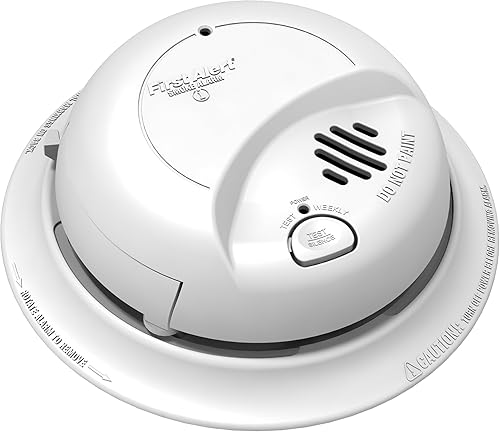 Check it
First Alert 9120B 120 Volt Hardwired Smoke
Best for five matching locations - 8
 Check it
First Alert SC-9120B Hardwired Smoke and Carbon
Best for a two-alarm combination upgrade - 9
 Check it
FIRST ALERT BRK FG250B Dual Ionization Smoke
Best for battery-powered single locations
How we compared First Alert smoke and fire alarms
We compared power type, backup power, sensor and detection type, pack size, interconnect features, and replacement details. Our score weighs specs and features against the needs of someone choosing a First Alert alarm; we did not test these alarms in a home.
Before buying, identify the model and wiring connector on the alarm you're replacing. A matching brand name alone does not confirm that a new alarm will connect to the existing system.
| Product | Best for | Power | Sensor | Pack | Our score |
|---|---|---|---|---|---|
| BRK First Alert 9120BFF/ SMI100-AC Smoke Detector | one hardwired replacement | Hardwired with battery backup | Ionization | 1 alarm | 9.7 |
| First Alert 9120B / SMI100-AC Smoke Detector | replacing several alarms | Hardwired with battery backup | Ionization | 3 alarms | 9.7 |
| First Alert Hardwire Smoke Alarm | updated sensing | Hardwire with battery backup | 9.6 | ||
| FIRST ALERT SC9120B Corded Electric Combination Alarm | smoke and CO with long backup | Corded electric with 10-year battery backup | 9.5 | ||
| First Alert BRK SMI100-AC Hardwired Smoke Alarm | a larger hardwired refresh | Hardwired with battery backup | Ionization | 6 alarms | 9.4 |
| BRK SC9120B Smoke and Carbon Monoxide Alarm | separate smoke and CO indicators | 9.1 | |||
| First Alert 9120B 120 Volt Hardwired Smoke | five matching locations | 120V AC with 9V battery backup | Ionization | 5 alarms | 8.8 |
| First Alert SC-9120B Hardwired Smoke and Carbon | a two-alarm combination upgrade | Hardwired with battery backup | 2 alarms | 8.7 | |
| FIRST ALERT BRK FG250B Dual Ionization Smoke | battery-powered single locations | 9V battery | Dual ionization | 8.3 |
Which First Alert smoke alarm fits each home?
The 9120B family is the clearest match for a hardwired smoke-only replacement, while SC9120B models add carbon monoxide detection. Pack size matters when several alarms need replacement, but only if each unit matches the home's wiring and alarm requirements.
Best First Alert smoke alarm for a single replacement
BRK First Alert 9120BFF/ SMI100-AC Smoke Detector: Best for one hardwired replacement
- 120V AC power
- 9V battery backup
- Ionization sensor
- Connects with compatible alarms
A single 9120BFF/SMI100-AC alarm gives you hardwired power with a 9V backup battery. It can connect to compatible BRK or First Alert alarms.
Pros
- Battery backup during power failure
- Single test/silence button
- Can interconnect with compatible alarms
Cons
- Ionization sensor is designed to detect fast-flaming fires
- Hardwired installation
The BRK First Alert 9120BFF/SMI100-AC is a single hardwired smoke alarm with a 9V battery backup. Its ionization sensor is designed to detect smoke from fast-flaming fires, and the alarm can interconnect with compatible BRK or First Alert models.
A single test/silence button handles routine checks and silencing. The side-load battery compartment also lets you reach the battery without removing the alarm from its base.
Choose this option when one compatible hardwired unit needs replacement. If you're unsure how to access the housing, see how to open a First Alert smoke alarm, then use the alarm's own instructions for wiring and mounting.
Best First Alert smoke alarm multipack
First Alert 9120B / SMI100-AC Smoke Detector: Best for replacing several alarms
- Three hardwired alarms
- 9V battery backup
- Ionization sensor
- Interconnect compatible
This three-pack offers the 9120B hardwired format for several locations. Each alarm has battery backup and can connect with compatible alarms.
Pros
- Three alarms in one pack
- Backup battery for outages
- Test/silence button
Cons
- Requires compatible hardwiring
- Ionization sensing
This three-pack contains 9120B hardwired smoke alarms with 9V backup batteries. Compatible interconnected alarms sound together when one detects smoke, which can help alert people in different rooms.
The ionization sensor is intended for fast-flaming fires. The single test/silence button and side-load battery compartment are useful when you need to check and maintain several units.
Choose the pack when three locations need the same smoke-only alarm type. Before installing, confirm each location's wiring and compatibility, and follow our guide to how to install a First Alert smoke alarm.
Best First Alert alarm with updated sensing technology
First Alert Hardwire Smoke Alarm: Best for updated sensing
- Precision Detection technology
- Battery backup
- Early warning interconnect
- Quick Connect Plug
First Alert's SMI100-AC uses Precision Detection technology and includes a Quick Connect Plug for replacing existing alarms without rewiring.
Pros
- Designed to reduce cooking nuisance alarms
- Battery backup
- Can interconnect with compatible alarms
Cons
- Compatibility should be checked against the existing system
- Hardwired format
The First Alert SMI100-AC uses Precision Detection technology, which First Alert says is designed to reduce cooking nuisance alarms while providing early warning in a home fire emergency. It includes battery backup and an early-warning interconnect feature.
A Quick Connect Plug is included to help replace existing alarms without rewiring. Still, check that the connector and interconnected alarm system match your current setup before choosing it.
This model fits buyers looking for the updated sensing approach in a hardwired smoke alarm. Read our guide to how to test a First Alert smoke alarm after installation, using the manufacturer's steps.
Best First Alert combination alarm for smoke and CO
FIRST ALERT SC9120B Corded Electric Combination Alarm: Best for smoke and CO with long backup
- Smoke and carbon monoxide detection
- 10-year battery backup
- Adapter plugs
- End-of-life signal
This SC9120B combines smoke and carbon monoxide detection, with adapter plugs for replacing compatible hardwired alarms without rewiring.
Pros
- Two hazard types in one alarm
- 10-year battery backup
- Visual indicators distinguish smoke and CO
Cons
- Combination alarm may not match a smoke-only system
- Hardwired installation
The SC9120B detects smoke and carbon monoxide in one hardwired alarm. It has an electrochemical CO sensor, smoke sensing technology, a 10-year battery backup and indicator lights that distinguish smoke from carbon monoxide.
Adapter plugs and a quick-connect wiring harness are included to help replace existing hardwired alarms without rewiring. An end-of-life signal indicates when the unit needs replacement.
Choose this model when you want both types of detection at compatible locations. If an alarm starts sounding without a clear cause, use our guide to why a First Alert smoke alarm may go off randomly to sort out possible causes.
Best First Alert pack for a larger replacement project
First Alert BRK SMI100-AC Hardwired Smoke Alarm: Best for a larger hardwired refresh
- Six-alarm pack
- 9V battery backup
- Ionization sensor
- Interconnect compatible
A six-pack of hardwired alarms can suit a multi-room replacement project. The SMI100-AC format has a 9V backup battery and interconnects with compatible alarms.
Pros
- Six alarms in one pack
- Battery backup
- One test/silence button
Cons
- Requires compatible wiring
- Ionization sensor
This six-pack of First Alert SMI100-AC hardwired alarms suits a project replacing several smoke-only units. Each alarm uses an ionization sensor, has a 9V battery backup and can connect with compatible BRK or First Alert alarms.
A latching alarm indicator can identify which interconnected unit initiated an alarm. The side-load battery drawer helps you replace the backup battery without taking the alarm down.
Choose a multipack only after confirming the number of locations and their wiring needs. If the alarm chirps after installation, see why a First Alert smoke alarm beeps or chirps.
Best First Alert combination alarm with separate indicators
BRK SC9120B Smoke and Carbon Monoxide Alarm: Best for separate smoke and CO indicators
- Smoke and CO detection
- Separate latching indicators
- 9V battery
- Interconnect compatible
The SC9120B combination alarm gives separate smoke and carbon monoxide indicators and can connect to compatible BRK and First Alert hardwired alarms.
Pros
- Separate smoke and CO indicators
- Test/silence button
- Universal mount bracket
Cons
- Hardwired system compatibility matters
- 9V battery backup
The BRK SC9120B combines smoke and carbon monoxide detection, with separate latching indicators for the two hazards. Its test/silence button and universal mount bracket support routine use and installation in a compatible system.
It can interconnect with BRK and First Alert hardwired smoke and carbon monoxide alarms. The listed 9V battery supports backup power, so check the alarm's instructions for battery replacement and maintenance.
This is a fit when you need a combination unit and want separate status indicators. If the alarm's light pattern is confusing, our guide explains why a First Alert smoke alarm may blink red.
Best First Alert five-pack for matching locations
First Alert 9120B 120 Volt Hardwired Smoke: Best for five matching locations
- Five-alarm pack
- 120V AC power
- 9V battery backup
- Tamper-resistant locking pins
This five-pack of 9120B alarms provides hardwired smoke detection with battery backup for multiple locations.
Pros
- Five alarms in one pack
- Battery backup
- Single-button test and silence
Cons
- Hardwired format
- Ionization sensor
The 9120B five-pack supplies hardwired smoke alarms with 120V AC power and 9V battery backup. Tamper-resistant locking pins and a single test/silence button are included.
Its ionization sensor is intended to detect fast-flaming fires. Choose it when five compatible smoke-only locations need replacement, and confirm the existing wiring before starting.
After fitting the units, learn how to reset a First Alert smoke alarm if a reset is needed. Follow the model's instructions so the alarm is ready for use afterward.
Best First Alert two-pack for smoke and CO
First Alert SC-9120B Hardwired Smoke and Carbon: Best for a two-alarm combination upgrade
- Two combination alarms
- Smoke and CO detection
- Battery backup
- Separate alert lights
This two-pack suits a home updating two compatible hardwired locations to smoke and carbon monoxide alarms.
Pros
- Two alarms in one pack
- Lights indicate smoke or CO
- Side-load battery compartment
Cons
- Requires compatible hardwired connections
- Combination format
This two-pack of SC-9120B alarms combines smoke and carbon monoxide detection in hardwired units with battery backup. Indicator lights distinguish whether an alarm is for smoke or CO, and each unit has a single test/silence button.
The alarms can connect to compatible BRK or First Alert units. The side-load battery compartment makes the backup battery easier to reach for maintenance.
Choose the pack when two compatible locations need combination alarms. A green light can be part of normal operation, so check what a blinking green light on a First Alert smoke alarm means.
Best First Alert battery-powered single alarm
FIRST ALERT BRK FG250B Dual Ionization Smoke: Best for battery-powered single locations
- Battery powered
- Dual ionization chamber
- 9V battery included
- Silence feature
The FG250B is a battery-powered single-station alarm with a 9V battery and a silence feature for nuisance alarms.
Pros
- Does not require hardwiring
- Battery included
- Tamper-resistant locking pin
Cons
- Single-station format
- Ionization sensor
The FG250B is a single-station alarm powered by a 9V battery. Its dual ionization sensing chamber, silence feature and tamper-resistant locking pin make it the battery-powered choice in this comparison.
It is designed for residential and institutional applications, including sleeping rooms in multifamily settings. The product information also notes RV use, but check the requirements for your specific installation.
Choose this format where a compatible hardwired alarm is not required. If the alarm gives three beeps, our guide covers what three beeps from a First Alert smoke alarm may mean.
What should you check before choosing a First Alert alarm?
Check whether the location needs smoke-only or combination smoke and carbon monoxide detection, then confirm power, connector and interconnect compatibility. Those details determine whether a replacement fits your existing setup.
A hardwired alarm with battery backup can continue monitoring during a power failure, but the backup battery still needs correct installation and maintenance. For a replacement project, note each existing model number and whether alarms are connected to one another.
An alarm that repeatedly chirps, flashes or sounds may need attention beyond a simple reset. Use the model instructions and our guides to replace a First Alert smoke alarm or reset a First Alert smoke alarm.
Which First Alert smoke and fire alarm should you choose?
Choose the 9120B / SMI100-AC for a hardwired smoke-only replacement, and choose an SC9120B if you need smoke and carbon monoxide detection in one alarm. For a battery-powered single station, consider the FG250B; for several compatible locations, select the pack size that matches your home.
A blinking light or chirp can mean different things by model and pattern. Check the manual for the exact alarm, including what a First Alert smoke alarm blinking green light means, before treating a signal as a fault.
Our top 3 picks at a glance
-
1
Best for one hardwired replacement
BRK First Alert 9120BFF/ SMI100-AC Smoke Detector
9.7/10 our score
See it on Amazon -
2
Best for replacing several alarms
First Alert 9120B / SMI100-AC Smoke Detector
9.7/10 our score
See it on Amazon -
3
Frequently asked questions
Which First Alert smoke alarm is best for most hardwired homes?
The First Alert 9120B / SMI100-AC is a strong fit when you need a hardwired smoke alarm with battery backup. It can connect to compatible BRK or First Alert alarms, so check your existing system before replacing units.
Choose a combination model if you also need carbon monoxide detection.
What is the difference between the 9120B and SC9120B?
The 9120B is a smoke alarm, while the SC9120B combination models detect smoke and carbon monoxide. The combination options include separate indicators for the hazards.
Check the current wiring and alarm compatibility before choosing a replacement, especially when several units are interconnected.
Are First Alert hardwired alarms still working during a power outage?
The hardwired 9120B models described here include a 9V battery backup, while the SC9120B corded electric combination alarm includes a 10-year battery backup. Backup duration and battery type depend on the model.
Install the specified backup battery and follow its manual.
What does First Alert micro smoke alarm mean?
“Micro smoke alarm” can refer to a compact or low-profile smoke alarm, but it does not identify one of the models in this comparison. Match a replacement by its model number, wiring connector, sensor type and required backup battery.
If you mean a specific First Alert Micro model, check its label before ordering.
How should I choose between a single alarm and a multipack?
Count the locations that need replacement and confirm the required alarm type at each one. The 9120B options here come in single, three, five and six-alarm formats, while combination smoke and CO models are also available.
A multipack is useful only when its alarms fit those locations and your wiring.