8 Best Hardwired Smoke Detectors (November 2026)
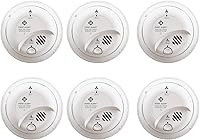
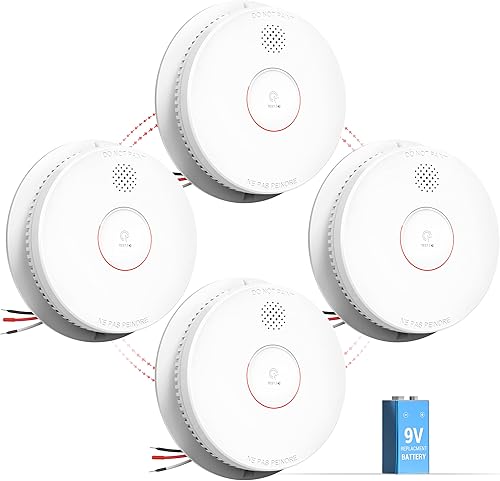
The best hardwired smoke detectors include the First Alert BRK SC9120B-6 Hardwired Smoke for smoke and CO coverage, the First Alert 9120B / SMI100-AC Smoke Detector for fast-flaming fire detection, and the Siterlink Hardwired Interconnected Smoke Detectors for photoelectric smoke coverage.
On this page (11 sections)
- Which hardwired smoke detector is best for most homes?
- Which hardwired smoke detector is best for fast-flaming fires?
- Which hardwired smoke detector is best with photoelectric sensing?
- Which hardwired smoke detector is best for voice alerts?
- Which hardwired smoke detector is best for a single replacement?
- Are hardwired smoke detectors interconnected across brands?
- What should you look for in the best hardwired interconnected smoke detectors?
- Do hardwired smoke detectors need backup batteries?
- Which alert features are worth choosing?
- More guides on this topic
- Verdict: which are the best hardwired smoke detectors?
The best hardwired smoke detectors combine a suitable sensor, reliable interconnection and battery backup. The First Alert BRK SC9120B-6 is the strongest overall choice here because each alarm detects smoke and carbon monoxide, includes a 9-volt backup and comes in a 6-pack.
Photoelectric Siterlink models suit buyers who want smoke-only coverage, while Kidde offers useful voice alerts and a larger stated interconnect limit. We compared sensor type, alarm purpose, connection options, backup power and pack size.
Our score weighs specs, features and buyer feedback against what you're shopping for.
If you need the basics first, start with what is a smoke alarm. For the wiring question, read do smoke detectors need to be hardwired.
Our picks at a glance
-
1
 Best for smoke and CO coverage
First Alert BRK SC9120B-6 Hardwired Smoke
9.7/10 our score
See it on Amazon -
2
 Best for fast-flaming fire detection
First Alert 9120B / SMI100-AC Smoke Detector
9.7/10 our score
See it on Amazon -
3
 Best for photoelectric smoke coverage
Siterlink Hardwired Interconnected Smoke Detectors
9.7/10 our score
See it on Amazon
- 4
 Check it
Kidde Smoke & Carbon Monoxide Detector
Best for voice alerts - 5
 Best for a single Kidde replacementCheck it
- 6
 Check it
SITERWELL Hardwired Smoke and Carbon Monoxide Detector
Best for wired or wireless interconnection - 7
 Check it
Siterlink Hardwired Interconnected Smoke Detectors GS562A 4-Pack
Best for a 4-alarm replacement - 8
 Check it
SITERWELL Smoke Detector Photoelectric Smoke Alarm 9V
Best for nuisance-alarm control features
Which hardwired smoke detector is best for most homes?
The First Alert BRK SC9120B-6 is the best overall pick when you want smoke and carbon monoxide coverage in several rooms. It pairs an ionization smoke sensor with electrochemical CO sensing, 9-volt backup batteries and a 6-pack.
First Alert BRK SC9120B-6 Hardwired Smoke: Best for smoke and CO coverage
- Smoke and carbon monoxide detection
- Electrochemical CO sensor and ionization smoke sensor
- 9-volt battery backup
- 6-pack with mounting brackets
This 6-pack combines smoke and carbon monoxide detection in each hardwired alarm. Battery backup and compatible BRK or First Alert interconnection suit homes replacing several alarms at once.
Pros
- Smoke and CO detection
- Battery backup
- 6-pack
Cons
- Ionization smoke sensor may not suit every buyer
- Compatibility must be checked before interconnection
The SC9120B-6 is built for a home replacing multiple combination alarms at once. Its smoke and carbon monoxide coverage means one alarm handles both hazards, while the battery backup keeps monitoring available during a power outage.
The alarm uses an ionization sensor for smoke and an electrochemical sensor for CO. Indicator lights identify whether smoke or carbon monoxide triggered the alarm, and a single test button helps with regular checks.
First Alert describes compatibility with other compatible BRK or First Alert hardwired smoke and CO detectors in a single-family residence. Confirm the existing system before mixing models.
The pack includes 6 alarms, 6 mounting brackets and 6 9-volt batteries.
Choose this model when you want a broad replacement pack and combination protection. If you want smoke-only photoelectric sensing, compare the Siterlink options below.
Which hardwired smoke detector is best for fast-flaming fires?
The First Alert 9120B is the best fit when you want ionization smoke sensing, battery backup and a 3-pack without adding carbon monoxide detection. It also supports compatible First Alert and BRK interconnection.
First Alert 9120B / SMI100-AC Smoke Detector: Best for fast-flaming fire detection
- Ionization sensor
- 9-volt battery backup
- 120-volt AC interconnection
- 3-pack
The First Alert 9120B focuses on smoke detection with an ionization sensor for fast-flaming fires. Its 3-pack, battery backup and compatible interconnection make it practical for a smaller replacement project.
Pros
- Ionization smoke sensing
- Interconnect capability
- 3-pack
Cons
- No carbon monoxide detection
- Compatibility must be checked before installation
The 9120B uses an ionization sensor designed to detect smoke from fast-flaming fires. Its 85-decibel alarm, single test and silence button and side-load battery compartment keep the main controls simple.
The unit uses hardwired power with a 9-volt battery backup. First Alert describes 120-volt AC interconnection and compatibility with other BRK or First Alert alarms and compatible devices.
Check the existing wiring and device list before installation.
This 3-pack works well when you need matching smoke alarms on several levels or near bedrooms. It does not add CO detection, so choose a combination model if carbon monoxide coverage is part of your plan.
Which hardwired smoke detector is best with photoelectric sensing?
The Siterlink GS562A 6-pack is the best photoelectric choice for buyers replacing several smoke-only alarms. It combines photoelectric sensing, 9-volt backup and interconnection for up to 12 devices.
Siterlink Hardwired Interconnected Smoke Detectors: Best for photoelectric smoke coverage
- Photoelectric sensor
- 9-volt battery backup
- Interconnects up to 12 devices
- 6-pack
This Siterlink GS562A 6-pack uses photoelectric sensing and supports wired interconnection for up to 12 devices. A test and silence button gives you a simple way to check each alarm.
Pros
- Photoelectric sensing
- 6-pack
- Interconnects up to 12 devices
Cons
- Smoke-only alarm
- Compatibility with existing wiring needs checking
The GS562A uses a photoelectric sensor and a loud alarm signal above 85 decibels. Its wired interconnection lets connected alarms sound when one unit detects smoke, helping spread the warning through different rooms.
A test button supports weekly checks, and the silence control can mute an alarm signal when there is no fire hazard. Green and red LED indicators show operating or alarm conditions, while the built-in indicator is designed to be visible without being disruptive at night.
The 6-pack suits a larger home or a full replacement job. It is a smoke alarm rather than a combination smoke and CO detector, so use a separate CO plan where needed.
Which hardwired smoke detector is best for voice alerts?
The Kidde KN-COSM-IBA is the best choice when spoken warnings matter. It identifies fire, carbon monoxide and low battery with voice alerts, and its 2-AA backup supports operation during a power failure.
Kidde Smoke & Carbon Monoxide Detector: Best for voice alerts
- Smoke and carbon monoxide detection
- Voice alerts
- 2-AA battery backup
- Interconnects up to 24 Kidde devices
Kidde combines smoke and carbon monoxide detection with voice alerts that identify fire, carbon monoxide or low battery. The 2-pack suits buyers who want spoken warnings and a larger Kidde interconnect network.
Pros
- Voice alerts
- Smoke and CO detection
- 2-pack
Cons
- Ionization sensor
- Kidde device compatibility matters
Kidde combines ionization smoke sensing with carbon monoxide detection in this hardwired alarm. The voice alert states whether it detects fire, carbon monoxide or a low battery, which can be easier to understand than a repeating tone alone.
The alarm uses 120VAC power and 2 AA batteries for backup. Its Test-Hush feature silences the unit for about 9 minutes, and Kidde describes interconnection with up to 24 Kidde devices, with limits on initiating devices.
The 2-pack fits buyers who want combination protection in key rooms. Choose it when voice information is more useful to you than photoelectric smoke sensing, and verify compatibility with any existing Kidde system.
Which hardwired smoke detector is best for a single replacement?
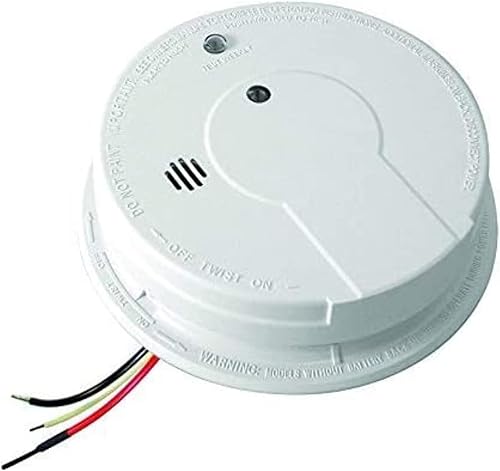
The Kidde i12040 is the best single-unit replacement for a compatible Kidde system. It offers ionization sensing, a 9-volt backup, a test-hush button and interconnect capability.
Kidde Smoke Detector: Best for a single Kidde replacement
- Ionization sensor
- 9-volt battery backup
- Test-Hush button
- Interconnects with up to 24 Kidde devices
The Kidde i12040 is a single hardwired smoke alarm for replacing one compatible unit. Its test-hush button, red alarm indicator and 9-volt backup cover the basic needs of a wired installation.
Pros
- Single replacement unit
- Test-Hush button
- Kidde interconnect capability
Cons
- Smoke-only product
- Ionization sensor
The i12040 is a smoke-only alarm with an 85-decibel warning and red LED indicator. Its ionization sensor is intended for invisible particles associated with flaming fires.
A 120-volt wired power source runs the alarm during normal conditions, while the 9-volt alkaline battery provides backup during an outage. The test-hush button checks operation and can silence nuisance alarms caused by cooking or shower steam.
Kidde describes compatibility with up to 24 Kidde devices. Use the single pack when one alarm needs replacing, but confirm the model and wiring before connecting it to a larger system.
Are hardwired smoke detectors interconnected across brands?
Hardwired smoke detectors are interconnected only when the models and wiring system support each other. A First Alert alarm should not be assumed compatible with a Kidde or Siterlink system.
The SITERWELL GS886F offers a different setup because it supports wired or wireless connection to up to 12 detectors. SITERWELL recommends wired interconnection for stability, so plan the connection method before mounting the alarms.
Read our guide to hardwired vs wireless smoke detectors if you are deciding between connection types. For a brand-specific comparison, see the best First Alert smoke detectors for hardwired installations.
SITERWELL Hardwired Smoke and Carbon Monoxide Detector: Best for wired or wireless interconnection
- Smoke and carbon monoxide detection
- Voice alert
- 2-AA battery backup
- Wired or wireless connection for up to 12
This SITERWELL combination alarm adds photoelectric smoke sensing, carbon monoxide detection and voice alerts. It can connect by wire or wirelessly to up to 12 detectors, although wired interconnection is recommended for stability.
Pros
- Photoelectric smoke sensing
- Smoke and CO detection
- Wired or wireless interconnection
Cons
- Single unit
- Connection planning is important
The GS886F combines photoelectric smoke sensing with carbon monoxide detection and a voice alert. It uses AC/DC power with 2 AA batteries for backup, and the voice warning helps identify which type of danger the alarm detects.
SITERWELL describes both wired and wireless interconnection for up to 12 alarms. Wired connection is recommended for a more stable network, while wireless connection may suit a layout where new cable runs are difficult.
The unit also has a self-check function and a stated 10-year sensor life. It is a single alarm, so compare the number of rooms you need to cover before choosing it.
What should you look for in the best hardwired interconnected smoke detectors?
The best hardwired interconnected smoke detectors match four things: sensor type, compatible devices, backup battery and the number of alarms you need. A higher device limit does not help if the alarm cannot connect to your current system.
For photoelectric options, compare the best hardwired photoelectric smoke detectors. If you are considering another brand, check which X-Sense smoke detectors fit hardwired installations.
The Siterlink GS562A 4-pack is a practical option when you need four matching photoelectric alarms. Its title identifies a hardwired interconnected design and a 9-volt backup, while its 4-pack keeps the replacement count clear.
Siterlink Hardwired Interconnected Smoke Detectors GS562A 4-Pack: Best for a 4-alarm replacement
- Photoelectric sensor
- Hardwired interconnection
- 9-volt battery backup
- 4-pack
The GS562A 4-pack fits a smaller multi-room replacement project. Photoelectric sensing and a 9-volt backup give you the main features to compare when you want matching hardwired alarms.
Pros
- Photoelectric sensing
- 4-pack
- Battery backup
Cons
- Smoke-only product
- Limited product details for comparison
The GS562A 4-pack is suited to a smaller multi-room replacement project. Each alarm uses photoelectric sensing, has a hardwired interconnected design and includes a 9-volt backup.
The model is useful when you want matching smoke-only alarms rather than combination units. Its photoelectric sensor may appeal to buyers who are comparing it with the ionization models in this roundup.
The product information gives fewer connection details than the 6-pack version, so confirm the wiring arrangement and compatible alarms before installation. Choose the 4-pack when the count fits your rooms and the system matches your existing setup.
Do hardwired smoke detectors need backup batteries?
Hardwired smoke detectors usually need backup batteries because household power can fail. The battery type differs by model, so compare hardwired smoke detectors with battery backup before you choose.
The SITERWELL GS562A uses a 9-volt backup and can interconnect up to 12 alarms. It also includes a Do Not Disturb mode that can reduce low-voltage or fault alerts for about 10 hours.
SITERWELL Smoke Detector Photoelectric Smoke Alarm 9V: Best for nuisance-alarm control features
- Photoelectric sensor
- 9-volt battery backup
- Interconnects up to 12 alarms
- Do Not Disturb mode
This SITERWELL smoke alarm uses photoelectric sensing and connects with up to 12 alarms. Its stated Do Not Disturb mode can reduce nighttime low-voltage or fault alerts for about 10 hours.
Pros
- Photoelectric sensing
- Interconnects up to 12 alarms
- Do Not Disturb mode
Cons
- Smoke-only product
- Single-alarm details need checking
This SITERWELL alarm is a smoke-only photoelectric model with hardwired interconnection and a 9-volt battery backup. When one connected alarm detects smoke, the others can sound as part of the network.
Its test button supports weekly checks, while the green and red LED signals show normal or alarm conditions. SITERWELL also describes a low-battery warning and a Do Not Disturb mode for about 10 hours.
Choose it when photoelectric sensing and interconnection matter more than carbon monoxide coverage. The included 9-volt battery, mounting parts and harness support the stated installation setup, but you should still follow the model instructions.
Which alert features are worth choosing?
Voice alerts are useful when you want the alarm to name the hazard, while a standard audible alarm keeps the design simpler. The best hardwired smoke detectors with voice alerts are worth comparing when household members may need more detail than a tone provides.
Pack size matters during replacement work. A best hardwired smoke detector 4 pack can match a smaller project, while a 6-pack may cover more rooms with the same model.
Avoid treating a plug-in unit as a hardwired replacement. Smoke detectors that plug into a wall outlet use a different installation approach, and is a smoke detector an outlet explains the electrical distinction.
More guides on this topic
- Do Hardwired Smoke Detectors Need Batteries?
- Best Kidde Hardwired Smoke Detectors
- Best Hardwired Smoke Detectors with 10-Year Backup Batteries
Verdict: which are the best hardwired smoke detectors?
The best hardwired smoke detectors depend on the hazard coverage and wiring system you need. Pick the First Alert BRK SC9120B-6 for a multi-room smoke and CO replacement, the First Alert 9120B for ionization smoke coverage in a 3-pack, or the Siterlink GS562A 6-pack for photoelectric smoke alarms.
Choose Kidde if voice alerts or Kidde interconnection matter. Choose SITERWELL if you want photoelectric smoke sensing with wired or wireless connection options.
Before installation, confirm the model compatibility, shut off power when required and follow the alarm instructions.
Our top 3 picks at a glance
-
1
Best for smoke and CO coverage
First Alert BRK SC9120B-6 Hardwired Smoke
9.7/10 our score
See it on Amazon -
2
Best for fast-flaming fire detection
First Alert 9120B / SMI100-AC Smoke Detector
9.7/10 our score
See it on Amazon -
3
Best for photoelectric smoke coverage
Siterlink Hardwired Interconnected Smoke Detectors
9.7/10 our score
See it on Amazon
Frequently asked questions
Are hardwired smoke detectors interconnected?
Many hardwired smoke detectors can be interconnected, but compatibility depends on the brand, model and wiring system. First Alert and Kidde describe specific compatible device limits, while Siterlink and SITERWELL provide their own connection limits.
Check the installation instructions before mixing brands.
Do hardwired smoke detectors need batteries?
Most hardwired smoke detectors need a backup battery even though normal power comes through the home's wiring. The battery keeps the alarm operating during an outage.
These picks use 9-volt or AA batteries, so check the required type and replace it when the alarm signals low power.
Which is better, ionization or photoelectric?
Ionization sensors are designed to detect invisible particles linked with fast-flaming fires, while photoelectric sensors are used for smoke detection and are often chosen for smoldering-fire coverage. A home may use both sensor types, depending on the alarm plan and local requirements.
Can you replace a hardwired smoke detector yourself?
Only replace a hardwired smoke detector yourself if you understand the wiring and the replacement is compatible with the existing system. Turn off power before working, follow the alarm instructions and use an electrician when the wiring, connector or interconnection system is unclear.