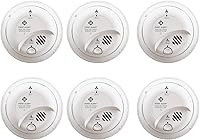
6 Best Wi-Fi Smoke Detectors (November 2026)
The best Wi-Fi smoke detectors include the X-Sense 3-Pack Interconnected Smoke and CO Detector for whole-home wireless alerts, the X-Sense Smoke Detector for simple bedroom coverage, and the X-Sense Wireless Combination Smoke and CO Detector for linked smoke and CO coverage.
On this page (8 sections)
- The best wifi smoke detector options by use
- How we compared smart smoke detector wireless options
- Best Wi-Fi smoke detectors compared
- Do smart smoke detectors need Wi-Fi?
- Wi-Fi smoke detector vs wireless interconnected alarm
- What to check before installing a smart smoke detector
- Are Honeywell wireless smoke detectors a better fit?
- Final verdict on the best wifi smoke detector
The best wifi smoke detector for remote notifications is the eufy Security Smoke Alarm E10, provided you have a compatible eufy HomeBase. For whole-home alarms that sound together without phone alerts, the X-Sense 3-pack interconnected models are stronger fits.
A Wi-Fi connection and a wireless connection are not the same thing. Wi-Fi supports remote notifications, while wireless interconnection lets multiple alarms communicate locally.
This distinction matters more than the product name on the box. A model can be wireless and still send no alert to your phone when you are away.
This roundup compares both types so you can match the alarm to your home and alert needs. It also separates hub based models from simple battery alarms.
If you need the basics first, read our guide to what is a smoke alarm. You can also compare more connected options in our guide to the best smart smoke detectors.
Start with how you want to be warned, then check what the alarm actually connects to. That order helps avoid buying a linked alarm when you wanted app alerts, or a hub based alarm when you wanted no extra hardware.
Our picks at a glance
-
1
 Best for whole-home wireless alerts
X-Sense 3-Pack Interconnected Smoke and CO Detector
9.7/10 our score
See it on Amazon -
2

-
3
 Best for linked smoke and CO coverage
X-Sense Wireless Combination Smoke and CO Detector
9.4/10 our score
See it on Amazon
The best wifi smoke detector options by use
The eufy E10 is the only product here built around HomeBase app alerts. The X-Sense picks offer wireless alarm-to-alarm communication, while the Kidde models are simple standalone choices.
That split is the main way to read this list. One alarm is designed to reach you away from home, some are designed to reach every room at once, and others are designed to do one local job well.
Our score weighs specs, features and buyer feedback against what you're shopping for. The products are ordered from highest score to lowest score, with the two 9.7 picks separated by their different alert styles.
A higher score here does not mean every home should pick the top model. It reflects how closely the product matches the use we set out to compare.
Battery design also shapes the ranking. Sealed batteries reduce routine changes, while AA batteries keep replacement familiar but require regular attention.
Installation needs matter too. A no wiring alarm suits renters and busy households, while a hub based alarm suits homes that already use that hub.
We placed connected, linked and standalone models side by side on purpose. The right pick depends less on the score gap and more on whether you need remote alerts, linked sound or simple local coverage.
How we compared smart smoke detector wireless options
We looked at the connection method, alert coverage, battery design, detection type, installation needs and product limits. A product that uses wireless interconnection can be useful for whole-home local alerts, but it should not be described as Wi-Fi if it cannot send remote notifications.
Connection came first because it changes the daily experience. Wi-Fi or hub based alerts can reach a phone, while wireless interconnection mainly helps people inside the home hear the same alarm.
We then checked what each alarm detects. Some models cover smoke only, while others combine smoke and carbon monoxide in one unit for a simpler layout.
Battery design was next. A sealed battery can cut out routine changes for years, while replaceable AA batteries are easy to find but need ongoing checks and fresh spares.
Installation and care also affected how we judged each option. No wiring setup suits many homes, yet mounting size, bracket fit and test controls still need a few minutes of attention.
We also noted clear limits instead of smoothing them over. If a model has no Wi-Fi, no app alerts or no link to other alarms, we treated that as a trade off rather than a minor detail.
For a broader comparison of alarms that sound together, see our guide to best wifi interconnected smoke alarms. If you are considering X-Sense specifically, our X-Sense Wi-Fi smoke detector guide explains which models send Wi-Fi alerts.
That approach keeps the comparison honest across very different products. It also makes it easier to see which alarm fits your home, your rooms and the way you want to be alerted.
Best Wi-Fi smoke detectors compared
| Product | Best for | Pack | Battery | Connection | Our score |
|---|---|---|---|---|---|
| X-Sense 3-Pack Interconnected Smoke and CO Detector | whole-home wireless alerts | 3 alarms | 10-year sealed lithium | Wireless interconnection, no Wi-Fi | 9.7 |
| X-Sense Smoke Detector | simple bedroom coverage | 3 alarms | Built-in battery for up to 10 years | Standalone, no Wi-Fi or interconnection | 9.7 |
| X-Sense Wireless Combination Smoke and CO Detector | linked smoke and CO coverage | 3 alarms | 10-year sealed lithium | Wireless interconnection, no Wi-Fi | 9.4 |
| Kidde Compact Smoke Detector | compact standalone coverage | Standalone battery operation | 9.2 | ||
| Kidde Smoke Detector | larger standalone rooms | Standalone battery operation | 9.0 | ||
| eufy Security Smoke Alarm E10 | compatible HomeBase users | Built-in battery for up to 5 years | eufy HomeBase required | 8.8 |
X-Sense 3-Pack Interconnected Smoke and CO Detector: Best for whole-home wireless alerts
- 3-pack
- Wireless interconnection
- 10-year sealed lithium battery
- Smoke and carbon monoxide detection
This 3-pack links the alarms so they all sound when one detects smoke or carbon monoxide. It suits homes that need coordinated local alerts without app notifications.
Pros
- All interconnected alarms sound together
- 10-year sealed battery
- Smoke and CO detection
Cons
- Does not provide Wi-Fi alerts
- Cannot connect to a base station
The X-Sense SC06-W is the best fit here for a home that needs wireless interconnection and both smoke and carbon monoxide detection. Its 3-pack lets you place alarms in several areas, then have all linked units sound when one detects smoke or CO.
The sealed lithium battery is designed to last 10 years and gives a low-battery warning. That reduces the need for regular battery changes, but you still need to test the alarms and follow the replacement guidance for the unit.
This model supports up to 18 Link+ devices. It mounts on a wall or ceiling without rewiring, and the box includes mounting brackets, screws and anchor plugs.
The key limitation is the connection type. SC06-W supports wireless interconnection, but it does not have Wi-Fi or base station connection, so it cannot send phone notifications while you're away.
Choose it when coordinated local alarms matter more than remote alerts. If you need phone notifications, compare the eufy E10 instead.
X-Sense Smoke Detector: Best for simple bedroom coverage
- 3-pack
- 10-year sealed lithium battery
- Photoelectric sensing
- One-button hush and self-test
This 3-pack is a straightforward choice for bedrooms, hallways and other areas that need local smoke detection. It does not send app alerts or sound with other alarms.
Pros
- Long-life sealed battery
- Photoelectric sensing
- No wiring required
Cons
- No Wi-Fi alerts
- No wireless interconnection
The X-Sense SD2J0AX is the best choice for simple smoke coverage in bedrooms, hallways, living rooms or basements. This 3-pack uses photoelectric sensing and a built-in battery that powers each alarm for up to 10 years.
Photoelectric sensing may reduce unwanted alarms from everyday cooking fumes and steam. That can make daily life calmer, especially in homes where alarms sit near kitchens or bathrooms.
The one-button control runs a self-test or silences a nuisance alarm, while the local audible alert and LED indicator show the alarm's status. It keeps routine checks simple enough to do without reading a long manual each time.
Installation does not require wiring or an electrician. The package includes 3 smoke alarms, and each unit works independently in the room where it is mounted.
That standalone design is also the reason it is not a Wi-Fi pick. SD2J0AX does not use app alerts, a base station or wireless interconnection.
It suits a buyer who wants long battery life and low setup complexity, not someone who needs every alarm to sound together. For many bedrooms and hallways, that simple trade off is the point.
X-Sense Wireless Combination Smoke and CO Detector: Best for linked smoke and CO coverage
- 3-pack
- Wireless interconnection
- 10-year sealed lithium battery
- Large 5.7-inch mounting bracket
These combination alarms coordinate smoke and carbon monoxide alerts across the home. The large mounting bracket can help cover marks from an older alarm installation.
Pros
- Smoke and CO detection
- All linked alarms sound together
- Large mounting bracket
Cons
- Does not send Wi-Fi alerts
- Check bracket fit before installation
The X-Sense XP0H-WN is best for linked smoke and carbon monoxide coverage across multiple rooms. Each alarm uses a 10-year sealed lithium battery, and all interconnected alarms sound when one detects smoke or CO.
The 3-pack combines 2-in-1 detection in each unit. That can simplify a home where you want smoke and CO monitoring without installing separate alarm types in the same areas.
A combined unit also reduces clutter on walls and ceilings. Fewer devices can mean fewer brackets, fewer batteries to track and a cleaner setup in busy rooms.
The large 5.7-inch mounting bracket can cover a wider area than a small bracket. Measure your existing installation area before mounting because the bracket size affects fit and appearance.
That larger bracket can help when an older alarm left marks or holes. It can also feel oversized in a very small space, so check the spot before you commit.
XP0H-WN uses wireless interconnection rather than Wi-Fi. It cannot connect to a base station and does not send remote phone alerts.
Choose it for coordinated alarms inside the home, not for checking alarm status while away. If linked sound is your priority, this design fits that goal well.
Kidde Compact Smoke Detector: Best for compact standalone coverage

- Compact 4-inch design
- Two included AA batteries
- 85 dB alarm
- Photoelectric sensor
The compact 10SDR fits buyers who want a small standalone smoke alarm with AA battery power. It has a local 85 dB alarm and red LED status light.
Pros
- Compact design
- AA batteries included
- Test and hush function
Cons
- No Wi-Fi alerts
- Standalone operation
The Kidde 10SDR is best for compact standalone smoke detection. Its 4-inch width and 1.88-inch depth suit homes, apartments and smaller spaces where a full-size alarm may be less convenient.
It uses a photoelectric sensor and sounds an 85 dB alarm. A red LED provides a visual warning, and the test and hush controls help you check operation or temporarily silence a nuisance alarm.
Two AA batteries are included, so installation does not require wiring. The batteries are replaceable, unlike the sealed-battery X-Sense models above.
That means you can change the batteries when needed, but you also need to keep replacements available. For some buyers that is a plus, since AA batteries are widely sold and easy to swap.
This is not a smart smoke detector wireless model. It does not connect to Wi-Fi or other alarms.
Pick it when local smoke detection, a compact body and familiar AA battery power are the priorities. It suits a straightforward setup where every room gets its own alarm.
Kidde Smoke Detector: Best for larger standalone rooms

- 5-inch design
- Two included AA batteries
- 85 dB alarm
- Photoelectric sensor
The 20SDR provides local smoke detection with a larger 5-inch body, AA battery power and an 85 dB alarm. It suits homes and apartments that do not need connected alerts.
Pros
- AA batteries included
- Test and hush button
- Red LED status light
Cons
- No Wi-Fi alerts
- Standalone operation
The Kidde 20SDR is best for standard standalone coverage in homes and apartments. Its 5-inch body is larger than the compact 10SDR, while the 85 dB alarm and red LED provide local audible and visual alerts.
The photoelectric sensor is designed to help reduce false alarms from everyday cooking or steam. That matters in daily use, since fewer nuisance alarms can make people more willing to keep the unit in place.
The test and hush button lets you check the alarm and temporarily silence a false alarm without disabling continued monitoring. It gives you a quick way to respond while keeping protection active.
Like the 10SDR, it uses two included AA batteries and needs no wiring. A low-battery chirp indicates when the batteries need replacement, so regular checks remain part of ownership.
The larger body may suit buyers who prefer a more standard alarm footprint. It is less suited to very tight spaces where a compact model would fit more easily.
The 20SDR does not connect to Wi-Fi and does not link with other alarms. Choose it when you want a straightforward smoke alarm and do not need phone notifications or coordinated alarm sounds.
eufy Security Smoke Alarm E10: Best for compatible HomeBase users

- 70 mm ultra-compact design
- 5-year sealed lithium battery
- HomeBase connection
- Up to 656 ft wireless range
The E10 is the connected choice here because it works with compatible eufy HomeBase devices for app alerts. It requires HomeBase and has a 70 mm compact design.
Pros
- App alerts through HomeBase
- Very compact design
- Up to 656 ft open-air range
Cons
- HomeBase is required
- 5-year battery instead of 10 years
The eufy Security Smoke Alarm E10 is the best fit for remote notifications through a compatible HomeBase. It connects wirelessly to HomeBase and can provide app alerts, making it the clear choice here for checking notifications while you're away.
The E10 has a 70 mm, or 2.75-inch, design that takes up less space than the other alarms in this roundup. Its sealed lithium battery lasts up to 5 years, which means fewer routine battery changes but a shorter stated battery life than the 10-year X-Sense models.
HomeBase is required for operation. Compatible devices include HomeBase 2, HomeBase 3, HomeBase Mini and HomeBase Pro, with specific software versions listed for each device.
Check your hub before choosing the E10.
The stated open-air wireless range is up to 656 ft, or 200 m. Walls and the layout of your home can affect real-world connection quality, so place the alarm where it can communicate with the HomeBase.
Do smart smoke detectors need Wi-Fi?
Smart smoke detectors usually need a network or hub to send remote notifications, but the exact setup depends on the model. The eufy E10 requires a compatible HomeBase, while the X-Sense and Kidde products here do not send app alerts.
A connected alarm can help you know about an alert when you're away from home. It does not replace local alarms, routine testing or a safe evacuation plan.
Read how do smart smoke detectors work for a closer look at hubs, apps and alert paths.
Before buying, confirm whether your home already has the required hub. A HomeBase-based alarm may be a poor fit if you do not want another connected device, while a standalone alarm may be too limited if remote alerts are essential.
Wi-Fi smoke detector vs wireless interconnected alarm
A Wi-Fi smoke detector sends information through a network for remote notifications. A wireless interconnected alarm sends an alert from one unit to other linked units inside the home.
The X-Sense SC06-W and XP0H-WN show why the difference matters. Both can make interconnected alarms sound together, but neither has Wi-Fi or base station support.
The eufy E10 offers app alerts through HomeBase, but it requires that compatible hub.
Choose wireless interconnection when people in different rooms need to hear the same local alarm. Choose Wi-Fi when you need notifications while away.
If someone in your home needs visual or vibration-based warning support, see our guide to the best smoke detector for deaf people.
What to check before installing a smart smoke detector
Start by checking the connection method. Confirm whether the alarm needs Wi-Fi, a dedicated hub, wireless pairing or no connection at all.
Next, check the power design. Sealed 10-year batteries reduce routine changes, while AA battery models make replacement simple but require ongoing battery checks.
The eufy E10 sits between those choices with a sealed battery designed for up to 5 years.
Measure the mounting area before installation. The XP0H-WN has a large 5.7-inch bracket, while the eufy E10 has a 70 mm body.
Existing holes and ceiling marks may affect which design looks and fits best.
Finally, test the alarm after installation and follow the product instructions for maintenance. Do not silence or remove an alarm as a permanent solution to nuisance alerts.
Move the alarm or follow the manufacturer's guidance for reducing unwanted alarms.
Are Honeywell wireless smoke detectors a better fit?
Honeywell may suit buyers who specifically want that brand, but the products in this roundup use X-Sense, Kidde and eufy Security models. Compare connection type, battery life and alarm coverage before choosing by brand alone.
Brand loyalty can be reasonable when a home already uses one maker throughout. Still, the alert method matters more in daily use than the logo on the front.
A Honeywell model may use Wi-Fi, wireless interconnection or standalone operation. Those three designs serve different needs, even when they sit in the same product category.
Battery design also varies by model. Sealed batteries reduce routine changes, while replaceable batteries keep service simple but require spares and periodic swaps.
Detection type matters as well. Some alarms cover smoke only, while others add carbon monoxide detection for homes that want both in one device.
Installation needs can change the fit too. A larger bracket, a compact body or a hub requirement may suit one home and annoy another.
If Honeywell is already part of your home safety setup, see our guide to best Honeywell wireless smoke detectors. Confirm whether the model you choose supports Wi-Fi alerts, wireless interconnection or only local alarm operation.
Use that check before you compare prices or scores. Once you know the connection type, the rest of the decision becomes much clearer.
Final verdict on the best wifi smoke detector
The eufy Security Smoke Alarm E10 is the best wifi smoke detector here for remote app alerts, but only when you have a compatible HomeBase. Choose the X-Sense SC06-W for a 3-pack of linked smoke and CO alarms without Wi-Fi, or the X-Sense XP0H-WN for the same linked approach with a large mounting bracket.
If your main need is a phone alert while you are away, the E10 is the clearest fit in this group. Its compact 70 mm body also suits homes where a smaller alarm blends in more easily.
If your main need is for people in different rooms to hear the same alarm, the X-Sense linked models make more sense. They focus on local coordination rather than remote notifications.
Pick the X-Sense SD2J0AX for independent 10-year smoke alarms, the Kidde 10SDR for compact AA battery coverage, or the Kidde 20SDR for a larger standalone design. The right choice depends on whether you need remote notifications, alarms that sound together or simple local detection.
Battery life is another dividing line. The 10-year sealed models reduce routine changes, the E10 offers up to 5 years, and the Kidde models use replaceable AA batteries.
Before you buy, check the mounting area and the connection requirement. A large bracket, a compact body or a required hub can affect fit as much as the alert style.
Choose the alarm that matches your home first, then your preferred brand. That order will help you get useful alerts instead of features you will not use.
Our top 3 picks at a glance
-
1
Best for whole-home wireless alerts
X-Sense 3-Pack Interconnected Smoke and CO Detector
9.7/10 our score
See it on Amazon -
2
-
3
Best for linked smoke and CO coverage
X-Sense Wireless Combination Smoke and CO Detector
9.4/10 our score
See it on Amazon
Frequently asked questions
What is the best wifi smoke detector for most homes?
The eufy Security Smoke Alarm E10 is the best Wi-Fi-connected choice here if you already have a compatible eufy HomeBase. It can provide app alerts through that hub, has a 70 mm design and uses a sealed battery for up to 5 years.
If you do not need phone alerts, an X-Sense wireless interconnected model may provide better whole-home local coverage.
Are wireless smoke detectors the same as Wi-Fi smoke detectors?
No. Wireless smoke detectors can communicate with one another without wires, while Wi-Fi smoke detectors connect to a network for remote notifications.
The X-Sense SC06-W and XP0H-WN use wireless interconnection but do not have Wi-Fi.
Check the connection type before buying.
Which smoke detector sends alerts to your phone?
The eufy Security Smoke Alarm E10 sends app alerts through a compatible eufy HomeBase. HomeBase 2, HomeBase 3, HomeBase Mini and HomeBase Pro are listed as compatible devices, with required software versions.
The X-Sense and Kidde models in this roundup do not provide Wi-Fi app alerts.
Do interconnected smoke alarms need Wi-Fi?
No. Interconnected alarms can communicate locally through a wireless connection.
The X-Sense SC06-W and XP0H-WN make all linked alarms sound when one detects smoke or carbon monoxide, but neither model sends Wi-Fi notifications.
Choose Wi-Fi only if remote phone alerts are a key need.
How do you choose between a smart smoke detector and a wireless interconnected alarm?
Choose a smart smoke detector when you need alerts while away and already have the required hub or network setup. Choose a wireless interconnected alarm when your main goal is for alarms throughout the home to sound together.
The eufy E10 needs HomeBase, while the X-Sense linked models do not use Wi-Fi.