Plug In vs Battery Carbon Monoxide Detectors: Which Is Better? (November 2026)
Choose a plug-in detector with battery backup if you have a suitable outlet; choose a battery-powered model when outlet access is limited. Either way, follow the detector's instructions for placement and keep it powered.
On this page (7 sections)
- Carbon monoxide detector plug in vs battery: which should you choose?
- What happens during a power outage?
- Is a plug-in or battery carbon monoxide detector easier to place?
- How much battery maintenance does each type need?
- Which plug-in carbon monoxide detectors stand out for different needs?
- How do the power options compare?
- Which power source is right for your home?
Choose a plug-in carbon monoxide detector with battery backup if you have a suitable outlet; choose a battery-powered detector when outlet access is limited. For outage protection, check whether a plug-in model has backup power and whether you can keep its batteries in working order.
A plug-in unit uses an outlet for everyday power, while a battery-powered unit doesn't depend on an outlet. Some plug-in models add batteries so they can keep operating during a power failure.
The practical choice depends on outlet access, battery upkeep and the locations where alarms are needed. For broader context on the difference between fire alarms and CO alarms, see what a smoke alarm is and how it fits into home safety.


Carbon monoxide detector plug in vs battery: which should you choose?
Choose plug-in with battery backup for an accessible outlet and outage coverage; choose battery power when you need placement away from outlets. Check the manual for approved locations and power requirements before deciding.
A plug-in detector is convenient where a suitable outlet is available. Its backup batteries can keep the alarm operating through a power outage, but only if the model has them and they are maintained.
A battery-powered detector is not tied to a wall outlet. That can give you more placement options, though you need to follow the maker's battery replacement guidance and watch for low-battery alerts.
A third option is a hardwired detector, which connects to a home's electrical system. The hardwired carbon monoxide detector guide can help if you are choosing alarms as part of a wiring project.
What happens during a power outage?
A plug-in detector with working backup batteries can continue operating during an outage. A plug-in detector without backup loses its power source when the outlet does.
The backup battery does not make every plug-in model interchangeable. Check the exact battery type, installation steps and replacement instructions in the manual.
Two Kidde options here use 2 AA backup batteries, while another uses a 9V battery. Siterlink states that its plug-in detector has a 10-year battery backup; check its instructions for how that backup works and what maintenance it needs.
If outages are common where you live, think about every alarm in the home, not just one room. A carbon monoxide detector with battery backup can help you compare models designed to combine outlet or hardwired power with battery backup.
Will battery backup cover every outage?
Battery backup helps only while the backup power source is installed and functional. Replace batteries as directed and respond to a low-battery signal promptly.
An outage may also affect other safety equipment, such as interconnected alarms. Read each alarm's instructions to understand what remains active when power is lost.
Is a plug-in or battery carbon monoxide detector easier to place?
Battery-powered detectors are easier to place where outlets are unavailable, while plug-in models need a suitable outlet at the chosen location. Neither power type overrides the manufacturer's placement instructions.
Outlets may be crowded, blocked by furniture or positioned where an alarm would be inconvenient. A rotating or foldable plug can make some plug-in models easier to fit, but it doesn't remove the need to choose a location that follows the manual.
Battery-powered options can work in more locations, but don't put an alarm somewhere simply because it fits. Placement guidance can differ by model and by whether the detector is a standalone CO alarm or a combination unit.
For a step-by-step overview, read how to install a carbon monoxide detector. If you're deciding between wall placement and other locations, compare the advice for a wall-mount carbon monoxide detector.
Can a detector go in a kitchen or on a ceiling?
Use the placement rules in the exact detector's manual, especially in kitchens and on ceilings. Heat, steam and cooking activity can affect where an alarm belongs, and instructions can vary.
A combination smoke and CO alarm may have different placement needs from a standalone CO alarm. See the guidance on a carbon monoxide detector in the kitchen and carbon monoxide detector on a ceiling before mounting or plugging one in.
How much battery maintenance does each type need?
A battery-powered detector depends on its batteries for operation; a plug-in model with backup still needs its backup batteries checked and replaced. The right choice depends partly on which upkeep routine you're more likely to follow.
Some battery-powered models use replaceable batteries, while others are designed around long-life batteries. Check whether the unit's battery can be replaced, how the alarm signals low power and when the detector itself should be replaced.
Plug-in models can reduce reliance on batteries during normal operation, but backup batteries still matter during outages. Make sure the backup batteries match the manual and that the detector is tested as directed.
If you want to compare battery types and maintenance, see whether carbon monoxide detectors have batteries and our guide to a carbon monoxide detector with a 10-year battery.
Which plug-in carbon monoxide detectors stand out for different needs?
Choose by the power setup and features that match your home. These four options cover standard AA or 9V backup, a stated long-life backup and alerts for both CO and certain gases.
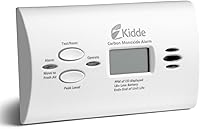
The Kidde Carbon Monoxide Detector with 2 AA backup batteries is a straightforward fit if you want outlet power plus outage coverage. It also has an 85 dB alarm, a Test-Hush button and Peak Level Memory.
The second Kidde Carbon Monoxide Detector also uses 2 AA backup batteries. Its rotating plug is designed for vertical or horizontal outlets, and it includes an LED warning light.
Siterlink combines AC plug-in power and a stated 10-year battery backup. Its foldable plug and travel-size design may appeal if you want to carry a detector between home and lodging.
The Kidde Carbon Monoxide Detector with a 9V backup battery also displays the CO level it senses. It can show “GAS” when it detects explosive gas, which may help if you want those alerts in one unit.
How do the power options compare?
Compare the primary power source, backup and outlet fit before choosing. The table summarizes the practical differences in these options.
| Product | Best for | Power | Alarm | Controls | Our score |
|---|---|---|---|---|---|
| Kidde Carbon Monoxide Detector | outlet access with backup | 120V outlet with 2 AA battery backup | 85 dB audible alarm | Test-Hush button and Peak Level Memory | 9.7 |
| Kidde Carbon Monoxide Detector | flexible outlet orientation | 120V outlet with 2 AA backup batteries | 85 dB audible alarm with LED warning light | 9.7 | |
| Siterlink Carbon Monoxide Detectors Plug | long-term battery backup | AC power with 10-year battery backup | 9.2 | ||
| Kidde Carbon Monoxide Detector | CO and gas alerts | 120V outlet with 9V battery backup | 9.1 |
A plug-in model may be a good match if the outlet is in the right place and you want battery backup for outages. If you prefer a detector that runs on batteries without needing an outlet, compare battery-operated Kidde carbon monoxide detectors and battery-powered carbon monoxide detectors.
For more plug-in options, see the guide to the best plug-in CO detector for a home. To understand how outlet-powered alarms detect CO and what to expect from them, read how plug-in carbon monoxide detectors work.
Which power source is right for your home?
Pick a plug-in detector with backup if a suitable outlet is available and outage operation matters; pick battery power when outlet access limits placement. Confirm that the exact model suits the location and maintenance routine you can manage.
If you're choosing a plug-in model, the first Kidde option pairs a 120V outlet with 2 AA backup batteries. The second adds a rotating plug and LED warning light, while Siterlink states a 10-year battery backup.
The Kidde model with a 9V backup also alerts for certain explosive gases. Compare the features you need against the installation location, then follow the manual for testing, battery care and replacement.
For this plug-in vs battery carbon monoxide detector choice, let outlet access guide the format and let outage needs guide backup. Choose a detector you can place and maintain according to its instructions.
Frequently asked questions
Does a plug-in carbon monoxide detector work during a power outage?
A plug-in detector works during an outage only if it has backup power and its backup battery is installed and working. Check the model's instructions for battery type and replacement guidance.
A plug-in detector without backup depends on the outlet, so consider that when choosing protection for your home.
Is a battery-powered carbon monoxide detector better?
A battery-powered detector can be easier to place where there is no suitable outlet, while a plug-in model avoids relying on batteries for its primary power. The better choice depends on outlet access, backup needs and the manufacturer's placement instructions.
Where should I put a carbon monoxide detector?
Follow the detector's manual and local fire-safety guidance for placement. Keep alarms near sleeping areas and on each level when the guidance calls for it, and don't assume a kitchen or ceiling is right for every model.
Use the instructions for the exact detector.
Do plug-in carbon monoxide detectors need batteries?
Some plug-in detectors include battery backup, and others may not. The models here use either 2 AA batteries or a 9V battery for backup, while Siterlink states a 10-year battery backup.
Check the exact model's instructions and replace backup batteries as directed.