Radon Element Classification: The Extended Answer
Radon is classified as a noble gas, placing it in Group 18 of the periodic table. This means it shares characteristics with other inert elements like helium and neon, making it stable and unreactive under normal conditions. Understanding this classification is key to grasping radon’s behavior.
While often thought of as a hazardous substance due to its radioactivity, radon’s noble gas status explains why it doesn’t chemically bond easily. Researchers have found that its elemental classification as a noble gas is the primary reason for its low reactivity. This contrasts with elements that readily form compounds.
- Radon is a noble gas.
- It belongs to Group 18 of the periodic table.
- This makes it generally unreactive.
- Its radioactive nature is separate from its chemical inertness.
Let’s dive deeper into what makes radon a noble gas and what that means for your home. Let’s dive deeper into how radon gets into your home and what that means for you.
You’ve learned that radon is a noble gas. That’s a big deal for how it behaves. But what does it *really* mean? Why is this classification important for understanding radon, especially when it comes to your home?
Understanding Radon’s Place on the Periodic Table
Radon sits pretty in Group 18 of the periodic table. This group is famously known as the noble gases. Think of helium in your party balloons or neon in those bright signs. They are all part of this special family. Radon shares their quiet nature.
The Noble Gas Family Tree
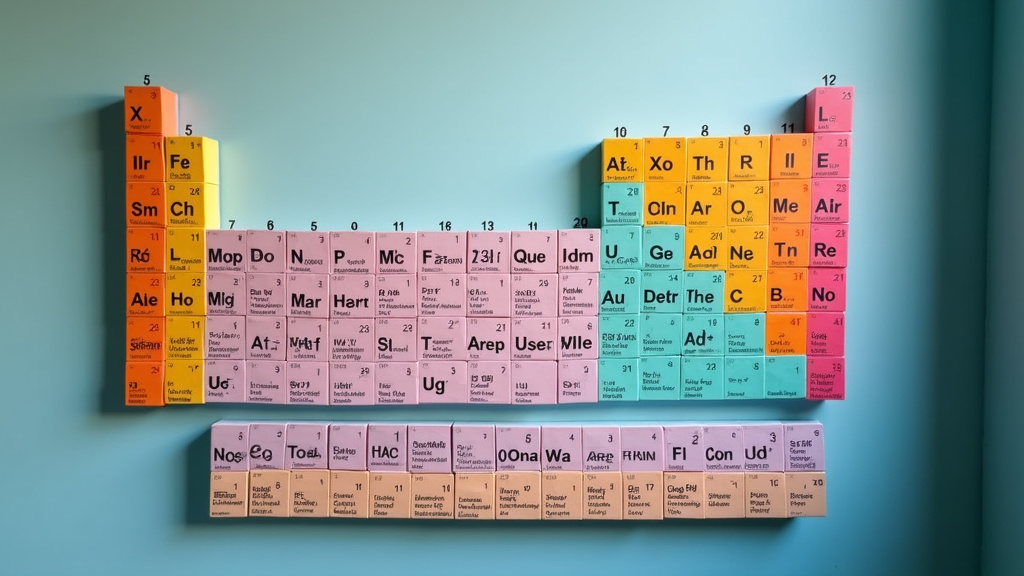
The periodic table is like a giant family photo of all the elements. Each group, or column, has members with similar traits. Group 18 includes Helium (He), Neon (Ne), Argon (Ar), Krypton (Kr), Xenon (Xe), and Radon (Rn). Radon is the heaviest member of this family.
Why “Noble”?
These elements are called “noble” because they are very stable. They don’t get into chemical arguments. They prefer to be left alone. This is because their outer electron shells are completely full. They have no real need to share, gain, or lose electrons to become stable. This makes them very unreactive under normal conditions.
Radon’s Chemical Independence
Because radon is a noble gas, it doesn’t easily form chemical bonds. It doesn’t readily join up with other elements to create compounds, unlike many other gases you might encounter. For instance, oxygen readily combines with hydrogen to form water (H2O). Radon, however, generally stays by itself.
Researchers have found that radon’s noble gas classification is the main reason for its low reactivity. This makes it different from elements that easily form compounds. Even under pressure or at high temperatures, radon shows very little chemical activity compared to its neighbors on the periodic table (National Research Council Canada).
Radon’s Behavior: Inertness vs. Radioactivity
It might seem strange. We hear about radon being dangerous, a health hazard. Yet, its element type tells us it’s unreactive. How can something so unreactive be so problematic? This is a common point of confusion, and it’s important to separate these two aspects of radon.
What Makes Radon a Health Concern?
The danger of radon doesn’t come from its chemical reactions. It comes from its radioactivity. Radon is an unstable element. Its atoms break down, or decay, over time. When they decay, they release tiny particles and energy. This process is called radioactive decay.
The key issue is that radon decays into other radioactive elements called radon daughters. These daughters can attach to dust particles in the air. If you breathe in these particles, they can get stuck in your lungs. Over time, this can damage lung tissue and increase the risk of lung cancer (U.S. Environmental Protection Agency).
The Decay Chain Explained
Radon-222, the most common isotope found in homes, has a half-life of about 3.8 days. This means half of it will decay in that time. It decays into a series of short-lived radioactive elements like Polonium-218, Lead-214, and Bismuth-214. These are the “daughters” that pose the main threat.
The fact that radon is a gas is also crucial to its danger. It can easily enter your home from the soil and rocks beneath it. Because it’s a gas, it can accumulate in indoor spaces, especially in lower levels like basements and crawl spaces.
Comparing Inertness and Radioactivity
Think of it like a very stable, quiet person who also happens to be a ticking time bomb. The “quiet” part is their personality (chemical inertness). The “ticking time bomb” part is their internal state (radioactivity). Radon’s noble gas status describes its outward personality—it doesn’t easily interact with others. Its radioactivity describes its internal nature—it’s unstable and breaking down.
Here’s a quick way to remember the difference:
| Characteristic | Description | Impact |
|---|---|---|
| Element Classification | Noble Gas (Group 18) | Generally unreactive, stable outer electron shell. Prefers to be alone. |
| Physical State | Gas at room temperature | Easily enters homes, can accumulate indoors. |
| Radioactivity | Unstable isotope (Rn-222) | Decays, releasing energy and radioactive particles. Poses a health risk when inhaled. |
Why Radon’s Classification Matters for You
Knowing that radon is a noble gas helps you understand why it behaves the way it does. It explains why you won’t find common household products that chemically react with radon. You can’t “neutralize” radon by mixing it with something else in a chemical sense, as you might with an acid and a base.
Implications for Radon Testing and Mitigation
The methods used to deal with radon are based on its physical properties, not chemical ones. Because radon is a gas and radioactive, the focus is on:
- Detection: Using devices that measure the radiation emitted by radon and its daughters.
- Ventilation: Removing radon gas from your home and replacing it with fresh air.
- Sealing: Blocking entry points where radon gas enters from the soil.
You won’t find “radon-neutralizing sprays” because that’s not how radon works. The scientific community and regulatory bodies, like the World Health Organization (WHO) and the Environmental Protection Agency (EPA), focus on measurement and mitigation strategies based on its gaseous and radioactive nature.
A Quick Checklist for Understanding Radon
Here are a few key takeaways to help you remember:
- Radon is a noble gas, part of Group 18.
- This means it’s generally unreactive.
- Its danger comes from being radioactive, not from chemical reactions.
- Radon gas can enter your home easily.
- Testing and mitigation focus on measuring and removing the gas.
- Its classification helps explain its behavior, but doesn’t remove its health risks.
Understanding these basics gives you a clearer picture of radon. It helps you see why certain testing and mitigation strategies are recommended by experts. You’re building a foundation of knowledge to protect your home and family.
Conclusion
You’ve learned that radon’s classification as a noble gas explains its unreactive nature. This chemical stability is separate from its radioactivity. The danger from radon comes from its decay into harmful particles, not from chemical reactions in your home. Understanding this distinction is key to effective protection. Don’t let confusion about its classification delay action. The most important next step is to test your home for radon.
Frequently Asked Questions
Is radon the only noble gas that can be a health hazard?
No, but radon is the only naturally occurring noble gas that is radioactive enough to pose a significant health risk in homes. Other noble gases like helium and neon are completely stable and non-radioactive, posing no health threat.
Can radon react with the air inside my house?
Because radon is a noble gas, it is very unlikely to react with the normal components of air like oxygen or nitrogen. Its danger comes from its radioactive decay, not from chemical reactions with your indoor air.
If radon is unreactive, why does it get into my home?
Radon enters your home because it is a gas produced naturally from the decay of uranium in soil and rock. As a gas, it can seep through cracks in your foundation and enter your living space. Its gaseous state allows it to move, even though it doesn’t easily form chemical bonds.
Does radon’s noble gas status mean it can be contained easily?
While radon itself is unreactive, its gaseous nature means it can spread. Containment efforts focus on blocking its entry points and ventilating the air, rather than chemically reacting with it. Effective mitigation prevents it from accumulating indoors.
Will scientific research ever find a way to make radon chemically stable?
Radon’s inherent radioactivity is a fundamental property of its atomic structure. While researchers can study and even create compounds under extreme conditions, making a radioactive isotope like radon-222 chemically stable permanently is not scientifically feasible.