Radon Meaning in English: The Longer Answer
Radon is a radioactive gas that occurs naturally. It has no color, smell, or taste. You can’t detect it without testing. Radon comes from the breakdown of uranium in soil, rock, and water. It can enter your home through cracks in the foundation or walls. This is important because long-term exposure is a leading cause of lung cancer for non-smokers.
Understanding what radon is helps protect your family’s health. Many homes have some level of radon. The amount can vary greatly depending on your location and home’s construction. Testing is the only way to know if your home has high levels. Then, you can take steps to reduce it.
- Radon is a colorless, odorless radioactive gas.
- It comes from natural uranium breakdown in the ground.
- Radon can seep into your home from below.
- Testing is the only way to detect it.
- High levels increase lung cancer risk.
Let’s get into the details of what radon really means for you and your home. We’ll cover how it gets in, why it’s a concern, and what you can do about it.
“`htmlSo, you’ve heard the word “radon” and maybe you’re wondering, “What exactly is this stuff, and why should I care?” It’s a great question, and understanding it is the first step in keeping your home and family safe. Think of radon like an invisible guest that can sneak into your house. We’ll break down what it means for you, where it comes from, and how to deal with it.
Understanding What Radon Gas Is All About
Radon is a natural element. It’s a radioactive gas that forms when uranium breaks down in soil, rock, and water. Uranium is found everywhere in the Earth’s crust. This means radon is present all over the world, though levels can vary greatly by location. The key thing to remember is that radon itself isn’t harmful when it’s deep underground. The trouble starts when it enters your home.
Where Does Radon Come From?
Imagine the Earth’s crust as a giant puzzle. Uranium atoms are tiny pieces within that puzzle. Over long periods, these uranium atoms decay, transforming into other elements. One of these elements is radium, and radium, in turn, decays into radon. This process is continuous and happens naturally, like a slow-motion chemical reaction happening beneath our feet.
The Uranium-to-Radon Chain
It’s a bit like a domino effect. Uranium atoms are stable for a very long time. But eventually, they transform. They become radium. Radium is less stable, and it quickly breaks down into radon gas. This radon gas then continues to decay, releasing radioactive particles. These particles are what can be harmful when inhaled.
Why Is Radon a Concern for Your Home?
Radon gas rises from the ground. It’s lighter than air, so it can move upward. If it encounters gaps or cracks in your home’s foundation, it can seep inside. Basements and lower levels are often where radon levels are highest. Think of your home’s foundation like a barrier. If that barrier has tiny openings, radon can find its way through.
Radon Enters Your Home
Your home is built on land that contains uranium. As that uranium decays, radon gas is produced in the soil and rock surrounding your foundation. This gas then travels through the soil. If it reaches your home’s foundation, it can enter through any openings. These include cracks in concrete, gaps around pipes, or even porous concrete blocks. Once inside, radon can accumulate, especially in poorly ventilated areas.
The Danger of Accumulation
Radon is a gas, and gases don’t usually stay in one place. However, in a sealed home, radon can build up to higher concentrations. This is particularly true in cooler months when windows and doors are kept closed. The longer you and your family are exposed to higher levels of radon in your home, the greater the potential health risks. It’s like a room slowly filling with something you don’t want.
Radon’s Health Impact: What You Need to Know
The primary health concern associated with radon exposure is lung cancer. The U.S. Environmental Protection Agency (EPA) and the World Health Organization (WHO) both identify radon as the second leading cause of lung cancer after smoking. For non-smokers, it’s actually the leading cause. This is a serious health risk that many people are unaware of.
How Radon Causes Lung Cancer
When radon gas enters your lungs, it decays into other radioactive elements. These elements can attach themselves to dust particles in the air. When you breathe in these particles, they can lodge in your lung tissue. The tiny radioactive particles then emit radiation that can damage lung cells. Over time, this damage can lead to the development of lung cancer. It’s a slow process, which is why long-term exposure is the main concern.
Radon and Smoking: A Dangerous Combination
If you smoke, your risk from radon exposure is significantly higher. Research shows that smokers exposed to radon have a much greater chance of developing lung cancer than non-smokers exposed to the same levels. The EPA estimates that the risk for smokers is 10 to 20 times higher than for non-smokers. This is because smoking already damages your lungs, making them more vulnerable to radon’s effects. It’s a double whammy that is best avoided.
Radon Testing: The Only Way to Know
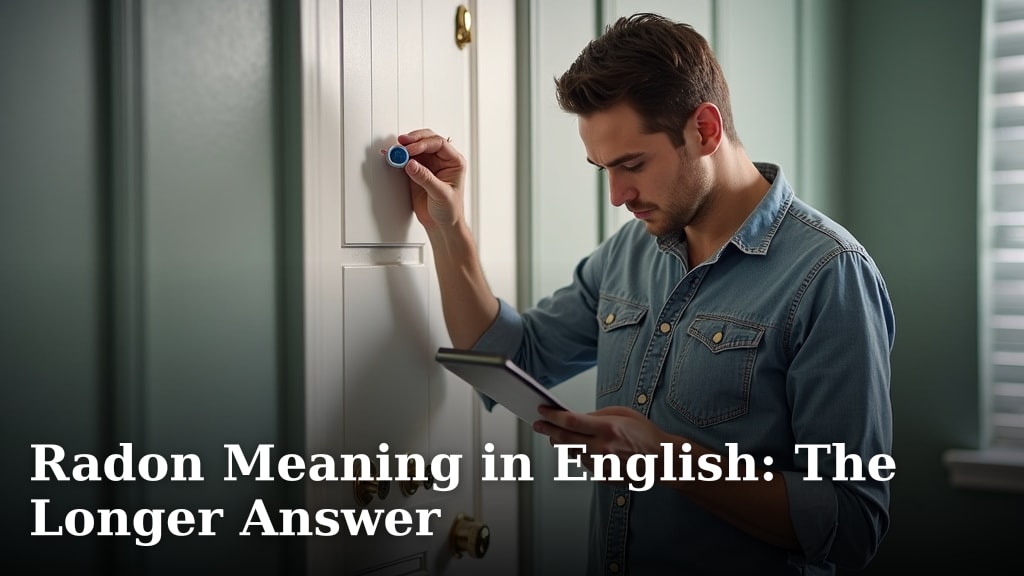
Since radon is invisible, odorless, and tasteless, you can’t detect it with your senses. The only reliable way to know if your home has elevated radon levels is to test for it. You can purchase DIY radon test kits or hire a qualified radon professional to perform the test. These tests measure the amount of radon gas in the air over a specific period.
DIY Test Kits Explained
You can find radon test kits at many hardware stores or online. These kits are relatively inexpensive and easy to use. You typically place the device in a lower level of your home, like a basement or crawl space, for a set number of days. After the testing period, you mail the device to a laboratory for analysis. The lab will then send you a report indicating your home’s radon levels. Be sure to follow the instructions precisely for accurate results.
Professional Testing Services
Hiring a radon professional offers a few advantages. They have specialized equipment and training. This can lead to more precise measurements, especially in complex home structures. They can also interpret the results for you and advise on next steps. While professional testing might cost more upfront, it can provide greater peace of mind.
Understanding Radon Levels and Action
Radon levels are measured in picocuries per liter of air (pCi/L). The EPA has set an action level of 4 pCi/L. This means that if your home tests at or above this level, you should consider taking steps to reduce the radon concentration. However, many experts and organizations, including the WHO, recommend that any level above 2 pCi/L should be mitigated if possible. There is no truly “safe” level of radon, so reducing it is always a good idea.
What the Numbers Mean for You
Think of it this way: a level of 4 pCi/L means that in one liter of air, there are, on average, 4 trillion radioactive decay events happening every minute. While that sounds like a lot, the actual risk depends on how long you’re exposed and other factors. The key takeaway is that higher numbers mean higher risk, and levels at or above 4 pCi/L warrant action. Even lower levels, like 2 pCi/L, are still a concern for long-term health.
Choosing a Mitigation System
If your test results show high radon levels, don’t panic. There are effective ways to reduce radon in your home. The most common and effective method is called sub-slab depressurization. This system uses a fan to draw radon gas from beneath your foundation and vent it safely outdoors. It creates a vacuum that prevents radon from entering your home. Other methods exist, but this is typically the most recommended approach.
Here’s a quick checklist to help you remember the important points about radon:
- Test your home: This is the only way to know your radon level.
- Understand your results: Know what the pCi/L number means.
- Action level is 4 pCi/L: Consider mitigation if your test is at or above this.
- Lower levels are also a concern: Even 2 pCi/L warrants consideration.
- Radon is a leading cause of lung cancer: Especially for non-smokers.
- Mitigation systems work: You can effectively lower radon levels.
Conclusion
You’ve learned that radon is a natural, invisible gas that can enter your home. Its presence is a serious health concern, as long-term exposure is a leading cause of lung cancer, especially for non-smokers. Understanding that radon comes from uranium decay in the ground and can seep through foundation cracks is key. The good news is that you are in control. Testing your home is the essential first step to understanding your risk. Don’t wait; schedule your radon test today to protect your family’s well-being.
Frequently Asked Questions
What is a “safe” level of radon?
There isn’t a truly “safe” level of radon. The EPA’s action level is 4 pCi/L, meaning you should consider mitigation above this. However, health organizations like the WHO suggest that levels above 2 pCi/L also carry risks. The goal is always to reduce radon levels as much as possible.
Can I test for radon myself?
Yes, you can. DIY radon test kits are readily available at hardware stores and online. They are generally easy to use, but it’s important to follow the instructions precisely for accurate results. You will typically mail the tested device to a lab for analysis.
How does radon get into my home if it’s a gas?
Radon gas rises from the natural breakdown of uranium in the soil and rock beneath your home. It can then travel through any small cracks, gaps, or pores in your foundation. Once inside, it can accumulate, especially in lower levels and areas with less ventilation.
If my home has high radon, what’s the first step?
The first step is not to panic, but to take action. If your radon test shows elevated levels (4 pCi/L or higher), you should consult with a qualified radon mitigation professional. They can assess your home and recommend the most effective system to reduce radon levels.
Does radon only affect older homes?
No, radon can affect any home, regardless of age or foundation type. Newer homes can have radon if built on uranium-rich soil, and well-sealed modern homes might trap radon more effectively. Testing is the only way to know if your specific home has a radon problem.