What Is a Long Term Radon Test? The Complete Answer
A long term radon test is a device used to measure radon gas levels in your home over an extended period, typically 90 days or more. This type of testing is considered the most accurate way to determine your home’s average radon exposure because it accounts for daily and seasonal fluctuations. Think of it as giving radon the time it needs to really show its face.
Unlike short term tests, which give a snapshot of radon levels over a few days, a long term test provides a more reliable picture of your home’s actual radon risk. This is especially important because radon levels can change throughout the year. Using a long term test ensures you’re not getting a misleading reading from a particularly good or bad few days.
- A long term radon test measures radon over 90+ days.
- It offers a more accurate, average reading.
- Short term tests are less reliable for long term exposure.
- Radon levels can fluctuate significantly.
- A long term test gives you the full story.
Below, we’ll walk you through everything you need to know about long term radon tests, why they matter for your family’s health, and what to do with the results.
Understanding Long Term Radon Testing for Your Home
You’re probably here because you want to know more about long term radon tests. That’s smart! Testing your home for radon gas is one of the most important things you can do for your family’s health. But not all tests are created equal. Understanding the difference between a quick check and a thorough investigation is key.
A long term radon test is designed to give you the most accurate picture of your home’s radon levels. It runs for a much longer period than a short term test. This means it captures a wider range of conditions. You get a much more reliable average reading this way.
Why Choose a Long Term Radon Test?
So, why is waiting longer the better approach for radon testing? It really comes down to how radon behaves. Radon is a naturally occurring radioactive gas. It seeps into homes from the ground. Its concentration in the air can change quite a bit.
Think of it like checking the weather. If you only look out the window for five minutes on a cloudy day, you might think it’s always gloomy. But if you observe for a whole week, you’ll see sunny days, rainy days, and windy days. You get a much better idea of the typical weather for that week. A long term radon test does the same for radon levels.
Understanding Radon Fluctuations
Radon levels aren’t static. They can change from hour to hour, day to day, and season to season. What factors cause these changes? Well, things like:
- Weather conditions: Wind, barometric pressure, and rain can all affect how radon moves from the soil into your home.
- Home occupancy: When your home is sealed up more (like at night or during winter), radon can build up.
- Ventilation: Opening windows and using exhaust fans can lower radon levels temporarily.
- Season: Many studies show that radon levels tend to be higher during the colder months when homes are more closed up for heating (Environmental Protection Agency – EPA).
Because of these variations, a short term test might catch your home on a day when radon levels are unusually low or high. This could lead to a false sense of security or unnecessary worry. A long term test smooths out these ups and downs. It provides an average reading over 90 days or more, giving you a truer representation of your home’s risk.
Accuracy is Key for Health Decisions
The goal of testing is to make an informed decision about your health and your home. If your radon levels are high, you’ll want to take action to fix it. If they are low, you can have peace of mind.
The EPA recommends taking action if indoor radon levels are 4 picocuries per liter (pCi/L) or higher. They also suggest considering mitigation if levels are between 2 and 4 pCi/L. These recommendations are based on the average exposure over time. A long term test is the best way to get that accurate average.
How Does a Long Term Radon Test Work?
The process for using a long term radon test is straightforward. You’ll typically receive a small device. It’s designed to be placed in a specific area of your home. Here’s what you can expect:
Types of Long Term Test Devices
There are a few common types of devices used for long term radon testing:
- Electret Ion Chamber Detectors: These are very common. They are small discs that collect electrically charged particles. They are very sensitive and can measure radon over long periods accurately.
- Activated Charcoal Detectors: These use activated charcoal to adsorb radon gas. They are usually sealed after the testing period for analysis.
- Alpha Track Detectors: These have a plastic film that records alpha particles from radon decay. The film is analyzed after the testing period.
Regardless of the type, the principle is the same: the device passively collects radon and its decay products over an extended time. Most consumer-grade long term tests are disposal devices. You place them, wait, and then mail them to a lab for results. Some professional radon testers might use more sophisticated, reusable equipment.
Where to Place Your Long Term Test
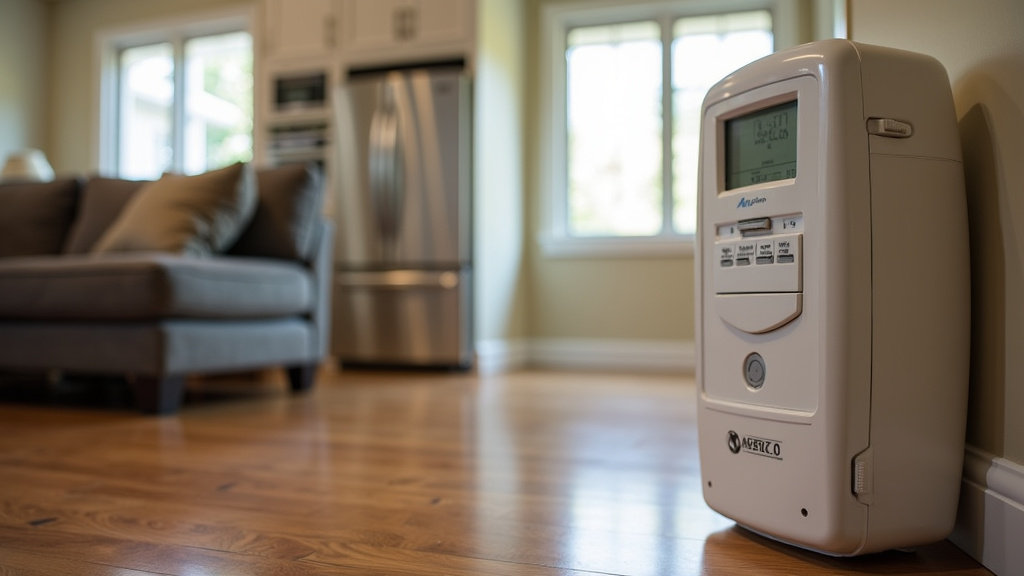
Where you place the test matters a lot for accurate results. The general rule is to place it in the lowest occupied level of your home. This is usually your basement if it’s finished or frequently used. If your home has a crawl space that is part of your living area, that might be the spot.
Why the lowest level? Because radon gas is heavy. It tends to settle in the lowest parts of a structure. You also want to place it in a room where people spend a lot of time. This could be a living room, a family room, or a bedroom.
Avoid placing the test:
- In bathrooms or kitchens (due to humidity and drafts from vents).
- Near open windows or doors.
- In areas with high air flow from fans or heating vents.
- In garages or attics that aren’t considered living space.
Follow the specific instructions that come with your test kit. The manufacturer’s guidance is crucial for getting valid results. For instance, some kits advise keeping the test away from areas with high humidity or direct sunlight.
The Testing Period: 90 Days or More
The magic number for long term testing is 90 days. This is the minimum recommended duration by many health organizations, including the EPA. Why 90 days? Because it allows the device to capture radon levels across different seasons and weather patterns.
Think about it: 90 days is about three months. This period will likely include a mix of warmer and cooler weather. It will likely include times when your windows are open and times when they are closed. This variety gives you a much more realistic average.
Some tests might even suggest testing for 6 months or a year for the most detailed picture. While 90 days is the standard for a good long term test, longer is generally better if accuracy is your absolute top priority. Make sure you don’t move the device during this time.
Comparing Long Term vs. Short Term Radon Tests
It’s helpful to see how long term tests stack up against their shorter-term cousins. This comparison makes it clear why the longer duration is usually preferred.
| Feature | Long Term Test | Short Term Test |
|---|---|---|
| Duration | 90 days or more | 2 to 90 days |
| Accuracy | High; provides a reliable average | Lower; snapshot in time, can be misleading |
| Radon Fluctuation | Accounts for daily, seasonal, and weather changes | Can miss significant fluctuations; may reflect only unusual conditions |
| Cost | Slightly higher initially, but provides better value for health decisions | Lower initial cost |
| Purpose | Best for initial testing, confirming results, and making long-term mitigation decisions | Useful for quick checks or when a short window of time is available |
A short term test can be useful as a screening tool. If a short term test shows very high levels, it’s a strong indicator you need to test long term. It might even prompt immediate action in extreme cases. However, if a short term test shows low levels, it doesn’t guarantee your home is safe year-round. You might still have higher levels during other seasons.
When a Short Term Test Might Be Okay
Are there ever times when a short term test is sufficient? For initial screening, yes. If you’re buying or selling a house and need results quickly, a short term test might be used. However, many experts recommend a follow-up long term test. This ensures the readings are representative.
If you are going to use a short term test, the EPA recommends using it for at least 48 hours. This gives you a better idea than just a few hours. But remember, it’s still just a snapshot. A long term test remains the gold standard for understanding your home’s true radon risk.
What to Do After Your Long Term Test is Complete
Once your 90 days (or more!) are up, it’s time to get your results. This is the exciting part where you get the information you need to protect your family.
Sending Your Test to the Lab
Most consumer long term test kits require you to mail the device to a laboratory for analysis. Make sure you do this promptly after the testing period is over. Some tests have a “use by” date. You also don’t want radon decay products to become unstable or for the detector to become saturated.
Carefully package the device according to the instructions. Include any required forms or information. You’ll usually get your results via email or mail within a few days to a couple of weeks after the lab receives your test.
Interpreting Your Radon Test Results
Your lab report will show your average radon concentration, typically measured in picocuries per liter (pCi/L). Here’s a quick guide:
- Below 2 pCi/L: This is generally considered a safe level. No immediate action is needed.
- Between 2 and 4 pCi/L: Many guidelines suggest considering mitigation at this level. It’s a good idea to re-test or explore options to reduce radon.
- 4 pCi/L or higher: The EPA recommends taking action to reduce radon levels. This is when professional radon mitigation is advised.
Remember, no level of radon is completely risk-free. However, the risk increases with higher concentrations and longer exposure times. Your long term test result gives you the data to make the best decision for your home and family.
Next Steps: Mitigation or Monitoring
If your results indicate high radon levels, don’t panic. Radon can be reduced. The most common solution is a radon mitigation system. This system typically involves a fan and vent pipes that draw radon from beneath your home and vent it safely outdoors.
A qualified radon mitigation professional can assess your home and design a system tailored to your specific needs. After mitigation, it’s recommended to test again to ensure the system is working effectively. Some homeowners also choose to do periodic long term testing even after mitigation to monitor levels.
If your levels are low, it’s still wise to test again every few years. Radon levels can change over time. A simple, periodic re-test can give you ongoing peace of mind.
Key Takeaways for Your Long Term Radon Test Journey
To sum up your long term radon testing adventure, keep these points in mind:
- Always use a long term test for the most accurate radon level readings.
- Ensure the test runs for at least 90 days.
- Place the test on the lowest occupied level of your home.
- Follow all manufacturer instructions carefully.
- If levels are high, consult a qualified radon mitigation professional.
- Re-test periodically to ensure your home remains safe.
Conclusion
You’ve learned that a long term radon test is your most reliable tool for understanding your home’s true radon exposure. By measuring over 90 days or more, it accounts for daily and seasonal changes, offering an accurate average. This detailed picture is essential for making informed decisions about your family’s health, especially when comparing results to EPA recommendations.
If your test shows elevated levels, don’t delay in exploring radon mitigation options. If levels are low, consider periodic re-testing every few years to maintain peace of mind. Taking this step to test your home is a smart move for long term safety.
Frequently Asked Questions
How do I know if my long term radon test is accurate?
Ensure you followed all manufacturer instructions for placement and duration. Sending your test to a reputable, licensed laboratory for analysis is also key to accurate results.
Can I use a long term test if I’m selling my house?
While a long term test provides the most accurate readings, it takes 90+ days. If time is short, a short term test might be used for an initial screening, but many experts recommend a follow-up long term test for a true picture.
What happens if my long term radon test results are high?
If your results are 4 pCi/L or higher, the EPA recommends taking action. You should contact a qualified radon mitigation professional to discuss installing a system to reduce radon levels in your home.
How often should I re-test my home for radon?
Even if your initial long term test shows low levels, it’s recommended to re-test every 2-5 years. Radon levels can change due to soil conditions, home modifications, or seasonal weather shifts.
Can I place a long term radon test in my bedroom?
Yes, if your bedroom is on the lowest occupied level of your home and you spend significant time there. Avoid placing the test in areas with high humidity, drafts, or open ventilation, like bathrooms or kitchens.