7 Best Combination Smoke and CO Detectors (November 2026)
The best combination smoke and carbon monoxide detectors include the First Alert BRK SC9120B-6 Hardwired Smoke for replacing hardwired alarms, the Kidde Smoke & Carbon Monoxide Detector for hardwired voice alerts, and the X-Sense Smoke Detector Carbon Monoxide Detector Combo for a standalone sealed battery.
On this page (5 sections)
The First Alert BRK SC9120B-6 is the best combination smoke and CO detector for replacing several hardwired alarms, with adapter plugs and battery backup. For a no-wiring location, choose a battery model; for alarms that sound together, consider an interconnected set.
A combination alarm detects smoke and carbon monoxide in one device, but models differ in power, sensors and alert signals. First decide whether you're replacing a wired alarm, adding coverage without wiring, or linking several rooms.
If you're comparing a combination unit with separate devices, read our guide to what a smoke alarm is and how it works and the difference between a smoke detector and carbon monoxide detector. Smoke detection and CO detection are separate functions, even when housed together.
Our picks at a glance
-
1
 Best for replacing hardwired alarms
First Alert BRK SC9120B-6 Hardwired Smoke
9.7/10 our score
See it on Amazon -
2
 Best for hardwired voice alerts
Kidde Smoke & Carbon Monoxide Detector
9.6/10 our score
See it on Amazon -
3
 Best for a standalone sealed battery
X-Sense Smoke Detector Carbon Monoxide Detector Combo
9.5/10 our score
See it on Amazon
- 4
 Check it
Kidde Smoke & Carbon Monoxide Detector
Best for no-wiring setup - 5
 Check it
X-Sense Wireless Combination Smoke and CO Detector
Best for wireless alarm groups - 6
 Check it
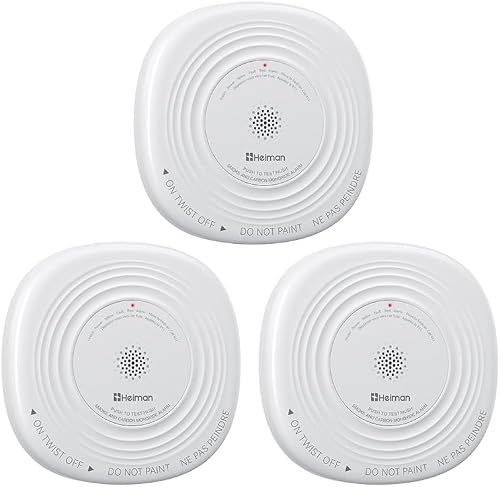
Heiman Smoke Detector Carbon Monoxide Detector Combo
Best for a compact sealed-battery alarm - 7
 Check it
SITERWELL Smoke & CO Detector Interconnected
Best for wired or wireless linking
How we chose combination smoke and CO detectors
We compared power options, sensor types, alert features, pack size and interconnection support against the needs of someone replacing separate smoke and CO units. Our score weighs specs, features and buyer feedback against what you're shopping for.
Check what your current alarms use before choosing a replacement. A hardwired alarm may need a compatible connector and wiring setup, while a battery-powered model can suit a new location where you don't want to run wires.
| Product | Best for | Power | Pack size | Smoke and CO alerts | Our score |
|---|---|---|---|---|---|
| First Alert BRK SC9120B-6 Hardwired Smoke | replacing hardwired alarms | Hardwired with battery backup | 6 alarms | Indicator light identifies hazard type | 9.7 |
| Kidde Smoke & Carbon Monoxide Detector | hardwired voice alerts | Hardwired with 2 AA backup batteries | 2 alarms | 9.6 | |
| X-Sense Smoke Detector Carbon Monoxide Detector Combo | a standalone sealed battery | 10-year sealed battery | 1 alarm | 9.5 | |
| Kidde Smoke & Carbon Monoxide Detector | no-wiring setup | 2 AA batteries | 1 alarm | 9.5 | |
| X-Sense Wireless Combination Smoke and CO Detector | wireless alarm groups | 10-year sealed battery | 3 alarms | 9.4 | |
| Heiman Smoke Detector Carbon Monoxide Detector Combo | a compact sealed-battery alarm | Sealed lithium battery | 1 alarm | 8.7 | |
| SITERWELL Smoke & CO Detector Interconnected | wired or wireless linking | AC with 2 AA backup batteries | 3 alarms | 8.5 |
The best combination smoke and CO detectors
The right combination smoke and CO detector depends on the wiring and alert setup you need. These picks cover hardwired replacements, standalone battery units and alarms designed to sound together.
First Alert BRK SC9120B-6 Hardwired Smoke: Best for replacing hardwired alarms
- Hardwired alarm with 9-volt battery backup
- Adapter plugs for replacement
- Smoke or CO indicator light
- Pack of 6
A 6-pack for buyers replacing several compatible hardwired alarms. Adapter plugs can avoid rewiring, and a light indicates whether smoke or CO triggered the alarm.
Pros
- Battery backup during power outages
- Adapter plugs included
- Light indicates smoke or CO
Cons
- Requires a compatible hardwired setup
- Uses 9-volt backup batteries
The First Alert BRK SC9120B-6 suits homes replacing multiple compatible hardwired alarms. The six-pack includes adapter plugs, so the change may not require rewiring when the plugs match your current setup.
A battery backup helps keep the alarm operating during a power outage. Indicator lights show whether smoke or carbon monoxide triggered an alarm, and one test button handles routine checks.
The alarm uses a 9-volt backup battery and has a side-load battery compartment. Its tamper-resistant locking brackets and universal mounting brackets are designed for installation, but confirm the alarm fits your existing mounting and wiring before starting.
This is the strongest fit when you need several hardwired units at once. It isn't the choice for a location without compatible wiring.
For more hardwired options, see our guide to the best hardwired combination smoke and CO detectors.
Kidde Smoke & Carbon Monoxide Detector: Best for hardwired voice alerts
- 120 VAC hardwired power with 2 AA backup batteries
- Voice alerts for fire, CO and low battery
- Interconnects with compatible Kidde devices
- Pack of 2
A two-pack for a compatible hardwired system where spoken alerts are useful. The voice alert names fire, carbon monoxide or low battery.
Pros
- Voice alerts identify the warning
- Backup batteries help during power failure
- Test-Hush feature
Cons
- Requires hardwiring
- Ionization smoke sensing
The Kidde KN-COSM-IBA is a two-pack hardwired alarm for buyers who want spoken warnings. It uses a 120 VAC power source with two AA battery backups and can interconnect with compatible Kidde devices.
Its voice alert names fire, carbon monoxide or low battery, which can make the warning easier to understand than a tone alone. The Test-Hush feature silences the unit for about 9 minutes.
Kidde uses ionization sensing for smoke detection in this model. If you're choosing by smoke sensor type, compare that detail with the photoelectric options in this roundup and your local guidance.
Choose this pair when you have a compatible hardwired system and want voice alerts. Review our Kidde smoke and carbon monoxide detector picks for more options from the brand.
X-Sense Smoke Detector Carbon Monoxide Detector Combo: Best for a standalone sealed battery
- 10-year sealed lithium battery
- Photoelectric smoke and electrochemical CO sensors
- No rewiring
- Standalone unit without wireless interconnection
A single alarm for a spot without existing wiring. Its sealed battery is designed for 10 years, and the unit does not support wireless interconnection.
Pros
- No wiring or routine battery replacement
- Photoelectric and electrochemical sensors
- Mounts on wall or ceiling
Cons
- Does not interconnect wirelessly
- Single alarm
The X-Sense SC07 is a standalone alarm for a room where you don't want to connect wiring. It combines a photoelectric smoke sensor with an electrochemical CO sensor and uses a sealed battery designed to last 10 years.
The sealed battery removes routine battery changes during its stated life, but the alarm is not wireless-interconnected. Don't choose it if you need several detectors to sound together.
Mounting hardware is included for a wall or ceiling. X-Sense says the model meets UL 217 and UL 2034 standards, and its product information describes an LCD display.
See our comparison of X-Sense smoke and CO detectors if you want to compare this standalone model with the brand's interconnected option.
Kidde Smoke & Carbon Monoxide Detector: Best for no-wiring setup
- Two AA batteries included
- Photoelectric smoke and electrochemical CO sensors
- 85 dB alarm with red LED
- 10-year limited warranty
A battery-powered Kidde option for a location where you don't want to add wiring. It has an 85 dB alarm, red LED and two included AA batteries.
Pros
- No wiring required
- Two AA batteries included
- Photoelectric smoke sensing
Cons
- Single alarm
- Requires battery replacement
The Kidde 30CUDR is a battery-powered combination alarm with no wiring required. Two AA batteries are included, and the alarm uses photoelectric smoke sensing and electrochemical CO sensing.
It gives an 85 dB alarm and red LED warning. Kidde says its sensing technology is designed to help reduce alarms from cooking or steam, while the alarm is tested to UL 217 10th Edition, UL 2034 5th Edition and FCC standards.
This model suits a single location where a battery-powered alarm is preferred. The batteries will need replacing, so it isn't the same low-maintenance setup as a sealed-battery alarm.
X-Sense Wireless Combination Smoke and CO Detector: Best for wireless alarm groups
- Wireless interconnection
- All interconnected alarms sound together
- 10-year sealed lithium battery
- 3-pack
A three-pack for rooms where linked alarms should sound together. It supports wireless interconnection, but does not use Wi-Fi or a base station.
Pros
- Interconnected alarms sound together
- Sealed battery is designed for 10 years
- Three alarms in a pack
Cons
- No Wi-Fi or base station support
- Check the 5.7 in bracket against existing ceiling marks
The X-Sense XP0H-WN is a three-pack for buyers who want linked alarms without adding Wi-Fi. When one alarm detects smoke or CO, the interconnected units sound together.
Each alarm has a 10-year sealed lithium battery, and the model supports wireless interconnection without a base station. Check the oversized 5.7 in mounting bracket against your ceiling before installing, especially if you're covering old screw holes.
Pick this set when simultaneous alerts across rooms matter. For other wireless options, compare the best wireless smoke and carbon monoxide detectors.
Heiman Smoke Detector Carbon Monoxide Detector Combo: Best for a compact sealed-battery alarm
- 10-year sealed lithium battery
- Photoelectric smoke and electrochemical CO sensors
- 85 dB alarm
- ETL listed to UL 217 10th Edition and UL 2034 5th Edition
A compact battery-powered option with a 10-year sealed battery. Its maker describes photoelectric smoke sensing, electrochemical CO sensing and an audible end-of-life alert.
Pros
- No wiring required
- 10-year sealed battery
- Test and silence button
Cons
- Single alarm
- Check placement guidance before mounting
The Heiman combo is a compact, battery-powered alarm with photoelectric smoke sensing and electrochemical CO sensing. Its dimensions are 4.76 x 4.76 x 1.38 in, and the sealed battery is designed for 10 years.
Heiman describes an audible end-of-life alert and a test/silence button. It is ETL listed to UL 217 10th Edition and UL 2034 5th Edition, according to Heiman's product information.
This single alarm can suit a location where you want a compact unit without wiring. Review placement instructions before mounting because the maker gives clearance guidance for cooking areas, vents and walls.
For models suited to that setting, see smoke detectors for kitchen areas.
SITERWELL Smoke & CO Detector Interconnected: Best for wired or wireless linking
- Hardwired with 2 AA battery backup
- Supports wired or wireless interconnection
- Voice alert
- Interconnects with up to 12 alarms
A three-alarm option for buyers who want to link rooms by wire or wirelessly. The alarms include AA battery backup and voice alerts.
Pros
- Wired or wireless interconnection
- Voice alert distinguishes smoke and CO
- AA battery backup
Cons
- Check compatibility with existing wiring
- Confirm the linking setup before installation
The SITERWELL alarm is a three-pack with hardwired power, AA battery backup and wired or wireless interconnection. The maker says up to 12 compatible alarms can be connected.
Its voice alert helps distinguish smoke from carbon monoxide, and the alarms can sound together when connected. SITERWELL also describes a self-check function and a 10-year sensor life.
This model suits a home where linked alerts are a priority and you can confirm the setup works with your existing wiring. Check the installation instructions and local requirements before replacing a hardwired alarm.
What should you check before buying a combination alarm?
Start with the power source, because a hardwired replacement and a battery-only installation solve different problems. Then check the sensor type, alert style and whether you want multiple alarms to sound together.
Is a hardwired combination smoke and CO detector right for you?
A hardwired combination alarm is a practical fit when the location already has compatible wiring. Models in this roundup include battery backup, but their connectors and interconnection rules differ, so verify compatibility before removing the old unit.
The First Alert pack includes adapter plugs, while the Kidde option uses 120 VAC and can connect with compatible Kidde devices. For another brand comparison, see the best First Alert smoke and carbon monoxide alarms.
Should you choose a battery-powered combination detector?
Choose a battery model when wiring isn't available or you want a simpler installation. Battery designs vary: some use replaceable AA batteries, while sealed-battery models are designed to run for 10 years.
A sealed battery can reduce routine battery changes, but you'll replace the alarm when it reaches end of life. Compare the best battery-powered smoke and carbon monoxide detectors and smoke and CO detectors with 10-year batteries before deciding.
Does a smoke and CO combination alarm detect carbon dioxide?
A smoke and CO alarm detects carbon monoxide, not carbon dioxide. CO and CO2 are different gases, and a combination smoke detector should not be treated as a CO2 monitor.
For a closer explanation, read whether combination smoke detectors detect CO or CO2. If you need another gas hazard device, see which detectors you need for smoke and gas.
Which smoke sensor type should you compare?
Photoelectric and ionization sensors respond to different smoke characteristics, and the products here use different sensor types. Compare the model's stated sensor and follow local fire-safety guidance when choosing an alarm.
The X-Sense SC07, Kidde 30CUDR and Heiman model pair photoelectric smoke sensing with electrochemical CO sensing. See our guide to the best photoelectric smoke and carbon monoxide alarms.
More guides on this topic
- Plug-In Smoke and Carbon Monoxide Detectors: What to Look For
Which combination smoke and CO detector should you choose?
Choose the First Alert six-pack if you're replacing compatible hardwired alarms in several locations. Pick the Kidde hardwired model for spoken alerts, the X-Sense XP0H-WN for linked wireless alarms, or a standalone battery unit where wiring isn't practical.
A combination unit covers two hazards in one device, but it does not replace a CO2 monitor or other gas detector. Before changing alarms, confirm the required locations, wiring compatibility and installation rules for your home, and learn whether smoke detectors detect carbon monoxide.
Our top 3 picks at a glance
-
1
Best for replacing hardwired alarms
First Alert BRK SC9120B-6 Hardwired Smoke
9.7/10 our score
See it on Amazon -
2
Best for hardwired voice alerts
Kidde Smoke & Carbon Monoxide Detector
9.6/10 our score
See it on Amazon -
3
Best for a standalone sealed battery
X-Sense Smoke Detector Carbon Monoxide Detector Combo
9.5/10 our score
See it on Amazon
Frequently asked questions
Should you choose a combination smoke and CO detector?
A combination alarm can save space and put smoke and carbon monoxide alerts in one unit. Choose one that suits your wiring, battery and interconnection needs, then confirm it meets local requirements and covers the locations required in your home.
A combined unit still needs correct placement and regular checks.
Does a combination smoke and CO detector detect both hazards?
Yes, a combination smoke and carbon monoxide detector is designed to detect both hazards. Smoke and CO sensing use different sensors, so the alarm may use separate lights or spoken alerts to identify which one triggered it.
Check the model's instructions to understand its signals.
Do combination alarms need hardwiring?
Some combination alarms are hardwired and use backup batteries, while others run on batteries without wiring. Pick the power type that fits the existing location and any local requirements.
If you're replacing a hardwired unit, confirm the new alarm's wiring and connector compatibility before installation.
Do wireless combination alarms use Wi-Fi?
Wireless interconnection doesn't always mean Wi-Fi. Some alarms create a link between compatible detectors so they sound together, without connecting to a router or app.
Check whether the model needs a base station, Wi-Fi or a compatible alarm group before buying.
Can one combination detector replace separate smoke and CO alarms?
It can replace separate units in some locations if the combination alarm is approved for the installation and provides the coverage required by local rules. A single unit may not cover every floor or room where alarms are needed.
Check your local requirements and the alarm's placement instructions before removing existing detectors.


