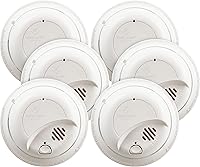
9 Best Smoke Detectors for Kitchen Areas (November 2026)
The best smoke detectors for kitchen areas include the BRK First Alert 9120BFF/ SMI100-AC Smoke Detector for hardwired replacement, the X-Sense Wireless Combination Smoke and CO Detector for wireless smoke and CO alerts, and the X-Sense Smoke Detector for cooking nuisance reduction.
On this page (6 sections)
The best smoke detector for a kitchen area is usually a photoelectric alarm positioned according to its manual and local code. For an alarm that may be less prone to everyday cooking nuisance alerts, consider the X-Sense SD2J0AX or Kidde 10SDR, while keeping required coverage in bedrooms and on every level.
A kitchen is a demanding place for an alarm because smoke and steam from ordinary cooking can trigger nuisance alerts. The goal is to reduce unwanted alarms while keeping the home protected, not to move or disable an alarm without checking the rules that apply to your home.
If you need a basic explanation of what is a smoke alarm, start with how smoke alarms detect danger and alert people. For a photoelectric-only shortlist, see our guide to the best photoelectric smoke detector for kitchen.
Our picks at a glance
-
1
 Best for hardwired replacement
BRK First Alert 9120BFF/ SMI100-AC Smoke Detector
9.7/10 our score
See it on Amazon -
2
 Best for wireless smoke and CO alerts
X-Sense Wireless Combination Smoke and CO Detector
9.6/10 our score
See it on Amazon -
3

- 4
 Check it
X-Sense Smoke Detector Carbon Monoxide Detector Combo
Best for standalone smoke and CO coverage - 5
 Best for compact photoelectric coverageCheck it
- 6
 Best for larger battery-powered alarmCheck it
- 7
 Check it
SITERWELL SITERLINK Smoke Detectors with 9V Replaceable
Best for replaceable-battery two-packs - 8
 Best for hardwired interconnectionCheck it
- 9
 Best for hardwired smoke and CO coverageCheck it
The best smoke detectors for kitchen areas
The strongest picks for kitchen-adjacent use pair relevant sensing features with a power setup that suits your home. We compared sensor type, cooking nuisance alarm features, backup power, interconnection and whether a unit also detects carbon monoxide.
BRK First Alert 9120BFF/ SMI100-AC Smoke Detector: Best for hardwired replacement
- Hardwired with 9V battery backup
- Ionization sensor
- Connects to compatible BRK and First Alert alarms
A hardwired option with battery backup for homes already using a compatible alarm circuit. Its ionization sensor is described for fast flaming fires, so consider placement carefully around cooking.
Pros
- Hardwired with battery backup
- Compatible alarms can sound together
- Test and silence button
Cons
- Ionization sensing may be a less suitable fit close to cooking
- Wiring may require a compatible existing setup
The BRK First Alert 9120BFF/ SMI100-AC is a hardwired alarm with a 9V battery backup for power outages. Its ionization sensor is designed to detect smoke from fast flaming fires, and it can connect with compatible BRK or First Alert alarms so the connected units sound together.
This model makes the most sense when you are replacing an existing hardwired alarm and need a compatible circuit. The test and silence button helps you check operation and mute a false alarm, but the ionization sensor may not be the first fit to consider close to a kitchen where cooking fumes are common.
First Alert says the alarm meets UL standards. Its mounting brackets are designed for installation, but existing wiring and compatibility matter, so check those before choosing a replacement.
X-Sense Wireless Combination Smoke and CO Detector: Best for wireless smoke and CO alerts
- Smoke and carbon monoxide detection
- Wireless interconnection
- 10-year sealed battery
This combination alarm wirelessly connects with compatible alarms so they sound together. It adds carbon monoxide detection, but it is not a Wi-Fi alarm and cannot connect to a base station.
Pros
- Smoke and CO in one unit
- Interconnected alerts
- Sealed battery
Cons
- No Wi-Fi or base-station connection
- Check compatibility and placement instructions
The X-Sense XP0H-WN combines smoke and carbon monoxide detection in one wireless-interconnected alarm. When one interconnected alarm detects smoke or CO, the connected alarms sound together.
Its sealed battery is designed to power the unit for 10 years. The model does not use Wi-Fi and cannot connect to a base station, so choose it for local alarm interconnection rather than app alerts.
The oversized mounting bracket may cover previous screw holes and ceiling marks, but measure the current mounting area first. Combination detection is useful only when the alarm is installed where its instructions and local rules permit both functions.
X-Sense Smoke Detector: Best for cooking nuisance reduction
- Photoelectric sensing
- 10-year sealed battery
- One-button test and silence
The photoelectric sensor is intended to help reduce unwanted alarms from everyday cooking fumes and steam. This standalone model does not use Wi-Fi, an app, a base station or wireless interconnection.
Pros
- Photoelectric sensor
- Sealed battery
- Test and hush button
Cons
- Standalone only
- Does not provide carbon monoxide detection
The X-Sense SD2J0AX is a standalone photoelectric smoke alarm with a sealed battery designed for up to 10 years. X-Sense says its photoelectric sensing helps reduce unwanted alarms from everyday cooking fumes and steam.
That feature makes it one of the closest matches for a kitchen-adjacent location in this group. Its one-button control supports self-tests and silence, but it doesn't connect to Wi-Fi, an app, a base station or other alarms.
Choose it when you want a simple battery-powered smoke alarm with photoelectric sensing. It does not detect carbon monoxide, so plan separate CO protection where required.
X-Sense Smoke Detector Carbon Monoxide Detector Combo: Best for standalone smoke and CO coverage
- Photoelectric smoke sensor
- Electrochemical CO sensor
- 10-year sealed battery
This standalone combination alarm pairs photoelectric smoke detection with electrochemical CO detection. It is a practical choice when you want both functions in one unit without rewiring.
Pros
- Smoke and CO detection
- Photoelectric smoke sensor
- No battery replacement during stated battery life
Cons
- No wireless interconnection, Wi-Fi or base-station connection
- Confirm placement for both hazards
The X-Sense SC07 is a standalone combination smoke and CO alarm with a photoelectric smoke sensor and electrochemical CO sensor. A sealed lithium battery powers it for 10 years, and installation doesn't require rewiring.
The smoke sensor is described as helping reduce cooking-related false alarms, while the CO sensor adds a second type of hazard detection. This is a practical choice if you want both functions in one location, but it doesn't support wireless interconnection, Wi-Fi or a base station.
Its display and mounting hardware make it a self-contained option for a suitable wall or ceiling location. Check the manual and local rules before relying on one combination unit to cover two hazards.
Kidde Compact Smoke Detector: Best for compact photoelectric coverage
- Photoelectric sensing
- Two AA batteries
- Test and hush button
Kidde says its sensing technology helps distinguish real smoke from everyday cooking or steam. The compact, battery-powered design avoids wiring, and the test and hush button can silence a nuisance alarm temporarily.
Pros
- Photoelectric sensor
- Battery-powered installation
- Cooking and steam false-alarm reduction feature
Cons
- Requires two AA batteries
- No CO detection
Kidde's compact 10SDR is a photoelectric smoke alarm powered by two AA batteries. Kidde says its sensing technology helps distinguish real smoke from everyday cooking or steam, and the alarm includes a test and hush button.
The compact size can help where a smaller alarm is preferred, and battery power avoids hardwiring. The hush function can temporarily silence a nuisance alarm, but it doesn't change whether the location is appropriate.
Choose this model if you want a standalone photoelectric alarm with replaceable AA batteries. It doesn't detect carbon monoxide or connect with other alarms based on the details available for this model.
Kidde Smoke Detector: Best for larger battery-powered alarm
- Photoelectric sensing
- Two AA batteries
- Test and hush button
This battery-powered photoelectric alarm includes a test and hush button. Kidde says its sensing technology helps reduce false alarms from everyday cooking or steam.
Pros
- Photoelectric sensor
- Test and hush button
- No hardwiring required
Cons
- Requires two AA batteries
- No CO detection
The Kidde 20SDR is a battery-powered photoelectric alarm with two AA batteries and a test and hush button. Kidde says its sensing technology helps reduce false alarms caused by everyday cooking or steam.
It offers the same core kitchen-adjacent advantages as the compact Kidde: photoelectric sensing and a hush control. This model is larger than the 10SDR, so compare the stated dimensions with your preferred installation spot.
It is a straightforward choice when you want a battery-powered smoke alarm without hardwiring. It doesn't include CO detection, so plan for a separate CO alarm if your home needs one.
SITERWELL SITERLINK Smoke Detectors with 9V Replaceable: Best for replaceable-battery two-packs
- Photoelectric sensor
- Replaceable 9V battery
- Two alarms
The two-alarm pack uses photoelectric sensors and replaceable batteries. It includes a test and silence button, plus mounting hardware and magnetic pads.
Pros
- Two alarms in the pack
- Replaceable battery
- Photoelectric sensing
Cons
- No CO detection
- Avoid damp, drafty or covered locations
The SITERWELL SITERLINK pack includes two photoelectric smoke alarms with replaceable batteries. Each has a test and silence button, and the pack includes screws, anchors, mounting brackets and magnetic pads.
The maker describes dual light wave detection and says the alarms can compensate for changes in temperature, humidity and dust. The stated installation guidance says to avoid damp, drafty and covered areas, which is relevant when choosing a kitchen-adjacent position.
This is the only two-alarm pack among these picks, which can help when you need coverage in more than one suitable spot. It detects smoke only, so it doesn't replace a carbon monoxide alarm.
Kidde Smoke Detector: Best for hardwired interconnection
- 120V hardwired power
- Two AA backup batteries
- Interconnect capability
This hardwired alarm includes AA battery backup and can connect with other Kidde alarms. Kidde says its sensing technology helps reduce false alarms from cooking and steam.
Pros
- Hardwired with battery backup
- Interconnect capability
- Photoelectric sensor
Cons
- Requires compatible wiring
- No CO detection
Kidde's 20SAR is a hardwired photoelectric smoke alarm with two AA backup batteries. It can interconnect with other Kidde alarms, helping connected units sound together when one detects danger.
Kidde says its sensing technology helps reduce false alarms from cooking or steam. That feature may make it worth comparing for an existing hardwired circuit, though you should verify wiring and compatibility before replacing an alarm.
This model adds backup power and interconnection while keeping smoke detection separate from CO detection. Add a compatible CO alarm if your home requires carbon monoxide coverage.
Kidde Smoke & CO Detector: Best for hardwired smoke and CO coverage
- Smoke and CO detection
- 120V hardwired power
- 10-year battery backup
This hardwired combination alarm adds carbon monoxide detection and a built-in 10-year backup battery. It can interconnect with other Kidde alarms, subject to model-specific requirements.
Pros
- Smoke and CO detection
- Battery backup
- Interconnect capability
Cons
- Requires compatible wiring
- Check interconnection requirements
The Kidde 30CUA10 combines smoke and CO detection in a hardwired alarm with a built-in 10-year battery backup. It can interconnect with other Kidde alarms, subject to the requirements for each model.
Kidde says its sensing technology helps reduce nuisance alarms from everyday cooking or steam. The alarm uses photoelectric smoke and electrochemical CO sensors, so it brings both functions into one hardwired unit.
Choose it if the existing wiring and interconnection setup are compatible and you want smoke and CO coverage together. Check the manual for placement and compatibility before installation.
How to choose a smoke detector near cooking
A photoelectric alarm is a sensible feature to compare near cooking because several of the listed models specifically describe reduced nuisance alarms from cooking or steam. That does not mean any alarm can be placed anywhere in the kitchen or that nuisance alarms can be ignored.
First, decide whether you need a standalone alarm or an interconnected system. A standalone alarm alerts locally, while compatible interconnected alarms can alert people elsewhere in the home when one unit detects danger.
Next, choose the power type that fits your home. Battery models avoid wiring, while hardwired alarms may suit an existing circuit and can include backup power; replacements must match the wiring and interconnection requirements.
If you want help deciding where to mount a smoke detector, use the instructions for the exact alarm and check local fire code. Avoid treating one general distance as a rule for every kitchen layout.
Where should a kitchen area smoke detector go?
A smoke alarm should go where its instructions and local code require, with placement that accounts for cooking fumes and steam. Some homes may use an alarm outside the kitchen rather than directly over cooking, but the permitted location depends on the home and applicable rules.
Keep required alarms in each bedroom and on every level. The BRK First Alert model's instructions also call for an alarm on each level and in each bedroom, but verify current local requirements and the instructions for the model you choose.
For a fuller placement discussion, see where to mount a smoke detector. If you're unsure about the rules for your home, our guide answers is a smoke detector required in a kitchen.
Photoelectric or ionization near cooking?
Photoelectric sensing is worth comparing when nuisance alarms from cooking are a concern. The X-Sense SD2J0AX and the Kidde models here describe photoelectric sensing and features intended to help reduce cooking or steam alarms.
Ionization sensing is another smoke detection approach. The BRK First Alert 9120BFF/ SMI100-AC uses an ionization sensor intended for fast flaming fires, so weigh that sensor type alongside the intended location and your existing alarm system.
Our guide to the best photoelectric smoke alarm with 10 year battery compares another useful feature combination. A battery life claim doesn't change where an alarm should be mounted or how often you should test it.
What else should you check before choosing?
Check the exact model number, power source and connection type before buying. Similar names can refer to standalone, wireless or hardwired models with different capabilities.
Confirm whether you need carbon monoxide detection in the same unit. The X-Sense SC07, XP0H-WN and Kidde 30CUA10 combine smoke and CO detection, while the other picks here are smoke-only alarms.
For broader selection advice, read Smoke Alarms: The Complete Buying Guide. If your main concern is choosing a detector specifically for the kitchen, see which smoke detector should you use near a kitchen.
Which smoke detector is the best fit for your kitchen area?
Choose the X-Sense SD2J0AX if you want a standalone photoelectric alarm with a sealed battery and a cooking nuisance alarm reduction feature. Pick the Kidde 10SDR if you prefer a compact photoelectric unit with AA batteries and a hush button.
Choose a combination alarm if you need smoke and CO detection in one device, and a hardwired model if your existing circuit and interconnection system support it. For the kitchen area, follow the model's placement instructions and local code first, then match sensing type, power and connection features to your home.
Our score weighs specs, features and buyer feedback against what you're shopping for.
Our top 3 picks at a glance
-
1
Best for hardwired replacement
BRK First Alert 9120BFF/ SMI100-AC Smoke Detector
9.7/10 our score
See it on Amazon -
2
Best for wireless smoke and CO alerts
X-Sense Wireless Combination Smoke and CO Detector
9.6/10 our score
See it on Amazon -
3
Frequently asked questions
What type of smoke detector is best near a kitchen?
A photoelectric alarm is often a useful choice near cooking areas because some models are designed to reduce nuisance alarms from everyday cooking fumes and steam. Follow the alarm manual and local fire code for placement, and don't remove or disable an alarm that sounds during cooking.
If nuisance alarms continue, review the location and ventilation before changing the alarm type.
How far should a smoke detector be from a kitchen?
There isn't one safe distance for every kitchen or alarm. Follow the alarm's instructions and local code, which may set specific placement rules based on the cooking appliance, ceiling shape and room layout.
Don't place an alarm where the manual says cooking fumes or steam may trigger it, and keep required alarms in bedrooms and on each level.
Can I put a smoke detector inside a kitchen?
Some homes have a smoke alarm in the kitchen, but placement depends on local code and the alarm's instructions. Cooking fumes and steam can cause nuisance alarms, so a location just outside the kitchen may be more suitable where allowed.
Never remove required protection to stop nuisance alerts.
Should a kitchen smoke alarm also detect carbon monoxide?
A combination alarm can detect both smoke and carbon monoxide, but the right location for each hazard may differ. Follow the manual and local rules for placement, and make sure the home has the required number of smoke and CO alarms.
A combination unit doesn't replace alarms needed in other rooms or on other levels.
How can I stop cooking from setting off a smoke alarm?
Use ventilation while cooking, keep the alarm clear of cooking fumes where placement rules allow, and use its hush button only as the manual directs. If the alarm keeps sounding, check whether it is too close to the cooking area or needs cleaning or replacement.
Never remove its battery or leave it disabled.