9 Best Photoelectric Smoke Detectors for Kitchens (November 2026)
The best photoelectric smoke detectors for kitchens include the X-Sense Interconnected Smoke Detector for whole-home wireless alerts, the Siterlink Hardwired Interconnected Smoke Detectors for wired alarm networks, and the SITERWELL Smoke Detector for multi-room battery coverage.
On this page (5 sections)
The best photoelectric smoke detector for kitchen use is the X-Sense Interconnected Smoke Detector when you want linked alerts, a sealed 10-year battery and sensing designed to help reduce cooking nuisance alarms. Choose the Siterlink hardwired pack for an existing wired system, or the X-Sense standalone alarm for one simple location.
Photoelectric alarms are often considered for kitchen-adjacent areas because they can be less prone to unwanted alerts from everyday cooking fumes and steam than some other sensing approaches. Placement still matters.
A detector installed too close to a cooktop may sound often, regardless of sensor type.
Read our guide to what is a smoke alarm before choosing between photoelectric, combination and other alarm types. For exact room placement, see where to mount a smoke detector.
Our picks at a glance
-
1
 Best for whole-home wireless alerts
X-Sense Interconnected Smoke Detector
9.7/10 our score
See it on Amazon -
2
 Best for wired alarm networks
Siterlink Hardwired Interconnected Smoke Detectors
9.7/10 our score
See it on Amazon -
3

The best photoelectric smoke detector for kitchen use
The best photoelectric smoke detector for kitchen use depends on your power setup and how far the alarm is from sleeping areas. The X-Sense interconnected model is the strongest overall pick here because it combines photoelectric sensing, wireless linking and a sealed 10-year battery.
We compared sensor type, power source, interconnection, maintenance, included quantity and the features that matter around cooking. Our score weighs specs, features and buyer feedback against what you're shopping for.
| Product | Best for | Sensor | Power | Pack | Our score |
|---|---|---|---|---|---|
| X-Sense Interconnected Smoke Detector | whole-home wireless alerts | Photoelectric | Sealed 10-year lithium battery | 6 alarms | 9.7 |
| Siterlink Hardwired Interconnected Smoke Detectors | wired alarm networks | Photoelectric | 120V AC with 9V backup | 6 alarms | 9.7 |
| SITERWELL Smoke Detector | multi-room battery coverage | Photoelectric | Replaceable 9V battery | 5 alarms | 9.6 |
| X-Sense Smoke Detector | a simple standalone alarm | Photoelectric | Sealed 10-year lithium battery | 1 alarm | 9.5 |
| Kidde Compact Smoke Detector | small spaces | 2 AA batteries | 9.2 | ||
| SITERWELL Smoke Detector | hardwired single-room replacement | Photoelectric | 120V AC with 9V backup | 1 alarm | 9.2 |
| Kidde Smoke Detector | a standard home alarm | 2 AA batteries | 9.0 | ||
| Heiman Smoke Detector | a very compact detector | Replaceable CR123A lithium battery | 8.5 | ||
| Heiman Smoke Detector Carbon Monoxide Detector Combo | smoke and CO coverage | 10-year sealed battery | 8.0 |
Product details and best uses
These photoelectric smoke detectors serve different homes. Start with the power and alert system you already have, then compare battery maintenance, pack size and whether you need smoke-only or smoke-and-carbon-monoxide coverage.
X-Sense Interconnected Smoke Detector: Best for whole-home wireless alerts
- Sealed 10-year lithium battery
- Wireless interconnection
- Up to 18 compatible Link+ alarms
- 6-pack
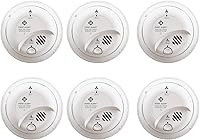
This 6-pack suits homes that need one alarm to sound throughout multiple rooms. Photoelectric sensing, a sealed battery and wireless interconnection reduce routine maintenance and help limit cooking-related nuisance alarms.
Pros
- Wireless alarm linking
- 10-year built-in battery
- No wiring required
Cons
- Requires compatible Link+ alarms for expansion
- More units than a single-room setup needs
The X-Sense Interconnected Smoke Detector is the best fit for a larger home where an alarm in one room should alert people elsewhere. When one unit detects smoke, the connected alarms sound together, which can help alerts reach bedrooms, hallways, living areas and multiple floors.
Its sealed lithium battery provides up to 10 years of power, so you won't need routine battery replacements during that operating life. Photoelectric sensing is designed to help reduce unwanted alarms from everyday cooking fumes and steam.
You can connect up to 18 compatible X-Sense Link+ alarms, including SC07-W, SC01-W and SC06-W. The 6-pack includes 6 SD19-W alarms, a user manual, and 12 screws and anchor plugs.
Choose this model when you want wireless whole-home coverage without running alarm wiring. Confirm that any additional units are compatible with the Link+ system before expanding.
Siterlink Hardwired Interconnected Smoke Detectors: Best for wired alarm networks
- 120V AC hardwired power
- 9V battery backup
- Up to 12 interconnected alarms
- 6-pack
This 6-pack fits homes with existing 120V alarm wiring and a need for linked alerts. The 9V backup keeps the alarms operating during a power outage.
Pros
- Hardwired interconnection
- Battery backup
- Test and silence button
Cons
- Needs compatible household wiring
- Installation is less simple than a battery-only alarm
The Siterlink Hardwired Interconnected Smoke Detectors suit a home that already has 120V AC alarm wiring. Each alarm also uses a 9V battery backup, so the system can continue operating during a power outage.
The photoelectric sensors are intended for smoke detection, and the alarms can connect up to 12 devices through hardwired interconnection. When one alarm detects smoke, the others sound the same signal, although the other units do not flash their red LEDs.
A test button supports routine checks, and holding it for 2 seconds can silence an alarm when there is no fire hazard. The 6-pack includes the GS562A alarms, but wiring work may require a qualified person if the existing setup isn't compatible.
Pick this pack for a wired alarm network. A battery-only model is easier when you don't already have alarm wiring in place.
SITERWELL Smoke Detector: Best for multi-room battery coverage
- Replaceable 9V battery
- Photoelectric sensor
- 5-pack
- Wall or ceiling mounting
The 5-pack gives battery-powered coverage across several rooms without hardwiring. Its photoelectric sensor is suited to slow-smoldering smoke, while the replaceable battery makes maintenance familiar.
Pros
- Five alarms in one pack
- Replaceable battery
- Mounting hardware included
Cons
- Requires battery changes
- No interconnection feature stated
The SITERWELL Smoke Detector is a practical choice for multi-room battery coverage. The 5-pack uses replaceable 9V batteries, so you can renew power without replacing each alarm.
Its photoelectric sensor is designed to detect smoke from slow-smoldering fires. A test and mute button supports weekly checks, and a low-battery signal tells you when a battery change is needed.
Each alarm measures 3.93 in by 3.93 in by 1.37 in and can mount on a wall or ceiling. The package includes 5 alarms, 5 batteries, mounting hardware, a user manual and a magnetic fastening kit.
Choose this set when you want several alarms without hardwiring. The trade-off is ongoing battery care, so set a reminder to check the alarms and replace batteries when indicated.
X-Sense Smoke Detector: Best for a simple standalone alarm

- Sealed 10-year lithium battery
- Standalone operation
- One-button hush and self-test
- No-wire installation
This single alarm suits a room that needs independent protection without wiring, Wi-Fi or linked units. Its sealed battery reduces routine replacement work.
Pros
- 10-year battery
- Compact standalone setup
- Hush and self-test button
Cons
- Does not interconnect
- One alarm covers one planned location
The X-Sense Smoke Detector is the best simple standalone option in this group. Its sealed lithium battery lasts up to 10 years, while the one-button control supports self-tests and temporary silencing.
The SD2J0AX uses photoelectric sensing to help reduce nuisance alarms caused by everyday cooking fumes and steam. It installs without wiring and includes the alarm, mounting screws, anchor plugs and a user manual.
This model works independently. It does not use Wi-Fi, app alerts, a base station or wireless interconnection, so it fits a room where a local alarm is all you need.
Choose it for a bedroom, hallway or nearby room that needs one independent detector. If you want several alarms to sound together, select the X-Sense SD19-W instead.
Kidde Compact Smoke Detector: Best for small spaces

- Two included AA batteries
- 85 dB alarm
- Red LED light
- 10-year limited warranty
The compact 10SDR fits buyers who want a small battery-powered alarm with a red visual indicator. Its AA batteries and no-wiring setup make replacement straightforward.
Pros
- Compact design
- Included AA batteries
- Test and hush function
Cons
- Batteries require future replacement
- Standalone operation
The Kidde Compact Smoke Detector suits small spaces where you want a battery-powered photoelectric alarm with a compact body. The 10SDR measures 1.88 in deep by 4 in wide by 4 in high.
Two included AA batteries power the alarm, and the red LED gives a visual warning alongside the 85 dB audible alarm. Kidde's sensing design is intended to help distinguish real smoke from everyday cooking or steam and reduce unwanted alarms.
The alarm includes mounting hardware and a user guide. Its test and hush controls make routine checks and temporary silencing straightforward, while the 10-year limited warranty applies to the alarm.
Pick this model when a compact 4 in wide body fits your planned location. It is a standalone alarm, so it does not replace a linked system in a larger home.
SITERWELL Smoke Detector: Best for hardwired single-room replacement

- 120V AC hardwired power
- Replaceable 9V backup battery
- Up to 12 interconnected alarms
- 85 dB alarm
This single GS562A-EAN alarm is aimed at replacing or extending a compatible hardwired system. Its backup battery supports operation during outages, while interconnection can link up to 12 alarms.
Pros
- Hardwired and backup power
- Interconnection support
- Test and silence button
Cons
- Needs compatible wiring
- Backup battery needs replacement
The SITERWELL Smoke Detector is aimed at a single location in a compatible hardwired alarm system. It uses 120V AC power with a replaceable 9V backup battery for continued operation during outages.
This GS562A-EAN model supports hardwired interconnection with up to 12 smoke detectors. When one alarm activates, the connected units sound together, and the 85 dB alarm and red LED provide audio and visual warnings.
A test and silence button supports daily self-checks and noise suppression. The alarm also gives low-battery and fault reminders through chirps and LED flashes.
Choose it when you need one replacement or extension unit rather than a full 6-pack. Confirm that the wiring and other alarms use a compatible system before installation.
Kidde Smoke Detector: Best for a standard home alarm

- Two included AA batteries
- 85 dB alarm
- Red LED light
- 10-year limited warranty
The 20SDR offers a familiar battery-powered setup with a larger 5 in by 5 in body than Kidde's compact model. Choose it when a standard home alarm format fits your planned location.
Pros
- AA battery operation
- Test and hush button
- LED status light
Cons
- Batteries require future replacement
- Larger than the Kidde compact model
The Kidde Smoke Detector is a standard home alarm with a larger body than Kidde's compact 10SDR. The 20SDR measures 1.88 in deep by 5 in wide by 5 in high.
Two included AA batteries provide power without household wiring. The 85 dB alarm and red LED provide audible and visual warnings, while the test and hush button supports routine checks and temporary silencing.
Kidde uses photoelectric sensing and says its technology helps reduce false alarms from everyday cooking or steam. The alarm meets UL 217 10th Edition and FCC standards, and Kidde backs the alarm with a 10-year limited warranty.
Pick it when the 5 in by 5 in format fits your ceiling or wall location and you prefer common AA batteries. Choose the compact Kidde instead when space is tighter.
Heiman Smoke Detector: Best for a very compact detector

- Dual-wavelength photoelectric sensing
- Included CR123A battery
- Magnetic adhesive mounting plate
- Up to 10-year product life
The Heiman S1-S is a small option for buyers who want a low-profile detector. Its dual-wavelength sensing, magnetic mounting plate and included CR123A battery simplify placement in compact indoor areas.
Pros
- Small low-profile body
- Magnetic mounting option
- Audible and visual alerts
Cons
- Uses a less common CR123A battery
- No interconnection stated
The Heiman Smoke Detector is the most compact smoke-only option in this roundup. Its tapered body is about 2.75 in across and 1.45 in high, which helps it fit areas where a larger alarm would be visually or physically awkward.
Its dual-wavelength photoelectric sensing uses red-light and infrared detection. The alarm includes an interchangeable CR123A lithium battery, a magnetic self-adhesive mounting plate, a screw and an anchor plug.
A one-touch test and silence button supports routine checks, while the audible alarm is at least 85 dB at 10 ft and the LED provides a visual status signal. The housing uses flame-retardant ABS+PC material.
Choose it for a low-profile indoor location, such as a hallway, apartment or bedroom. Check the battery type before buying because CR123A cells are less common than AA or 9V batteries.
Heiman Smoke Detector Carbon Monoxide Detector Combo: Best for smoke and CO coverage

- Photoelectric smoke and electrochemical CO sensors
- 10-year sealed battery
- 85 dB alarm
- 10-year limited warranty
This combo alarm suits rooms where one device needs to monitor both smoke and carbon monoxide. It adds CO coverage but is larger and more specialized than a smoke-only detector.
Pros
- Smoke and CO monitoring
- Sealed 10-year battery
- Alarm memory and diagnostics
Cons
- Not a smoke-only alarm
- One unit covers one planned location
The Heiman Smoke Detector Carbon Monoxide Detector Combo is the right choice when one alarm needs to monitor both smoke and carbon monoxide. It combines a photoelectric smoke sensor with an electrochemical carbon monoxide sensor.
Its sealed battery is designed to last 10 years, and the 85 dB alarm uses a flashing LED for audio-visual warnings. Alarm memory flashes the red LED every 20 seconds after an alert, while low-battery and end-of-life warnings support routine awareness.
The ABS+PC housing has a UL94 V-0 rating, and the package includes the smoke and CO alarm, mounting kit and user manual. Heiman provides a 10-year limited warranty for non-artificial damage.
Choose this combo unit for an open kitchen, living room, bedroom or hallway where CO coverage is also useful. It is larger than the Heiman smoke-only detector and does not replace a linked multi-alarm system.
How to choose a photoelectric smoke detector near a kitchen
The best photoelectric smoke detector for kitchen areas starts with correct placement, not the loudest alarm. A detector should protect the nearby route to bedrooms while staying far enough from normal cooking activity to limit nuisance alarms.
For a broader comparison, read our guide to the best smoke detector for kitchen area. If you're unsure about local rules, see is a smoke detector required in a kitchen.
Photoelectric sensing and cooking nuisance alarms
Photoelectric sensing is a useful feature to look for near a kitchen because several products here describe help with cooking-fume or steam nuisance alarms. That does not mean you should place an alarm directly above a cooktop or beside a toaster.
Steam, smoke and dust can all affect alarms. Keep the detector clean according to its instructions, use the hush button only for a temporary nuisance event, and never disable an alarm because it sounds inconvenient.
Battery, hardwired or interconnected power
Choose a sealed 10-year battery when you want fewer battery changes. X-Sense offers that setup in both a wireless interconnected 6-pack and a standalone 1-pack, while the Heiman combo also uses a sealed 10-year battery.
Choose replaceable AA, 9V or CR123A power when you prefer to renew the battery rather than replace the alarm. Kidde uses AA batteries, SITERWELL uses 9V batteries, and Heiman's compact smoke alarm uses a CR123A battery.
Hardwired alarms make the most sense when your home already has compatible 120V AC wiring. The Siterlink and SITERWELL hardwired models also use backup batteries, but installation and interconnection should match the existing system.
How many alarms do you need?
A single alarm may suit one planned room, but larger homes often need coverage along escape routes, near sleeping areas and on multiple floors. Interconnected models can make a single detection event easier to hear throughout the home.
The X-Sense wireless system can connect up to 18 compatible Link+ alarms. The Siterlink and SITERWELL wired models support up to 12 compatible devices, while the standalone models here do not state an interconnection feature.
Smoke-only or smoke-and-carbon-monoxide coverage
A smoke-only alarm is enough when you are adding smoke protection to a location that already has suitable carbon monoxide coverage. The Heiman combo is more useful when you want both functions in one device.
A combination alarm does not mean every room has the same placement needs. Follow the manual for the smoke and CO functions, and check local requirements before deciding where to mount it.
Brand compatibility matters
Don't mix wireless or hardwired alarms just because they share the same sensor type. The X-Sense SD19-W connects with compatible Link+ alarms, while Siterlink and SITERWELL describe their own wired interconnection limits.
For a brand comparison, read Kidde vs First Alert smoke detectors. For more battery-focused options, see the best 10 year smoke and carbon monoxide detector guide and best photoelectric smoke alarm with 10 year battery roundup.
How to install and care for a kitchen-area smoke detector
Install the alarm according to its manual and local fire code, with enough separation from normal cooking sources to limit nuisance alarms. Use the correct mounting hardware, and make sure a hardwired model matches the home's existing wiring.
Test each alarm on the schedule in its instructions. Replace AA, 9V or CR123A batteries when the alarm indicates low power, and replace sealed-battery alarms at the end of their stated operating life.
Keep the alarm free of dust and grease. If nuisance alarms continue, review the placement and the manual instead of removing the battery or leaving the detector disabled.
Verdict: which photoelectric smoke detector should you choose?
The X-Sense Interconnected Smoke Detector is the best photoelectric smoke detector for kitchen-adjacent coverage when you need wireless whole-home alerts and a sealed 10-year battery. Choose Siterlink or SITERWELL for compatible hardwired systems, and choose the X-Sense standalone model for one independent room.
Pick Kidde when AA battery operation and a compact or standard home alarm format matter most. Choose Heiman's smoke-only model for a very small detector, or the Heiman combo when carbon monoxide coverage belongs in the same alarm.
For placement help, read which smoke detector should you use near a kitchen. Your final choice should match the room, power system, interconnection needs and local installation guidance.
Our top 3 picks at a glance
-
1
Best for whole-home wireless alerts
X-Sense Interconnected Smoke Detector
9.7/10 our score
See it on Amazon -
2
Best for wired alarm networks
Siterlink Hardwired Interconnected Smoke Detectors
9.7/10 our score
See it on Amazon -
3
Frequently asked questions
Is a photoelectric smoke detector good for a kitchen?
A photoelectric smoke detector can suit a kitchen area when it is installed at the distance and location required by local guidance. Photoelectric sensing may help reduce nuisance alarms from cooking fumes and steam, but no smoke alarm should be placed where normal cooking regularly triggers it.
Use the manual and local code before mounting.
How far should a smoke detector be from a kitchen?
The safe distance depends on the room layout, ceiling shape and local fire code. Smoke alarms are often kept away from cooking appliances to reduce nuisance alarms, while still covering the path smoke may take into nearby rooms.
Review our placement guide and follow the alarm manufacturer's instructions.
Are interconnected smoke detectors better for a large home?
Interconnected alarms can be useful in a large home because one detecting alarm can trigger others in bedrooms, hallways and other floors. Wireless and hardwired systems use different compatibility rules, so keep the alarm family consistent and check the maximum number of linked units.
A standalone alarm may be enough for a small, separate area.
Do photoelectric smoke alarms need batteries?
Yes. Photoelectric alarms need a power source, such as a sealed lithium battery, replaceable AA or 9V battery, or household AC power with battery backup.
Sealed batteries reduce routine changes, while replaceable batteries let you renew power without replacing the whole alarm.
Test the alarm regularly and replace it at the end of its service life.