Kidde Smoke Detectors vs First Alert: Which Is Better? (November 2026)
Choose Kidde for more combination alarm and pack-size options, or First Alert for a single hardwired ionization alarm that can connect with compatible BRK and First Alert units. The right choice depends on the fire sensor, wiring system and coverage you need.
On this page (8 sections)
- Kidde smoke detectors vs First Alert: which should you choose?
- Which brand offers the better sensor choice?
- How do the Kidde and First Alert alarms interconnect?
- Which Kidde alarm is best for carbon monoxide protection?
- Which product fits each buying situation?
- What should you check before installing?
- How should you maintain these smoke and CO alarms?
- Kidde vs First Alert: final choice
Choose Kidde for broader choices in pack size and combination smoke and CO coverage, or First Alert for a compatible BRK and First Alert hardwired system. In this Kidde smoke detectors vs First Alert comparison, sensor type and interconnection matter more than the brand name alone.
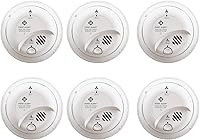
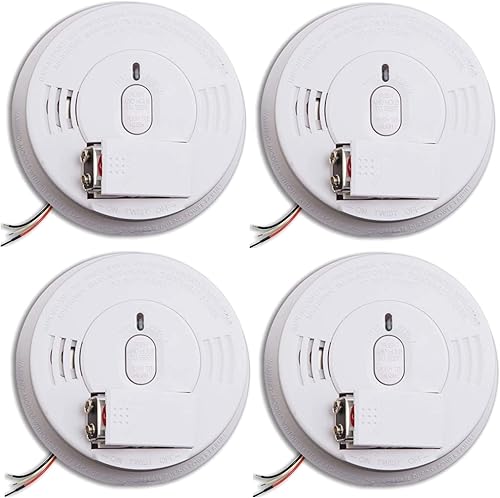
The Kidde Smoke Detector is a hardwired ionization alarm with a 9V battery backup and a pack of 4. The BRK First Alert 9120BFF/ SMI100-AC Smoke Detector is a single hardwired ionization alarm with battery backup that can connect with compatible BRK or First Alert alarms.
Kidde also has 2 combination alarms here. One uses photoelectric smoke sensing and electrochemical CO detection, while the other uses ionization smoke sensing with CO detection.
Both include voice alerts and battery backup.
If you need a basic explanation first, start with what is a smoke alarm. It explains how smoke alarms fit into a broader home safety plan.
 Best for BRK and First Alert systems
BRK First Alert 9120BFF/ SMI100-AC Smoke Detector
Kidde smoke detectors vs First Alert: which should you choose?
Choose the Kidde 4-pack for several hardwired smoke-only locations, or choose the BRK First Alert unit when you are adding to a compatible BRK or First Alert system. Choose one of the Kidde combination alarms when carbon monoxide detection is part of the same buying decision.
The Kidde smoke-only model uses ionization sensing for invisible fire particles and has an 85 dB alarm. It runs from 120V power with a 9V battery backup, includes a front-load battery door and comes as a 4-pack.
The BRK First Alert model also uses an ionization sensor, a hardwired 120V connection and battery backup. It is sold as a 1-pack and includes an 85 dB alarm, a single test and silence button, a side-load battery compartment and tamper-resistant locking brackets.
The two basic smoke alarms are closer in purpose than their brand names suggest. The practical difference is the pack size, mounting and interconnection family you need.
Which brand offers the better sensor choice?
Kidde offers the wider sensor choice in this comparison because it includes both ionization and photoelectric smoke alarms, plus CO detection in its combination models. First Alert is represented here by an ionization smoke alarm.
Ionization sensing is used in the Kidde smoke-only model, the BRK First Alert 9120BFF and the Kidde KN-COSM-IBA combination alarm. The product information connects ionization sensing with invisible fire particles and fast flaming fires.
The Kidde KN-COPE-IC uses a photoelectric smoke sensor and an electrochemical carbon monoxide sensor. Its voice alerts announce either “Fire!” or “Warning: Carbon Monoxide!” when the alarm detects danger.
A smoke detector and a fire alarm are related terms, but they are not always used in the same way. See the guide to smoke detector vs fire alarm before choosing equipment for a larger safety system.
Kidde’s own product information recommends using both ionization and photoelectric smoke alarms to help detect different types of fire. That makes sensor coverage worth considering before you decide between brands.
Kidde smoke detector vs First Alert for smoke-only coverage
The Kidde Smoke Detector suits a home that needs 4 matching hardwired smoke alarms, while the BRK First Alert suits a compatible system that needs 1 additional alarm. Both use ionization sensing and battery backup.
The Kidde model has a front-load battery door, which lets you replace the backup battery without removing the alarm from its mounting bracket. It also has a test and silence button on the face.
The BRK First Alert model has a side-load battery compartment and a single test and silence button. Its compatible BRK and First Alert interconnection makes it the more natural choice for an existing system from those brands.
If you are still comparing sensor types, the guide on how to choose a smoke detector can help you match the alarm to each room and level.
How do the Kidde and First Alert alarms interconnect?
The BRK First Alert alarm is designed for compatible BRK or First Alert alarms, while the Kidde combination models are specified for compatible Kidde devices. Brand and model compatibility should be checked before you connect hardwired alarms.
The BRK First Alert 9120BFF can connect with up to 12 other First Alert or BRK hardwired alarms. Its latching indicator identifies the unit that triggered the alarm.
The Kidde KN-COPE-IC can interconnect with up to 24 Kidde devices, including smoke, CO and heat alarms. The Kidde KN-COSM-IBA also supports up to 24 Kidde devices, with limits for initiating devices in a multiple-station arrangement.
This means interconnection is not simply a choice between Kidde and First Alert. Your existing wiring, alarm family and exact model determine which replacement or extension is suitable.
If your home already has hardwired alarms, identify the brand and model before buying. The best hardwired smoke detectors guide covers features that matter when you are planning a wired setup.
Which Kidde alarm is best for carbon monoxide protection?
The Kidde KN-COPE-IC is the strongest fit here when you want photoelectric smoke sensing and electrochemical CO detection in one hardwired alarm. The Kidde KN-COSM-IBA is the better fit when you want a 2-pack with ionization smoke sensing and CO detection.
The KN-COPE-IC uses a 9V battery backup and has a front-load battery door. Its voice alerts identify fire, carbon monoxide and low battery conditions, which can make the alert easier to understand than a tone alone.
The KN-COSM-IBA comes as a 2-pack and uses 2-AA battery backup. It also has voice alerts for fire, carbon monoxide and low battery, plus a test and hush feature that silences the unit for about 9 minutes.
Both Kidde combination models are hardwired and designed for interconnection with compatible Kidde devices. Neither should be added to a system without checking the exact compatible alarm family and wiring instructions.
For a broader comparison of brands, read X-Sense vs Kidde smoke detector. It can help if you are considering a third option beyond the two brands in this post.
Which product fits each buying situation?
Pick the product that matches your coverage count, sensor preference and existing interconnection system. The highest score does not make every model right for every room.
Choose the Kidde Smoke Detector
This model is designed for 120V hardwired installation and includes battery backup for power failures. The pack contains 4 white smoke detectors, each with a test and silence button.
It fits a household that needs one smoke alarm on each level and in each bedroom, provided the wiring and installation plan support this type of alarm. Its front-load battery door is useful when the alarm is mounted and the backup battery needs attention.
The trade-off is sensor coverage. It is an ionization smoke alarm, so it should not be treated as a replacement for photoelectric alarms where both sensor types are part of your safety plan.
Choose the BRK First Alert 9120BFF/ SMI100-AC Smoke Detector
This alarm uses 120V AC power and includes battery backup for an outage. It has an 85 dB alarm, a test and silence button, a side-load battery compartment and tamper-resistant locking brackets.
Its main advantage in this comparison is system fit. If your home already uses compatible BRK or First Alert hardwired alarms, adding the same interconnection family can simplify planning.
Choose a different option if you need CO detection, a 2-pack or a photoelectric smoke sensor. This model is a smoke-only ionization alarm.
Choose the Kidde Smoke & Carbon Monoxide Detector, photoelectric model
The KN-COPE-IC runs on 120V power with a 9V battery backup. It has a front-load battery door and voice warnings that identify fire, carbon monoxide or low battery conditions.
It can interconnect with up to 24 Kidde devices. That makes it useful for a compatible Kidde system where you want smoke, CO and heat alarms to work together.
The main trade-off is that it is a single combination alarm, not a multi-unit pack. Plan the number of rooms and levels that need coverage before you decide how many units to buy.
Choose the Kidde Smoke & Carbon Monoxide Detector, 2-pack
This model uses ionization smoke sensing, CO detection, 120V power and 2-AA battery backup. Voice alerts identify fire, carbon monoxide and low battery, while the test and hush feature silences the fire alarm for about 9 minutes.
It can interconnect with up to 24 Kidde devices, subject to the stated initiating-device limits. The 2-pack helps cover two locations with matching alarms.
Choose the photoelectric Kidde model instead if that smoke sensor type is the priority. Choose the First Alert model instead if your existing system is built around compatible BRK or First Alert alarms.
What should you check before installing?
Check the existing alarm brand, wiring, sensor type and room coverage before replacing or adding a hardwired detector. A battery backup does not make every alarm interchangeable.
First, identify whether the current alarm is smoke-only or a combination smoke and CO unit. Replacing a combination alarm with a smoke-only model can remove CO coverage from that location.
Next, check the interconnection family. The BRK First Alert model connects with compatible BRK and First Alert alarms, while the Kidde combination models are specified for compatible Kidde devices.
Then confirm the sensor plan. The Kidde smoke-only alarm, BRK First Alert model and Kidde KN-COSM-IBA use ionization smoke sensing.
The Kidde KN-COPE-IC uses photoelectric smoke sensing with electrochemical CO detection.
Follow the installation instructions for the exact model and have a qualified professional handle wiring if you are not comfortable working with a 120V connection. Do not improvise connections between alarm families.
How should you maintain these smoke and CO alarms?
Test the alarm with its test button, keep it clear and replace backup batteries when needed. Routine care helps you notice a low battery, a fault or an alarm that has been silenced.
Use the test and silence button according to the product instructions. A hush feature is for temporary nuisance alarms, not for leaving an alarm disabled.
Keep the alarm clear of dust and follow the manual for cleaning. Avoid covering the unit, blocking its openings or removing the battery because of repeated nuisance alerts.
For combination alarms, take every voice warning seriously. A warning for carbon monoxide is different from a fire warning, so follow your household emergency plan and the instructions for the exact alarm.
Replace backup batteries with the type specified for the model. The Kidde smoke-only and KN-COPE-IC models use a 9V backup, while the KN-COSM-IBA uses 2-AA battery backup.
Kidde vs First Alert: final choice
Pick Kidde if you need a 4-pack, a Kidde combination alarm or a choice between ionization and photoelectric smoke sensing. Pick BRK First Alert if you are extending a compatible BRK or First Alert hardwired system with one ionization smoke alarm.
The best smoke detector Kidde vs First Alert choice is the one that matches your current wiring and sensor plan. Do not mix alarm families without confirming compatibility, and do not choose a smoke-only alarm when the room also needs CO detection.
For a final checklist, use best First Alert smoke and carbon monoxide alarm and best Kidde hardwired smoke detector. If you want to compare another brand after that, see best X-Sense smoke detectors.
Frequently asked questions
Is Kidde better than First Alert for smoke detectors?
Kidde is the better fit when you want a 4-pack of hardwired smoke alarms or a combination smoke and carbon monoxide alarm with voice alerts. First Alert is a strong fit when you are extending a compatible BRK or First Alert system.
Compare the sensor type and wiring before brand name.
What is the difference between Kidde and First Alert smoke detectors?
The products compared here differ in sensor choices, pack sizes and interconnection systems. The Kidde smoke-only model and BRK First Alert model use ionization sensing, while one Kidde combination alarm uses photoelectric smoke sensing.
Kidde also offers the combination models shown here with CO detection and voice alerts.
Can Kidde and First Alert smoke detectors interconnect?
Do not assume Kidde and First Alert alarms can interconnect with each other. The BRK First Alert 9120BFF can connect with compatible BRK or First Alert alarms, while the Kidde combination models are specified for compatible Kidde devices.
Check the exact wiring and compatibility instructions before connecting alarms.
Should you choose ionization or photoelectric smoke detection?
Choose a photoelectric smoke alarm when that sensor type matches your coverage plan, and remember that an ionization alarm does not replace photoelectric coverage. The Kidde KN-COPE-IC combines photoelectric smoke sensing with electrochemical CO detection, while the other smoke alarms here use ionization sensing.
How often should you maintain a hardwired smoke detector?
Test each alarm using its test button and replace backup batteries when the alarm indicates low power or according to the product instructions. Keep the alarm clear of dust, follow the manual for cleaning, and replace the unit according to the manufacturer’s service guidance.
Never disable an alarm because of nuisance alerts.