7 Best Interconnected Smoke Alarms (November 2026)
The best interconnected smoke alarms include the Siterlink Hardwired Interconnected Smoke Detectors for whole-home wired coverage, the First Alert Hardwire Smoke Alarm for Precision Detection, and the SITERWELL Smoke Detector for replaceable-battery coverage.
On this page (6 sections)
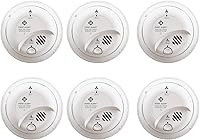
The best interconnected smoke alarms for most wired homes are the Siterlink Hardwired Interconnected Smoke Detectors. They combine photoelectric sensing, 120V hardwired power, 9V battery backup and wired connection for up to 12 devices in a 6-pack.
That mix suits a larger home where several alarms need to sound together rather than one alarm sounding alone in a single room. Photoelectric sensing is aimed at smoke from slow smoldering fires, while the battery backup keeps protection going if household power fails.
For a new or replacement installation, the main decision is whether your home already has suitable hardwired alarm wiring. If it does, a wired system avoids the need to set up a separate wireless link between alarms.
Wireless alarms are useful when opening walls for new wiring is not practical. They can still sound together from alarm to alarm, but the setup is different from a hardwired circuit.
Start with our guide to what is a smoke alarm if you are comparing alarm types for the first time. It helps you separate sensor choice, power source and interconnection before you narrow the shortlist.
Once you know which installation type fits, compare pack size and compatibility. A 6-pack can cover several rooms at once, while a single alarm may be enough for a targeted replacement.
Our picks at a glance
-
1
 Best for whole-home wired coverage
Siterlink Hardwired Interconnected Smoke Detectors
9.7/10 our score
See it on Amazon -
2

-
3

- 4
 Check it
First Alert Smoke Alarm Interconnected Hardwired with 10-Year
Best for long battery backup - 5
 Best for single-room hardwired replacementCheck it
- 6
 Check it
BRK SM6W01 Hardwire Smoke Alarm with Battery
Best for large wired installations - 7
 Best for wireless interconnectionCheck it
The best interconnected smoke alarms for each home
The best interconnected smoke alarm depends first on your installation type. Choose a hardwired system when suitable wiring already exists, and choose wireless interconnection when you need coordinated alerts without running alarm cable.
Siterlink Hardwired Interconnected Smoke Detectors: Best for whole-home wired coverage
- Photoelectric sensor
- 120V hardwired power with 9V battery backup
- Connects up to 12 devices
- 6-pack
This 6-pack suits larger homes that already have hardwired alarm wiring. Each alarm uses a photoelectric sensor, and interconnected units sound together when one detects smoke.
Pros
- Up to 12 interconnected devices
- Battery backup
- Test and silence button
Cons
- Requires hardwired installation
- The interconnected system is wired
Siterlink is the strongest overall pick for a larger wired home because the 6-pack gives you several matching photoelectric alarms at once. Each unit uses 120V AC wiring with a 9V battery backup, so the alarm can continue operating during a power outage.
The wired interconnection supports up to 12 devices. When one alarm detects smoke, the other connected alarms sound the same signal, while the initiating unit identifies the alarm condition with its red LED.
A test button supports weekly checks, and a 2-second press can silence an alarm when there is no fire hazard. The hidden indicator light is designed to remain visible without being a bright distraction in a bedroom.
That softer light matters in sleeping areas, where a bright status light can be annoying through the night. It still lets you check the alarm state during a routine test without a harsh flash.
Choose this set when you want photoelectric sensing and coordinated alerts across several rooms. For a closer look at photoelectric options, see best interconnected photoelectric smoke alarms.
First Alert Hardwire Smoke Alarm: Best for Precision Detection
- Precision Detection sensing
- Early warning interconnect
- Battery backup
- Quick Connect Plug
First Alert's hardwire model is a strong choice for replacing compatible existing alarms. The Quick Connect Plug can simplify installation where the existing wiring setup matches.
Pros
- Designed to reduce cooking nuisance alarms
- Alarm indicator identifies the initiating unit
- Quick Connect Plug included
Cons
- Compatibility must be checked before mixing alarms
- Requires hardwired power
First Alert suits buyers replacing compatible hardwired alarms who want Precision Detection sensing. The brand says this sensing system is designed to reduce cooking nuisance alarms while providing early warning during a home fire emergency.
Its early warning interconnect makes compatible alarms sound together, and the alarm indicator identifies the unit that initiated the alert. Battery backup adds protection during power outages.
The Quick Connect Plug can make replacement easier when your existing installation uses a matching connection. Confirm the alarm family and wiring before assuming a replacement will interconnect with alarms from another system.
That check matters because a plug that fits physically does not always mean the alarms will signal correctly together. Matching the family helps the whole system respond as one.
Choose this model when a First Alert-compatible hardwire setup is already in place. Read best hardwired interconnected smoke alarms for more wired choices.
SITERWELL Smoke Detector: Best for replaceable-battery coverage
- Photoelectric sensor
- 1-year 9V battery
- 10-year product life
- 5-pack
This battery-powered 5-pack fits homes that do not have alarm wiring. It has a test and mute button, low-battery warning and a stated 10-year product life with continuous battery replacement.
Pros
- No wiring required
- Photoelectric sensing
- Mounting hardware and magnetic fastening kit included
Cons
- Not an interconnected model in the supplied product details
- Requires regular battery replacement
SITERWELL's 5-pack fits homes that need several battery-powered alarms without installing new wiring. Its photoelectric sensor is intended for smoke from slow-smoldering fires, and the 1-year 9V battery can be replaced as needed across the stated 10-year product life.
The test and mute button supports weekly checks. A low-battery signal tells you when to replace the battery, while the alarm produces an audible signal above 85 dB.
The package includes a 9V carbon zinc battery, user manual, mounting hardware and a magnetic fastening kit. Those details make it practical for wall or ceiling placement where hardwired installation is not available.
Battery power gives flexibility in placement, but it also adds a regular care task. You need to keep track of replacement dates and test each alarm on schedule.
Choose it for battery-powered room coverage, but confirm the exact interconnection requirement first. The supplied product details do not identify it as an interconnected alarm system.
First Alert Smoke Alarm Interconnected Hardwired with 10-Year: Best for long battery backup
- Precision Detection sensing
- 10-year battery backup
- Hardwire interconnect
- End-of-life warning
Choose this First Alert model when long battery backup matters during power outages. It supports early warning interconnect and identifies the unit that started the alarm.
Pros
- 10-year battery backup
- End-of-life warning
- Easy Adapter Plug
Cons
- Ionization sensor
- Compatibility should be confirmed before installation
This First Alert model is the best fit here when long battery backup is the main priority. Its hardwired interconnect design adds a 10-year battery backup for continued protection during power outages.
The alarm uses Precision Detection sensing and includes an end-of-life warning. A visual indicator identifies the alarm that initiated the alert, which can help you locate the room that needs attention.
The product data identifies an ionization sensor, so compare that sensor type with your preferences before choosing it over the photoelectric models in this roundup. The Easy Adapter Plug may help with a compatible existing installation.
An end-of-life warning is useful because it separates battery care from the end of the alarm service life. That helps you plan a full replacement instead of reacting to repeated chirps.
Choose this model when long backup duration matters more than choosing a photoelectric sensor. Check the how do interconnected smoke alarms work guide before building a complete system.
SITERWELL Smoke Detector: Best for single-room hardwired replacement
- Photoelectric sensor
- 120V hardwired power
- Replaceable 9V backup battery
- Connects up to 12 alarms
This single alarm suits a room where you need a compatible hardwired replacement rather than a full multi-alarm pack. It includes a test and silence button and supports up to 12 connected alarms.
Pros
- Photoelectric sensor
- 85 dB alarm
- UL 217 10th listed in the product details
Cons
- Single alarm
- Requires hardwired installation
SITERWELL's single alarm is useful when one room needs a hardwired replacement or when you are expanding a compatible system one unit at a time. It uses 120V AC power, a replaceable 9V backup battery and a photoelectric sensor.
The alarm can connect up to 12 smoke detectors. Once one alarm triggers, the connected units sound together, and the 85 dB alarm plus flashing red LED provide audible and visual warnings.
Its Test/Silence button supports self-checks and can mute a low-battery chirp for up to 10 hours. The product details also identify UL 217 10th Edition listing and a flame-retardant ABS+PC composite housing.
The mute period can help at night, but it does not remove the need to replace a weak battery. Treat the silence as a short pause while you get a fresh battery.
Choose it when you need one compatible photoelectric hardwired alarm, not a full pack. Installation requires care around the 120V wiring, so use a qualified electrician if the circuit is unfamiliar.
BRK SM6W01 Hardwire Smoke Alarm with Battery: Best for large wired installations
- SMI100-AC model
- Hardwire interconnect
- Battery backup
- 12-pack
The 12-pack is aimed at larger wired installations that need many matching alarms. It includes battery backup, an alarm indicator and a Quick Connect Plug.
Pros
- Largest pack here
- Hardwire interconnect
- Quick Connect Plug
Cons
- Requires hardwired installation
- Check compatible alarm families before adding units
The BRK SM6W01 is aimed at a large hardwired installation that needs 12 alarms in one pack. It uses the SMI100-AC model and includes battery backup, hardwire interconnect capability, an alarm indicator and a Quick Connect Plug.
The larger pack can simplify coverage planning in a multi-room home because the alarms come from the same product family. Even so, check the compatible alarm list before adding them to an existing system.
This pick makes more sense for a full replacement or new installation than for a single-room update. Count the required rooms first, then place alarms according to local fire-safety guidance.
Buying in one pack also makes future matching easier if a room needs an extra unit later. Keep the model details with your home records so replacements stay in the same family.
Choose it when pack size matters and the home already supports compatible hardwired alarms. For installation details, see how to install interconnected smoke alarms and how to wire interconnected smoke alarms.
Heiman Smoke Detector: Best for wireless interconnection
- Wireless alarm-to-alarm connection
- Dual-photoelectric detection
- Lithium battery included
- 3-pack
Heiman is the clearest fit for homes where running alarm wire is difficult. Its wireless interconnection works between alarms, not directly with a smartphone app or Wi-Fi network.
Pros
- No wiring required
- Magnetic adhesive pads included
- 85 dB buzzer and LED indicators
Cons
- No direct app or Wi-Fi connection
- Open-area range does not equal every home's indoor range
Heiman is the best wireless choice in this group because its 3-pack communicates between alarms without direct app or Wi-Fi connection. The alarms can interconnect across up to 656 ft in open areas, although walls and floors can reduce usable indoor range.
Each alarm uses dual-photoelectric detection and a lithium battery. The 85 dB buzzer, LED indicators and Test/Silence button provide clear local alerts, while the button can hush nuisance alarms for 10 minutes.
Magnetic adhesive pads, mounting brackets, screws, anchor plugs, a disassembly pin and a manual are included. The ABS+PC housing is flame retardant and rated UL94 V-0 in the product details.
Choose Heiman when new wiring would be difficult, especially in a rental or finished home. Compare it with best wireless interconnect smoke detectors and learn how do wireless smoke detectors work before choosing a system.
Wired or wireless interconnected smoke alarms?
Hardwired interconnected smoke alarms are the better fit when your home already has compatible alarm wiring. They can use household power with battery backup, but installation and replacement must match the existing circuit and alarm family.
That existing wiring is the main advantage. It can simplify a like-for-like replacement, and the battery backup covers the gap if power is lost during severe weather.
Wireless interconnected smoke alarms are easier to place when running wire would require opening walls. Their alarm-to-alarm link does not necessarily use Wi-Fi, and stated open-area range may not reflect performance through several walls.
Wireless placement suits finished rooms, rentals and older homes where new cable would be disruptive. It also avoids electrical work, although you still need to mount each alarm securely and test the link.
Range needs a practical view. An open-area figure is a starting point, not a promise for every floor plan, so test the system after mounting in the actual rooms.
The First Alert hardwired models suit existing First Alert or BRK-compatible systems. If you are comparing brand-specific options, see best X-Sense interconnected smoke detectors and best Honeywell wireless smoke detectors.
Care differs between the two approaches as well. Hardwired alarms still need battery checks and weekly tests, while wireless alarms need the same checks plus attention to battery life in every unit.
For most homes with wiring in place, hardwired interconnection is the cleaner long-term setup. For homes where wiring is not in place, wireless interconnection can still give coordinated alerts without opening walls.
Photoelectric or ionization smoke sensors?
Photoelectric sensors are the stronger match for shoppers who want an alarm designed to detect smoke from slow smoldering fires. Siterlink, SITERWELL and Heiman use photoelectric sensing in the products above.
Photoelectric detection looks for smoke particles, which makes it a common choice for alarms meant to respond to smoldering material. That does not mean placement can be loose, because smoke still needs to reach the sensor.
Daily use depends on where smoke can travel. A closed door, a long hallway or a high ceiling can all delay the moment smoke reaches a unit.
The First Alert SMI105-AC uses an ionization sensor. Sensor choice is only one part of a safe setup, so place alarms correctly, test them on schedule and follow local requirements.
Ionization and photoelectric alarms should not be judged on sensor name alone. Room layout, alarm location, power source and compatibility with the rest of the system also shape daily use.
In a kitchen, nuisance alarms are a practical concern for many homes. That is why alarm placement and the sensing method need to be considered together rather than in isolation.
Do not connect a radon monitor to a smoke alarm system unless the products are designed to work together. Our Radon Monitors with Alarm System: A Useful Guide explains the difference between radon alerts and fire alarms.
A radon monitor measures gas and may alert you to a different hazard from smoke. Keeping the two purposes separate helps you choose the right device for each risk.
How should you choose an interconnected system?
Choose the system by installation method, compatibility and the number of rooms that need coverage. A large hardwired home may suit the Siterlink 6-pack or BRK 12-pack, while a finished home may be easier to cover with Heiman wireless alarms.
Start by mapping the rooms that need alarms and whether wiring already runs to those points. That map shows if a wired replacement is simple or if a wireless link is the more practical route.
Check the existing wiring before buying a hardwired replacement. For a new wired installation, have electrical work handled by someone qualified to work on household circuits.
Compatibility should be checked before you mix old and new units. The safest plan is usually to stay within one compatible alarm family across the home.
After installation, test every alarm and confirm that the connected units respond. Keep the alarm openings free of dust and insects, replace batteries when warned and replace alarms according to the manufacturer's instructions.
Weekly testing is a small habit that catches problems early. It also confirms that an alarm in a far room can trigger the rest of the system.
If alarms sound without visible smoke, investigate the cause instead of disabling the system. Our guide explains why interconnected smoke alarms keep going off, and which Kidde smoke detectors can be interconnected covers a common brand compatibility question.
More guides on this topic
- How to Link X-Sense Smoke Detectors
- Can You Mix Smoke Detector Brands?
Use these guides after you have chosen a wired or wireless route. They focus on linking and brand compatibility, which are the two issues most likely to cause problems after purchase.
Linking steps can differ by brand and by model. A guide for one family will not always match the buttons, pairing order or wiring checks for another family.
That is why it helps to read the linking guide for the exact alarms you plan to use. The right sequence matters, especially when several units need to sound together.
Brand mixing raises a separate question. Two alarms may look similar and use the same power source, yet still not signal each other correctly.
If you are replacing one alarm in an existing system, check compatibility before you buy. Staying with the same compatible family is usually the simplest way to keep the system working as one.
These guides also help you set realistic expectations for wireless models. Alarm to alarm linking is not the same as a phone app link or a home network link.
Read them before installation, not after the alarms are already on the ceiling. A short check at the start can save time when you test the whole system for the first time.
Keep the model names and pack details with your home records. That makes future replacements easier and reduces the chance of adding a unit that does not match.
Final choice among the best interconnected smoke alarms
The best interconnected smoke alarms for most wired homes are the Siterlink 6-pack, especially when photoelectric sensing, battery backup and up to 12 connected devices fit your plan. Choose First Alert when you already have a compatible Precision Detection system.
Pick Heiman when wireless alarm to alarm communication is more practical than new wiring. Choose SITERWELL's battery model only when you need standalone battery coverage, and confirm compatibility before mixing alarms or adding a relay such as the one discussed in which relay works with a Kidde smoke detector.
For a wired home, match the new alarms to the existing circuit and alarm family before ordering. That choice keeps installation simpler and helps every unit sound together.
Start with the rooms that need coverage. Count bedrooms, living areas and any utility spaces where an alert would need to be heard quickly.
Then check what power is already available at those points. Existing wiring can make a like for like replacement straightforward, while missing wiring may point you toward a wireless option.
For a wireless home, place the alarms, test the alarm to alarm link and confirm that each room can trigger the others. Do not assume a stated open area range will match a layout with several walls.
Test from the farthest room as well as the nearest one. A link that works across a short distance may still need adjustment when walls or floors sit between units.
Battery care should be part of the plan from the start. Hardwired alarms with backup batteries still need checks, and battery powered alarms need replacement on schedule.
Weekly tests help you confirm that the sound is clear in sleeping areas. They also help you notice a weak battery or a fault before it becomes a bigger problem.
Keep the sensing openings clean and free of dust and insects. A clean alarm is more likely to respond as intended when smoke reaches it.
If one alarm sounds, treat it as a prompt to check the home. Do not disable the system to stop the sound without finding the cause.
For a larger wired home, the Siterlink 6-pack gives you matching units for several rooms at once. That can make coverage planning simpler than buying separate alarms over time.
For a home with an existing First Alert system, staying with the same family may be the easier route. The Quick Connect Plug and Precision Detection features are reasons to check that option first.
For a finished home or rental where new wiring would be disruptive, Heiman offers a wireless route between alarms. It does not connect directly to a phone app or Wi-Fi, so set expectations accordingly.
The SITERWELL battery 5-pack fits a different need. It suits homes that want several battery powered alarms without new wiring, provided interconnection is not a requirement.
In both cases, test weekly and replace batteries or alarms when the warnings appear. A connected system only helps if the alarms are maintained and kept free of dust and insects.
Choose the route that matches your wiring, your rooms and your tolerance for upkeep. The best system is the one you can install correctly and keep working year after year.
Our top 3 picks at a glance
-
1
Best for whole-home wired coverage
Siterlink Hardwired Interconnected Smoke Detectors
9.7/10 our score
See it on Amazon -
2
-
3
Frequently asked questions
What is an interconnected smoke alarm?
An interconnected smoke alarm communicates with other compatible alarms. When one unit detects smoke, the connected units sound too, which can help you hear an alert from a different room.
Interconnection may use hardwired alarm wiring or wireless communication.
It does not automatically mean the alarms connect to Wi-Fi or a phone app.
Are interconnected smoke alarms better?
Interconnected smoke alarms can give a faster whole-home alert than separate alarms that sound only in the room where smoke is detected. They are especially useful in larger homes, homes with closed doors and sleeping areas far from kitchens or utility rooms.
Choose a compatible wired or wireless system and follow local installation rules.
Can you mix smoke alarm brands?
Usually, you should not assume that different smoke alarm brands will interconnect. Compatibility depends on the alarm family, wiring method and manufacturer instructions.
Use the same compatible family when possible, and review our guide on can you mix smoke detector brands before replacing only one alarm.
Are wireless interconnected smoke alarms connected to Wi-Fi?
No. Wireless interconnection usually means the alarms communicate with each other over a local radio link.
The Heiman 3-pack does not connect directly to a smartphone app or Wi-Fi.
Wireless alarms can still sound together without a home network, but indoor range depends on walls, floors and the layout of your home.
How often should interconnected smoke alarms be tested?
Test interconnected smoke alarms weekly by using each alarm's test control, then confirm that the connected units respond as intended. Replace batteries when the low-battery warning sounds and keep smoke, dust and insects away from the sensing openings.
See our guide on how to test interconnected smoke alarms for a practical checklist.