9 Best Interconnected Photoelectric Smoke Alarms (November 2026)
The best interconnected photoelectric smoke alarms include the Kidde Smoke & Carbon Monoxide Detector for combined smoke and CO protection, the Siterlink Hardwired Interconnected Smoke Detectors for multi-room photoelectric coverage, and the SITERWELL Smoke Detector for a single hardwired replacement.
On this page (6 sections)
- How we chose interconnected photoelectric smoke alarms
- The best interconnected photoelectric smoke alarms
- What should you check before buying linked photoelectric alarms?
- How do wired and wireless links affect installation?
- How do you maintain an interconnected alarm system?
- Which interconnected photoelectric smoke alarm should you choose?
The best interconnected photoelectric smoke alarms combine photoelectric sensing with a link that can alert people in more than one room. The Kidde Smoke & Carbon Monoxide Detector is the top pick for a hardwired smoke and CO system, while Siterlink offers a photoelectric six-pack for multi-room coverage.
Interconnection matters because a fire may start far from the bedrooms or living areas where people are. Before choosing a model, check the sensing type, backup power, connection method, and compatibility with every alarm you want to link.
For a broader overview of what a smoke alarm does, start with the complete buying guide. This roundup focuses on models that match the linked-alarm need, and it flags several compatibility options that use ionization sensing or do not interconnect.
Our picks at a glance
-
1
 Best for combined smoke and CO protection
Kidde Smoke & Carbon Monoxide Detector
9.7/10 our score
See it on Amazon -
2
 Best for multi-room photoelectric coverage
Siterlink Hardwired Interconnected Smoke Detectors
9.7/10 our score
See it on Amazon -
3

- 4
 Check it
Kidde 21007624 AC Photoelectric Smoke and Carbon
Best for voice alerts and alarm memory - 5
 Check it
FIRST ALERT Hardwired Wireless Smoke Alarm
Best for adding wireless-linked alarms - 6
 Check it
First Alert Smoke Alarm Interconnected Hardwired with 10-Year
Best for long-term backup power - 7
 Check it
First Alert Hardwire Smoke Alarm
Best for compatible hardwired systems - 8
 Best for battery-only photoelectric coverageCheck it
- 9
 Check it
X-Sense Smoke Detector Carbon Monoxide Alarm Combo
Best for standalone smoke and CO sensing
How we chose interconnected photoelectric smoke alarms
We compared the stated sensor type, power source, backup method, interconnection support, and useful alarm features for each model. Our score weighs specs and features against what you're shopping for: a linked smoke alarm system with photoelectric sensing.
A few supplied options don't fully match that goal. The First Alert hardwired models use ionization sensors, while the SITERWELL battery alarm and X-Sense combo are described as standalone, so we include them as alternatives with those limits made clear.
Interconnection can be wired or wireless, and brands may support different devices within a system. Read how interconnected smoke alarms work before mixing models or replacing alarms.
| Product | Best for | Sensing | Power | Interconnection | Our score |
|---|---|---|---|---|---|
| Kidde Smoke & Carbon Monoxide Detector | combined smoke and CO protection | Photoelectric smoke and electrochemical CO | 120V hardwired with 9V battery backup | Up to 24 compatible devices | 9.7 |
| Siterlink Hardwired Interconnected Smoke Detectors | multi-room photoelectric coverage | Photoelectric smoke | 120V hardwired with 9V battery backup | Up to 12 devices | 9.7 |
| SITERWELL Smoke Detector | a single hardwired replacement | Photoelectric smoke | 120V hardwired with 9V backup battery | Up to 12 smoke detectors | 9.2 |
| Kidde 21007624 AC Photoelectric Smoke and Carbon | voice alerts and alarm memory | Photoelectric smoke and CO | AC hardwired with 9V battery backup | Up to 24 compatible Kidde devices | 9.5 |
| FIRST ALERT Hardwired Wireless Smoke Alarm | adding wireless-linked alarms | Photoelectric smoke | Hardwired with 2 AA backup batteries | Up to 18 compatible First Alert alarms | 8.0 |
| First Alert Smoke Alarm Interconnected Hardwired with 10-Year | long-term backup power | Ionization | Compatible alarms sound together | 9.3 | |
| First Alert Hardwire Smoke Alarm | compatible hardwired systems | Ionization | Hardwired with battery backup | Compatible alarms sound together | 9.6 |
| SITERWELL Smoke Detector | battery-only photoelectric coverage | Photoelectric smoke | Replaceable 9V battery | Not specified as interconnected | 9.6 |
| X-Sense Smoke Detector Carbon Monoxide Alarm Combo | standalone smoke and CO sensing | Photoelectric smoke and electrochemical CO | 10-year sealed battery | Standalone, no wireless interconnection | 8.9 |
The best interconnected photoelectric smoke alarms
The Kidde combination alarm leads for buyers who want smoke and CO detection in one hardwired unit. For a smoke-only linked set, the Siterlink six-pack is the strongest match among these choices.
Kidde Smoke & Carbon Monoxide Detector: Best for combined smoke and CO protection
- Photoelectric smoke sensing
- Electrochemical CO sensing
- Hardwired with 9V battery backup
- Interconnects with up to 24 compatible devices
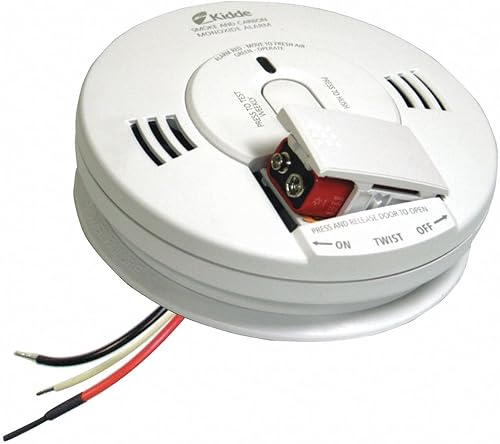
This hardwired combination alarm pairs photoelectric smoke sensing with electrochemical CO detection. Voice alerts name the type of danger, and the alarm can interconnect with up to 24 compatible devices.
Pros
- Smoke and CO detection in one alarm
- Voice alerts identify fire or carbon monoxide
- Front battery door
Cons
- Combination unit rather than smoke-only
- Compatibility should be checked across the planned system
Kidde's combination alarm brings photoelectric smoke sensing and electrochemical CO detection into one hardwired unit. It runs from a 120V power source and includes a 9V battery backup.
When it detects danger, voice alerts announce “Fire! Fire!” or “Warning!
Carbon Monoxide!” That gives you more information than an alarm tone alone, especially when you need to identify which hazard triggered the alert.
The alarm can interconnect with up to 24 compatible smoke, CO, and heat alarms. Check that the units you already have, or plan to add, are compatible before building a mixed system.
Choose this pick if you want a hardwired combination alarm with voice alerts and battery backup. If your home already has a smoke-only system, compare the wiring and device compatibility before replacing a unit with a combination model.
Siterlink Hardwired Interconnected Smoke Detectors: Best for multi-room photoelectric coverage
- Photoelectric sensing
- 120V hardwired with 9V battery backup
- Connects up to 12 devices
- 6-pack
This six-alarm set is designed for hardwired interconnection, with photoelectric sensing and a 9V battery backup in each alarm. When one detects smoke, the others sound the same signal.
Pros
- Six alarms in one set
- Up to 12 devices can connect
- Test and silence button
Cons
- Hardwired installation is required
- Compatible system size is limited to 12 devices
The Siterlink set suits a home that needs several photoelectric alarms connected through hardwired interconnection. It includes six alarms, each with a 9V battery backup for power interruptions.
The system can connect up to 12 devices. When one alarm detects smoke, the other connected alarms sound the same signal, although their red LEDs don't flash.
A test and silence button supports regular checks and can silence an alarm when there is no fire hazard. Follow the instructions for your model and learn how to test interconnected smoke alarms as part of your home routine.
Choose this set when you need multiple smoke-only alarms and have compatible hardwiring. Confirm the installation requirements and total device count before you commit to a system.
SITERWELL Smoke Detector: Best for a single hardwired replacement
- Photoelectric sensing
- 120V hardwired with 9V backup battery
- Connects up to 12 smoke detectors
- Test and silence button
This single hardwired photoelectric alarm can join up to 12 smoke detectors. It includes a backup battery and a test and silence button.
Pros
- Photoelectric sensing
- Can connect with up to 12 smoke detectors
- Backup battery included
Cons
- Smoke-only alarm
- Check wiring and compatibility before replacing an existing alarm
This single SITERWELL alarm is a photoelectric option for a hardwired system. It uses 120V AC power, includes a replaceable 9V backup battery, and can interconnect with up to 12 smoke detectors.
The test and silence button supports a quick device check and nuisance-alarm silencing. The stated features make it a fit for replacing one alarm in a compatible SITERWELL network, but confirm wiring and model compatibility first.
Choose it when you need one alarm rather than a multi-pack. For a complete hardwired system comparison, see our guide to the best hardwired interconnected smoke alarms.
Kidde 21007624 AC Photoelectric Smoke and Carbon: Best for voice alerts and alarm memory
- Photoelectric smoke sensing
- Smoke and CO detection
- Hardwired with 9V battery backup
- Interconnects with compatible Kidde devices
This Kidde combination alarm provides photoelectric smoke sensing, CO detection, voice warnings, and alarm memory. Its hardwired power includes a 9V backup battery.
Pros
- Voice warnings distinguish fire from CO
- Alarm memory signals a previous alert
- Front-loading battery
Cons
- Confirm compatibility with existing alarms
- Combination alarm may be more than a smoke-only system needs
This Kidde model combines photoelectric smoke sensing with CO detection and voice warnings. It has a front-loading 9V backup battery, and its alarm memory can indicate that smoke or CO was detected earlier.
It can interconnect with compatible Kidde devices, with support for up to 24 devices. The product details also specify limits on how many can initiate an alarm, so check the system instructions when planning a larger network.
Choose this model if voice alerts and alarm memory matter alongside smoke and CO sensing. Confirm compatibility with the other alarms in your home, especially if you're replacing a device from another brand.
FIRST ALERT Hardwired Wireless Smoke Alarm: Best for adding wireless-linked alarms
- Photoelectric sensing
- Hardwired with 2 AA backup batteries
- Wirelessly connects up to 18 compatible alarms
- Test and silence button
This hardwired First Alert alarm can wirelessly connect with up to 18 compatible alarms. That can help extend a linked system to areas without an interconnect wire.
Pros
- Wireless link to compatible alarms
- Photoelectric sensor
- Battery backup
Cons
- Requires compatible First Alert wireless-enabled alarms
- Check current compatibility before expanding a system
The First Alert SA521CN-3ST is a photoelectric alarm that uses wireless interconnection with compatible First Alert-enabled alarms. It is hardwired and includes 2 AA backup batteries, while the wireless link can connect up to 18 compatible alarms.
This can help when you want a linked network that reaches locations without interconnect wiring. The system still depends on compatible First Alert wireless-enabled alarms, so check the exact models before adding units.
Choose it when wireless linking is useful in a home with existing hardwired alarm locations. Its photoelectric sensor is a fit for this roundup, but wireless compatibility is specific to supported alarms.
First Alert Smoke Alarm Interconnected Hardwired with 10-Year: Best for long-term backup power
- Interconnects with compatible alarms
- 10-year battery backup
- Alarm indicator identifies the initiating unit
- End-of-life warning
This First Alert hardwired model offers 10-year battery backup and an indicator that identifies which unit initiated an alarm. Its sensor is ionization, so it does not meet this roundup's photoelectric preference.
Pros
- 10-year battery backup
- Initiating alarm indicator
- End-of-life warning
Cons
- Ionization sensor, not photoelectric
- Interconnection is limited to compatible alarms
This First Alert hardwired alarm offers a 10-year battery backup and an indicator that identifies the unit that initiated an alarm. Compatible alarms sound together when one unit activates.
Its sensor type is ionization, so it does not fit the photoelectric focus of this guide. It may be worth considering as a system compatibility option if your existing setup uses the same type, but verify that before buying.
Choose this model when the backup period and compatibility match your needs. If photoelectric sensing is a priority, select one of the photoelectric picks above instead.
First Alert Hardwire Smoke Alarm: Best for compatible hardwired systems
- Interconnects with compatible alarms
- Battery backup
- Alarm indicator identifies the initiating unit
- Quick Connect Plug
This First Alert hardwire alarm can link with compatible alarms and includes battery backup. Its ionization sensor means it is a compatibility option for an interconnected system, not a photoelectric pick.
Pros
- Quick Connect Plug included
- Battery backup
- Initiating alarm indicator
Cons
- Ionization sensing
- Confirm compatibility with the existing alarm network
The First Alert SMI100-AC is a hardwired alarm with battery backup and a Quick Connect Plug. It can interconnect with compatible alarms, and its indicator helps identify the unit that started an alarm.
The sensor is ionization, not photoelectric. That makes it a possible replacement for a compatible existing network, but not a direct match for shoppers seeking photoelectric interconnected alarms.
Check the sensor type and alarm compatibility before choosing it. For a system that meets this roundup's photoelectric focus, compare the Kidde and SITERWELL options instead.
SITERWELL Smoke Detector: Best for battery-only photoelectric coverage
- Photoelectric sensing
- Replaceable 9V battery
- Test and mute button
- Mounts on wall or ceiling
This battery-powered photoelectric alarm is a standalone option for a location without hardwired power. It does not provide the linked whole-home alert function sought in this roundup.
Pros
- Photoelectric sensor
- Replaceable battery
- Test and mute button
Cons
- Not specified as interconnected
- Battery replacement is needed
This SITERWELL alarm uses a photoelectric sensor and a replaceable 9V battery. Its test and mute button and wall-or-ceiling mounting make it a straightforward standalone option for a location without hardwired power.
The available details don't specify interconnection support. That means it should not be treated as a linked alarm for whole-home alerts without confirmation from SITERWELL.
Choose it for a battery-powered photoelectric alarm when interconnection isn't required. If you need linked alerts, choose a model that explicitly supports the system you plan to use.
X-Sense Smoke Detector Carbon Monoxide Alarm Combo: Best for standalone smoke and CO sensing
- Photoelectric smoke and electrochemical CO sensors
- 10-year sealed battery
- LCD shows CO levels and battery life
- Standalone model
This X-Sense combo provides smoke and CO sensing in one standalone alarm, with a sealed 10-year battery. It does not interconnect, so it is not a match for linked whole-home alerts.
Pros
- Smoke and CO sensing in one unit
- Sealed battery
- LCD displays CO levels
Cons
- Does not support wireless interconnection
- Standalone model
The X-Sense XP0H-SN combines photoelectric smoke sensing with electrochemical CO sensing, plus a sealed 10-year battery. Its LCD can show CO levels and battery life.
This is a standalone model with no wireless interconnection, Wi-Fi, or base station support. It can cover smoke and CO in one location, but it won't send an alarm signal to other rooms.
Choose it for a standalone combo alarm, not as a linked-system replacement. For a separate comparison of X-Sense smoke and CO detectors, check which models support the type of connection you need.
What should you check before buying linked photoelectric alarms?
Check the alarm's sensor type, interconnection method, compatible models, and backup power before buying. A photoelectric sensor alone doesn't mean that an alarm can alert other rooms.
If you have hardwired alarms now, identify the brand and model before choosing a replacement. Some alarms can connect to a limited number of compatible devices, and a wireless-enabled model may require a specific family of alarms.
Consider whether you want smoke-only alarms or combination units. The Kidde picks add CO sensing, while the Siterlink and SITERWELL hardwired models focus on smoke detection.
If you also need a CO device for another location, compare a handheld carbon monoxide detector by its intended use. A handheld detector and a fixed interconnected alarm solve different needs.
How do wired and wireless links affect installation?
Wired interconnection uses the home's alarm wiring, while wireless models communicate with compatible alarms over a wireless link. The right choice depends on your existing setup and the models supported by the manufacturer.
Hardwired alarms may still use backup batteries, so check the battery type and replacement needs. A wireless link can help extend coverage to areas without interconnect wiring, but it doesn't remove the need to confirm compatibility and installation requirements.
For a home with an existing hardwired system, compare its model numbers with the replacement instructions. If the setup is unclear, use a qualified installer and follow local fire-safety requirements.
How do you maintain an interconnected alarm system?
Test each alarm and the full interconnected system according to the manufacturer's instructions. A test on one unit may help confirm that connected alarms sound, but follow the exact procedure for your models.
Keep alarms clear of dust and follow instructions for cleaning, battery replacement, and end-of-life alerts. If one unit chirps or shows a fault, identify the source and address it rather than silencing the system indefinitely.
After installation, make sure everyone in the home knows what the alarm sounds like and how to leave. A working alarm network supports early warning, while a practiced escape plan helps people act on that warning.
Which interconnected photoelectric smoke alarm should you choose?
Choose the Kidde Smoke & Carbon Monoxide Detector if you want photoelectric smoke sensing, CO detection, voice alerts, and support for a larger compatible network. Choose the Siterlink six-pack if you need several hardwired photoelectric smoke alarms connected together.
Pick the First Alert wireless model if its compatible wireless network fits your home, and choose a standalone alarm only where linked alerts aren't required. For a final check, compare your preferred model with the best interconnected smoke alarms guide and verify system compatibility before installation.
About this guide: We compared interconnected photoelectric smoke alarms by sensing type, backup power, and supported links. For radon alerts in a separate system, see Radon Monitors with Alarm System: A Useful Guide.
Our top 3 picks at a glance
-
1
Best for combined smoke and CO protection
Kidde Smoke & Carbon Monoxide Detector
9.7/10 our score
See it on Amazon -
2
Best for multi-room photoelectric coverage
Siterlink Hardwired Interconnected Smoke Detectors
9.7/10 our score
See it on Amazon -
3
Frequently asked questions
What makes an interconnected photoelectric smoke alarm different?
It combines a photoelectric smoke sensor with an alarm link to other compatible units. When one alarm detects smoke, the linked alarms can sound too, depending on the system and model.
Check whether the link is wired or wireless and confirm that every alarm is compatible.
Are all interconnected smoke alarms photoelectric?
No. Some interconnected alarms use ionization sensing, while others use photoelectric sensors or combine both types.
Check the sensor type for each model before buying; a linked alarm system does not by itself tell you which sensing technology it uses.
Can I mix brands in an interconnected smoke alarm system?
Only when the manufacturers confirm that the specific models are compatible. Interconnection methods and supported devices vary, so don't assume that alarms from different brands will communicate.
Check the manuals and compatibility guidance before connecting or replacing units.
Should I choose hardwired or wireless interconnected alarms?
Choose based on the wiring already in your home and the compatibility of the alarms you plan to use. Hardwired models can include battery backup, while wireless links may help connect locations without interconnect wiring.
Follow the manuals and local requirements for installation.


