Ionization vs Photoelectric Smoke Detectors: Which Is Better? (November 2026)
Photoelectric alarms are a practical choice for slow, smoldering fires, while ionization alarms respond well to fast-flaming fires. For broad coverage, use both sensing types or a dual-sensor alarm, and follow local rules and each alarm's instructions.
On this page (7 sections)
- Ionization smoke detector vs photoelectric: how do they differ?
- Is a photoelectric smoke detector better?
- What are the trade-offs of each smoke alarm type?
- What should you check before choosing an alarm?
- Are ionization smoke detectors safe or banned?
- Can smoke alarms detect cigarette smoke or vape?
- Which smoke detector should you choose?
Photoelectric alarms are a practical choice for slow, smoldering fires, while ionization alarms respond well to fast-flaming fires. For broad coverage, use both sensing types or a dual-sensor alarm, and follow local rules and each alarm's instructions.
The choice between an ionization smoke detector vs photoelectric comes down to how each sensor detects smoke, the fire risks you want to cover, and how alarms fit your home. Photoelectric sensing can also be a useful choice if cooking fumes or steam often trigger nuisance alarms.
Both types are smoke alarms. For a broader overview of what a smoke alarm does, start with the parts, power options and placement that apply to either sensor.
 Best for fast-flaming fire sensing
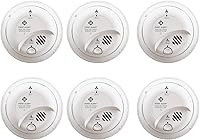
First Alert 9120B / SMI100-AC Smoke Detector

Ionization smoke detector vs photoelectric: how do they differ?
Ionization alarms use a small electric current to sense smoke particles, while photoelectric alarms use light inside a sensing chamber. The different sensing methods can affect how quickly each type responds to different fire conditions.
An ionization alarm can respond well to fast-flaming fires that produce smaller combustion particles. A photoelectric alarm can respond well to larger smoke particles from slow, smoldering fires.
That difference is a tendency, not a guarantee that one alarm will detect every fire first. Fire behavior, smoke movement, alarm placement and the exact model all matter.
How do ionization smoke detectors work?
An ionization alarm uses a small amount of radioactive material to help create an electric current inside its sensing chamber. Smoke entering the chamber changes that current, which can trigger the alarm.
Read more about how ionization smoke detectors work and what an ionization smoke detector is. Knowing the sensor design can help you compare models and understand why the alarm may react differently to smoke.
How does a photoelectric smoke detector work?
A photoelectric alarm shines light inside a sensing chamber and looks for changes caused by smoke. It often responds well to larger particles produced by smoldering fires.
The photoelectric smoke detector's sensing process explains why this design can suit areas where a slow, smoky fire is a concern. A photoelectric model may also be a good fit if cooking fumes cause frequent nuisance alarms, though placement and the specific alarm still matter.
Is a photoelectric smoke detector better?
A photoelectric alarm can be better for detecting slow, smoldering fires, but it isn't the best choice for every fire risk. Ionization alarms can respond well to fast-flaming fires, so using both types gives broader coverage.
A dual-sensor alarm combines ionization and photoelectric sensing in one unit. If you prefer separate alarms, use models that meet local requirements and follow their instructions for placement and interconnection.
Consider the rooms and conditions in your home before deciding. An alarm near a kitchen, a bedroom and a hallway may face different placement needs, but every location should follow the manual and applicable fire-safety rules.
Are photoelectric smoke detectors better near kitchens?
Photoelectric alarms may reduce nuisance alerts from cooking fumes and steam compared with some ionization alarms. That can make them worth considering near cooking areas, but an alarm should not be placed wherever it is convenient without checking the manual.
The X-Sense Smoke Detector uses photoelectric sensing and is designed to help reduce unwanted alarms from everyday cooking fumes and steam. It's a standalone, battery-powered option if you don't need wireless interconnection.
Choose an approved location based on the alarm instructions and local guidance. Don't remove batteries or disable an alarm to stop nuisance alerts; address placement or use the hush feature as directed.
What are the trade-offs of each smoke alarm type?
Ionization alarms suit fast-flaming fire detection, while photoelectric alarms suit slow, smoldering fire detection and may reduce some cooking-related nuisance alarms. Your best fit also depends on power, wiring and whether you need linked alarms.
| Choice | Consider it if | Keep in mind |
|---|---|---|
| Ionization | You want sensing that can respond well to fast-flaming fires | Cooking fumes may trigger unwanted alarms, depending on placement and model |
| Photoelectric | You want sensing that can respond well to slow, smoldering fires | It does not replace ionization sensing for every fire condition |
| Dual sensor or both types | You want coverage from both sensing approaches | Follow local rules, manuals and compatibility guidance |
For an ionization option, the First Alert 9120B / SMI100-AC is a three-pack of hardwired alarms with battery backup. It uses an ionization sensor and can connect to compatible BRK or First Alert alarms.
A photoelectric smoke alarm can also be part of a combination unit. The Kidde 21007624 pairs photoelectric smoke sensing with carbon monoxide detection, hardwiring and battery backup.
What should you check before choosing an alarm?
Check the required alarm locations, power source, interconnection needs and local rules before comparing sensor types. A suitable sensor cannot make up for missing alarms or an incompatible installation.
Start by checking whether the home has hardwired alarms that must be replaced or interconnected. If you need a new hardwired unit, confirm that it can connect to your existing system before buying.
The Siterlink Hardwired Interconnected Smoke Detectors use photoelectric sensing, battery backup and interconnection. The manufacturer describes the system so linked alarms sound together when one is triggered.
If you want a standalone alarm without wiring, check its power and connection limits. The X-Sense SD2J0AX works independently and does not provide Wi-Fi, app alerts or wireless interconnection.
For a broader product comparison, see our guide to the best photoelectric smoke detector. Check that the model's power and connection type work in the room where you plan to install it.
Are ionization smoke detectors safe or banned?
Ionization alarms are a common smoke-sensing type, but rules about their sale and use vary by location. Check local requirements and the alarm's instructions before replacing or installing one.
Some ionization alarms contain a small amount of radioactive material sealed inside the device. The presence of that material does not by itself tell you how to handle, dispose of or replace a specific alarm.
Our guide answers are ionization smoke detectors safe in more detail. For location-specific rules, consult your local fire department or building authority, and read whether ionization smoke detectors are banned where you live.
Can smoke alarms detect cigarette smoke or vape?
Smoke alarms may react to cigarette smoke or vape aerosol if enough particles reach the sensor, but they are not designed to identify the source. Response depends on the amount, distance, airflow and alarm type.
See whether smoke detectors detect cigarette smoke and whether smoke detectors detect vape for details. Don't use that possibility as a reason to cover, disable or remove a working alarm.
If you need to detect heat rather than airborne smoke, a heat detector serves a different purpose and doesn't replace a smoke alarm in sleeping areas. Compare the roles in our smoke detector vs heat detector guide and review how combination smoke and heat detectors work.
Which smoke detector should you choose?
Choose photoelectric sensing if slow, smoldering fires and cooking-related nuisance alarms are your main concerns; choose ionization sensing for fast-flaming fire detection. For broader coverage, consider both sensing types or a dual-sensor alarm, then match power and interconnection to your home.
A standalone battery alarm may suit a room without hardwiring, while a hardwired model can fit an existing compatible system. The right ionization smoke detector vs photoelectric choice is the one that meets local rules and the alarm's placement and installation instructions.
Frequently asked questions
Are photoelectric smoke detectors better than ionization?
Photoelectric alarms are often a good fit for slow, smoldering fires, while ionization alarms respond well to fast-flaming fires. Neither type is best for every fire.
For broader coverage, use both sensing types or a dual-sensor alarm, and check local requirements before choosing.
Should I replace an ionization alarm with a photoelectric one?
Replace an alarm when it reaches the end of its service life or its instructions call for replacement, and choose a model that meets local rules. If you want both sensing approaches, consider a dual-sensor model or use appropriately placed alarms of each type.
Do photoelectric smoke alarms reduce cooking nuisance alarms?
Some photoelectric alarms are designed to reduce unwanted alarms from everyday cooking fumes and steam. Placement matters too: follow the alarm's instructions and local guidance for distance from cooking appliances, and don't disable an alarm because it sounds during cooking.
Can I mix ionization and photoelectric smoke alarms?
You can use both types in a home, but interconnected alarms must be compatible with one another. Check the manuals and wiring requirements before connecting models from different systems, and follow local rules for alarm placement and coverage.
Which smoke detector should I choose for a bedroom?
Choose an alarm type and placement that meet local rules, then follow the manufacturer's instructions for the bedroom and nearby hall. Photoelectric sensing is one option; a dual-sensor alarm or a layout using both sensing types can provide broader detection coverage.