Smoke Detector vs Heat Detector: Which Should You Choose? (November 2026)
Choose a smoke detector for bedrooms and living areas, and a heat detector for garages, kitchens or dusty spaces. The best setup may use both types in different rooms.
On this page (7 sections)
Choose smoke detectors for bedrooms, hallways and living areas, and choose heat detectors for garages, kitchens or dusty rooms where smoke alarms may cause unwanted alerts. A smoke detector and heat detector do different jobs, so many homes benefit from using each type where it fits best.
Think of the choice room by room rather than picking one type for the whole house.
A smoke detector senses smoke particles in the air.
A heat detector responds to high temperature, such as the Kidde model's trigger above 135°F.
That simple difference changes how each device behaves in daily life.
A smoke detector can react while smoke is still developing, before a room gets very hot.
A heat detector waits for temperature to rise to its set point.
This makes smoke detection the usual fit for sleeping areas and main living spaces.
It also explains why a heat detector can reduce nuisance alerts in a garage.
Vehicle exhaust, dust, steam and humidity can disturb a smoke detector more easily than a heat detector.
Your choice also depends on wiring, battery maintenance, carbon monoxide coverage and whether you want alarms to sound together.
Some homes already have wired alarm points ready to use.
Other homes suit battery models that can sit on a wall or ceiling without new wiring.
Carbon monoxide is a separate concern that neither a plain smoke detector nor a plain heat detector covers.
A combination alarm is needed when you want smoke and CO detection in one unit.
This comparison focuses on those practical differences so you can match each alarm to the room.
Start with how people use the room and what the air is normally like there.
Then check power, sensing type and any need for linked alerts.
Finally, check local rules and the instructions for each model before you buy or mount it.
Smoke detector vs heat detector: how do they work?
Smoke detectors respond to smoke, while heat detectors respond to temperature. That difference determines which rooms each device can cover well.
Smoke detectors are designed to alert when smoke reaches the sensing chamber. Photoelectric models, such as the X-Sense Smoke Detector, use photoelectric sensing and include an audible local alert.
Heat detectors wait for a temperature condition. The Kidde Heat Detector alerts when temperatures rise above 135°F and sounds an 85-decibel alarm.
A heat detector may reduce unwanted alerts in a room where smoke, dust, steam or humidity is common. It also means the device does not provide the same smoke-sensing response as a smoke detector.
For a basic explanation of what is a smoke alarm, start with the separate guide before deciding how many alarms your home needs.
Smoke detector and heat detector in different rooms
Use the detector that matches the room's normal conditions. Bedrooms, hallways and living rooms usually suit smoke detectors, while garages and other dusty or humid areas may suit heat detectors.
Do not place a heat detector in a bedroom simply because it has fewer unwanted alerts. The room's need for early smoke warning matters more than convenience.
Likewise, do not assume a smoke detector is the best choice for every room. Cooking fumes, shower steam, dust and humidity can cause unwanted smoke-alarm alerts.
Which detector suits each room?
Smoke detectors suit occupied living spaces, while heat detectors suit locations where smoke alarms may not be appropriate. Room use and air conditions should guide the placement.
Bedrooms and hallways
Bedrooms and hallways generally need smoke detection rather than heat-only detection. A smoke alarm can alert you before a room reaches the high temperature needed by a heat detector.
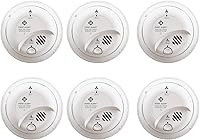
The X-Sense Smoke Detector is a standalone 5-pack with photoelectric sensing and a sealed lithium battery that powers each alarm for up to 10 years. It needs no wiring or electrician for installation, but the alarms do not connect wirelessly or sound together.
If you want to compare sensing styles, read ionization smoke detector vs photoelectric before choosing between detector types.
Garages and dusty areas
A heat detector often fits a garage better than a smoke detector. Exhaust, dust and other normal conditions can create unwanted smoke-alarm alerts, while a heat detector waits for a high-temperature condition.
The Kidde Heat Detector uses 120V wired power with a 9-Volt alkaline battery backup. It has a 135°F heat trigger, an 85-decibel alarm and a Test-Hush button.
Its hardwired design makes it different from the battery-powered X-Sense models. Plan the wiring before installation, and use its interconnection capability only with a compatible Kidde arrangement.
Kitchens and humid areas
Choose based on the exact conditions near the appliance or source of steam. A heat detector may be more suitable where cooking fumes or steam regularly cause unwanted smoke alarms, but it should not replace smoke alarms elsewhere.
Keep detectors away from routine sources of steam and cooking fumes according to the installation instructions. The correct distance and position depend on the device and local requirements.
A combination smoke and heat detector can be useful when one device needs to respond to both conditions. See the guide to combination smoke and heat detector for the trade-offs.
Do smoke detectors give earlier warning?
Smoke detectors can respond to smoke before a room reaches a heat-detector threshold. That makes them the usual choice for sleeping areas and main living spaces.
A heat detector responds after temperature rises above its trigger point or meets its heat-sensing condition.
It is designed for locations where smoke detection may be unsuitable, not as a universal replacement for smoke alarms.
In a bedroom, that timing matters because people may be asleep and need a faster alert.
In a hallway, early smoke warning can help the whole home respond sooner.
Photoelectric sensing is one common smoke-detection method.
The photoelectric smoke detector how it works guide explains how this sensor responds to smoke in more detail.
The X-Sense Smoke Detector uses photoelectric sensing and a local audible alert.
Its one-button control supports self-tests or silencing nuisance alarms, while its sealed battery reduces routine battery changes.
That sealed battery is rated for up to 10 years, so there are no regular battery swaps to plan.
Day to day, this suits busy homes where maintenance tasks are easy to postpone.
It also suits renters who need coverage without wiring changes, since each alarm works on its own.
The trade-off is that standalone alarms do not sound together across rooms.
An ionization model may suit a different preference, but smoke-alarm choice should consider room placement, local rules and the device's instructions.
Read are ionization smoke detectors safe for more context.
Place smoke detectors where smoke is most likely to reach them and where people can hear the alert.
Keep them away from routine sources of steam and cooking fumes where possible.
Test each alarm as the instructions direct and replace it at the end of its stated service life.
Do you need carbon monoxide detection too?
Smoke and heat detectors do not provide the same coverage as a combination smoke and CO alarm. If carbon monoxide protection matters, choose a product that specifically includes CO detection.
The X-Sense Wireless Combination Smoke and CO Detector uses photoelectric and electrochemical sensors in one device. Its sealed lithium battery lasts for 10 years, and wireless interconnection makes all connected alarms sound together when one detects smoke or CO.
This model supports wireless interconnection but does not have Wi-Fi and cannot use a base station. Confirm that its wireless setup fits the other alarms you plan to use.
The X-Sense Smoke Detector Carbon Monoxide Detector Combo is another combination option. Its 5-pack uses photoelectric smoke sensing and electrochemical CO sensing, with an LCD that shows battery level and real-time CO levels in PPM.
This SC07 model does not support wireless interconnection, Wi-Fi or base-station use. It needs no rewiring and mounts on a wall or ceiling with the included mounting bracket, screws and anchor plugs.
For another CO-focused comparison, see best smart carbon monoxide detector. A smart CO alarm may offer a different feature set from these standalone or wirelessly interconnected models.
Wired or battery-powered: which is easier?
Battery-powered alarms are simpler to place, while hardwired alarms suit homes with the right electrical setup. Choose based on the room, existing wiring and your maintenance preference.
The X-Sense Smoke Detector uses a sealed 10-year lithium battery.
Its 5-pack can cover several rooms without running wire, but each alarm works independently.
That setup suits bedrooms, hallways, living rooms and basements where you want photoelectric smoke detection in more than one spot.
You do not need an electrician for mounting, and one button handles self-test or hush.
The downside is simple to plan for, because an alarm in one room will not trigger the others.
The X-Sense Wireless Combination Smoke and CO Detector also uses a 10-year sealed lithium battery.
It adds RF wireless interconnection, so connected alarms can sound together, but it is not a Wi-Fi or base-station product.
That link matters in a larger home where a warning in a distant room could otherwise be missed.
It also combines smoke and carbon monoxide detection, which a smoke-only alarm does not provide.
You still need to confirm that the other alarms in the home are compatible with this wireless setup.
The Kidde Heat Detector uses 120V wired power and a 9-Volt alkaline battery backup.
Its quick-connect power harness is intended to make installation easier, but electrical work still needs to follow the instructions and local requirements.
The battery backup helps during a power failure, yet the 9-Volt battery still needs periodic replacement.
That is a different maintenance task from a sealed 10-year battery that you never swap during use.
The X-Sense Smoke Detector Carbon Monoxide Detector Combo is also battery powered with a sealed 10-year battery.
Its LCD shows battery level and real-time CO levels in PPM, which helps you check status at a glance.
It is a standalone model, so it has no wireless interconnection, Wi-Fi or base-station use.
For care, keep each alarm free of dust and follow the cleaning and testing schedule in its manual.
A hardwired detector can suit a planned wired system with backup power.
A sealed-battery detector may suit a rental, a finished room or a location where adding wiring is not practical.
Match the power choice to the room first, because placement and ease of upkeep matter as much as the sensor type.
Which option is best for your home?
Pick a smoke detector for normal living areas, a heat detector for harsh rooms, and a combination alarm when you also need carbon monoxide detection. The right choice depends more on room conditions than on choosing one detector type for the whole home.
Choose the Kidde Heat Detector for a garage or another space where dust, steam, humidity or routine conditions may cause unwanted smoke alarms. Its 120V wiring and 9-Volt battery backup make it a better fit for a suitable wired location.
Choose the X-Sense Smoke Detector for simple smoke coverage across 5 rooms. It uses photoelectric sensing and sealed 10-year batteries, but the alarms are standalone.
Choose the X-Sense Wireless Combination Smoke and CO Detector when linked smoke and CO alerts matter. Choose the X-Sense Smoke Detector Carbon Monoxide Detector Combo when you want 5 standalone combination alarms with LCD CO readings.
If you are comparing brands for a smoke-only setup, the X-Sense vs Kidde smoke detector guide can help you review the broader choice.
Final choice: smoke detector vs heat detector
Choose smoke detectors where early smoke warning matters, and choose heat detectors where normal room conditions could cause repeated smoke alarms. Add combination smoke and CO alarms where carbon monoxide protection is part of your plan.
The key rule is simple: use smoke detection for bedrooms, hallways and living areas, then use heat detection only where the environment calls for it.
A garage often fits a heat detector because exhaust and dust can cause unwanted smoke alerts.
A kitchen or humid area needs a closer look at the exact source of fumes or steam.
Do not use a heat detector in a bedroom just to avoid nuisance alerts, since early smoke warning matters there.
Do not use a smoke detector in a harsh room if normal conditions will make it unreliable.
Check local fire-safety requirements and each device's installation instructions before mounting any alarm.
Think about wiring before you buy, because a hardwired model needs a suitable 120V setup.
Think about linked alerts too, because some alarms sound together and others work alone.
Add CO detection with a combination alarm if you have fuel-burning appliances or an attached garage.
Test alarms regularly and keep them clean so dust does not affect performance.
Replace any alarm that is damaged, past its service life or no longer testing correctly.
With that plan in place, each room gets the type of warning it actually needs.
Frequently asked questions
What is the main difference between a smoke detector and a heat detector?
A smoke detector responds to smoke particles, while a heat detector responds to a rise in temperature. Smoke detectors usually fit bedrooms, hallways and living areas.
Heat detectors suit places such as garages, kitchens, attics or dusty rooms where smoke, steam or humidity may cause unwanted smoke alarms.
Is a heat detector better than a smoke detector?
A heat detector is better only where a smoke detector may cause frequent unwanted alerts or may not be suitable. It does not replace smoke detection in bedrooms and living areas.
For many homes, the safer layout is smoke detectors in living spaces and a heat detector in a garage or another harsh environment.
Can you use a smoke detector and heat detector together?
Yes, you can use a smoke detector and heat detector in different rooms when each type suits the environment. A smoke detector can cover bedrooms and hallways, while a heat detector can cover a garage or kitchen.
Follow local rules and each device's installation instructions.
Should a garage have a smoke detector or heat detector?
A garage often suits a heat detector because vehicle exhaust, dust and temperature changes can cause unwanted smoke-detector alerts. The Kidde Heat Detector is a hardwired model with battery backup and a 135°F heat trigger.
Check local fire-safety requirements before installation.
Are photoelectric smoke detectors good for bedrooms?
Photoelectric smoke detectors are a practical choice for bedrooms and hallways because they sense smoke and can provide a local audible alert. The X-Sense Smoke Detector uses photoelectric sensing, a sealed 10-year battery and a one-button self-test and hush function.