How to Read a Radon Detector
To read a radon detector, check the unit, averaging period, and time of the latest update before interpreting the number. A short-term change is a snapshot, while a longer average gives more context.
On this page (10 sections)
- What does the number on a radon detector mean?
- What is the difference between a current reading and an average?
- Why does the reading change during the day?
- How long should you wait before interpreting the display?
- What should you do if the reading looks high?
- Does a monitor alarm mean you should take action?
- Can you compare readings from different rooms or devices?
- Do radon detectors work like carbon monoxide detectors?
- How should you track readings over time?
- How can you read a radon detector with confidence?
To read a radon detector, check its unit, averaging period, and update time before you act on the number. A quick reading can move around, while a longer average gives you more context.
Most US home devices show radon in picocuries per liter, written as pCi/L. The display may show a current estimate, a short-term average, or a longer-term average, and those numbers can differ.
What does the number on a radon detector mean?
The number is an estimate of radon concentration in the air, expressed in the unit shown on the screen. In the United States, that unit is commonly pCi/L.
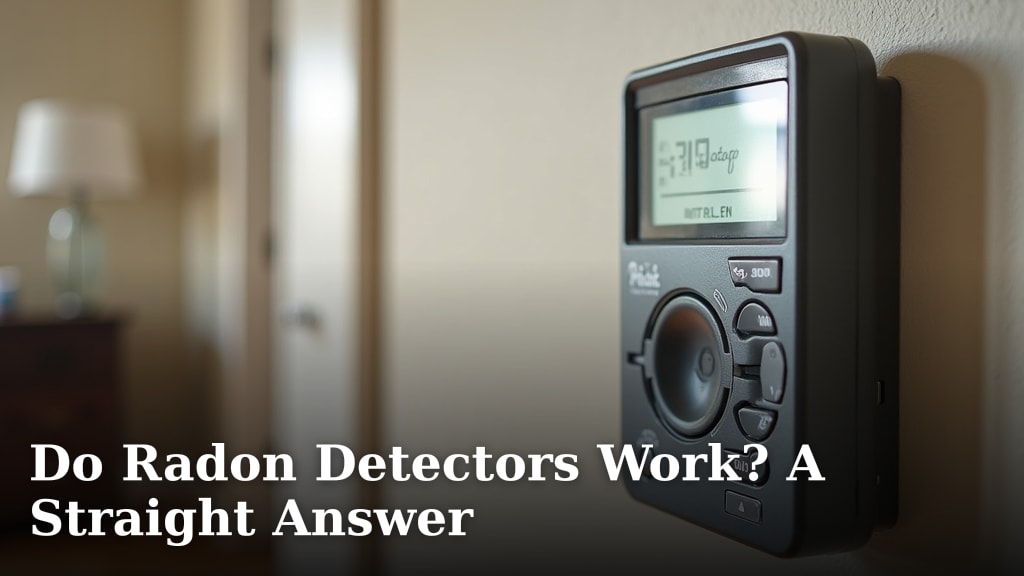
Look for a label such as “current,” “short-term,” “long-term,” or an elapsed measurement time. If the display only shows a number, check the device manual or app to learn whether it is an average and how long the monitor has been collecting data.
A radon detector is different from a carbon monoxide alarm. To understand what a detector measures and how common devices work, start with [What Is a Radon Detector?
A Simple Guide](/what-is-a-radon-detector/).
How to read a radon detector in pCi/L
A reading of 4 pCi/L means the device estimates an average radon concentration of 4 picocuries per liter for the period it displays. It does not tell you the exact concentration at every moment or in every room.
Compare readings only when the units, room, placement, and averaging periods are similar. A reading from a basement monitor, for example, may not match a reading from a bedroom upstairs.
What is the difference between a current reading and an average?
A current reading reflects a recent measurement window, while an average combines readings over a longer period. The average can smooth out short-lived changes and make trends easier to see.
Some monitors show several readings at once. The device instructions explain how it defines each one, since update timing and averaging windows differ between models.
Don't treat a newly switched-on monitor as if it already has a settled long-term average. Give it the time its instructions recommend, and note the start date if you plan to track changes.
Why does the reading change during the day?
Radon readings can change as the monitor collects new data and conditions in the home shift. A changing display does not by itself mean the device is broken or that a problem has been resolved.
Doors and windows, heating or cooling, and air movement can affect how air mixes in a room. Keep the monitor in the same suitable location while you compare readings, and follow the device's placement guidance.
A short dip is not a reason to ignore a higher average. Likewise, one high point should be read in context with the measurement period and any follow-up test guidance.
How long should you wait before interpreting the display?
Wait until the device has collected measurements for the period described in its instructions. A very new reading has less context than an average based on more time.
Some readers want a simple screening test rather than a display they monitor continuously. The First Alert Radon Gas Test Kit is a lab analyzed kit that includes test materials and lab fees, except New Jersey state fees; results are emailed within 72 hours of lab receipt.
Use a test according to its directions, including the required placement and exposure period. Keep its result separate from a monitor's reading, since the methods and time periods may differ.
What should you do if the reading looks high?
If a reading seems high, check the unit and averaging period, then follow current public health guidance for your area. A single brief reading is not enough to describe long-term exposure.
For context in the United States, the EPA recommends taking action to fix a home if a long-term test result is 4 pCi/L or higher, and says to consider fixing it when results are between 2 and 4 pCi/L. Review the EPA's radon guidance for current recommendations and testing advice.
Consider a follow-up test when the result or circumstances call for one. If the reading is part of a home purchase or formal evaluation, ask what testing method the transaction or local rules require; [What Is a Radon Inspection?
What It Means](/what-is-a-radon-inspection/) explains what an inspection may involve.
Does a monitor alarm mean you should take action?
An alarm means the monitor has reached a threshold or condition set by its maker, so check the instructions to learn what triggered it. The alarm alone does not replace reading the value, unit, average, and time period.
If you want to compare alarm features, see Radon Monitors with Alarm System: A Useful Guide. A radon alert is not the same as a smoke or carbon monoxide alarm; smoke and radon detector explains the difference.
A charcoal test kit may suit a one-time check. The Leaping Lynx Radon Test Kit for Home is a 48-hour short-term kit with laboratory analysis included; postage is required to return the detector, and results are typically reported 3–5 business days after the lab receives the sample.
Follow the kit instructions for where to place it and how to return it. A lab test gives a result for its sampling period, not a continuously changing display.
Can you compare readings from different rooms or devices?
You can compare them only with care, because placement, device method, and averaging period can differ. Keep a simple record of the location, date, unit, and displayed time window for each reading.
Don't place monitors beside an open window, a vent, or a doorway unless the instructions say to. Choose a stable location that follows the device's guidance, and avoid moving it mid-measurement.
A monitor can help track a pattern, while a short-term test kit can provide a separate screening result. The AccuStar Charcoal Short Radon Gas Test Kit is described for a 48–96 hour test and requires undisturbed placement under closed-building conditions.
Don't compare that kit's result directly with a monitor's newest display value. Compare the same room and similar time periods when possible, and follow professional guidance for decisions about mitigation.
Do radon detectors work like carbon monoxide detectors?
Radon detectors measure radon, while carbon monoxide detectors are designed to warn about carbon monoxide. If you are unsure whether one is installed, see how to tell whether your home has a radon detector.
One device should not be assumed to detect both gases unless its instructions clearly say it does.
For carbon monoxide device options, see our guides to the best X-Sense carbon monoxide detector and best wall mount carbon monoxide detector. Those products address a different gas and do not replace a radon monitor or test.
If you're choosing between a monitor and a kit, Do Home Radon Detectors Work? A Plain Guide and [Do Radon Detectors Work?
A Straight Answer](/do-radon-detectors-work/) explain what each approach can tell you.
How should you track readings over time?
Track the date, room, unit, measurement period, and any change in placement or household conditions. That makes it easier to see whether the displayed pattern is stable or still shifting.
Use the same device and location for a consistent record. If you move it, start a new note for the new location rather than treating the two readings as one continuous series.
Follow the monitor's own instructions for resets, app syncing, and calibration. If the manual is unclear or readings remain concerning, contact the manufacturer or a qualified radon professional.
How can you read a radon detector with confidence?
Start with the unit, the averaging window, and the last update time. Then compare like with like, allow enough time for the measurement period, and use follow-up testing or public health guidance when a result calls for it.
Choose a continuous monitor if you want to watch readings over time, or a test kit if a defined sampling period and lab result better fit your need. For a formal home review, use the right testing method for the decision you need to make.
Frequently asked questions
What units does a radon detector use?
Radon readings are commonly shown in picocuries per liter (pCi/L) in the United States, though some devices may use other units. Check the unit on the screen or in the device instructions before comparing a reading with guidance or another monitor.
A number without its unit is hard to interpret.
Why does my radon detector reading keep changing?
Radon levels can shift over time, and many monitors update as they collect new measurements. Room conditions, airflow, and the averaging period can affect the displayed number.
Use the device instructions to understand how often it updates, and give a longer average time to build before drawing a conclusion.
Should I be concerned about a high short-term radon reading?
A brief high reading is a reason to check the device instructions and consider a follow-up test, but one moment does not describe long-term exposure. Follow current public health guidance for your location and use an appropriate test to confirm the result.
Contact a qualified radon professional if you need help interpreting next steps.
Can a radon detector display replace a radon test?
A monitor can show ongoing readings, while a test kit may collect a sample for laboratory analysis. Which approach fits depends on why you're checking and the device or test instructions.
For a formal inspection or real estate decision, ask the relevant professional or authority which measurement method is accepted.