6 Best X-Sense Carbon Monoxide Detectors (November 2026)
The best X-Sense carbon monoxide detectors include the Kidde Carbon Monoxide Detector for CO and gas alerts, the Kidde Carbon Monoxide Detector for battery-powered placement, and the X-Sense Smoke Detector and Carbon Monoxide Detector for a single standalone combo.
On this page (6 sections)
- How we compared X-Sense carbon monoxide detectors
- The best X-Sense carbon monoxide detectors and alternatives
- How to choose between standalone and connected X-Sense alarms
- Should you choose a combo smoke and CO alarm?
- What should you check before installing an X-Sense CO alarm?
- Which X-Sense carbon monoxide detector should you choose?
The best X-Sense carbon monoxide detector for most people who want a standalone combo alarm is the SC01, with smoke and CO detection, a sealed 10-year battery and a real-time CO display. For several rooms, consider the SC07 five-pack; for connected alarms, choose the XP0H-WN kit.
X-Sense offers different setups under similar model names, so check the exact model before choosing. The SC01 and SC07 are standalone alarms, while the XP0H-WN kit is interconnected.
Our picks at a glance
-
1

-
2

-
3
 Best for a single standalone combo
X-Sense Smoke Detector and Carbon Monoxide Detector
9.5/10 our score
See it on Amazon
- 4
 Check it
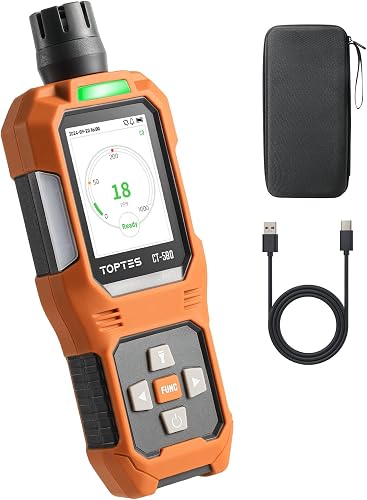
TOPTES CT-580 Portable Carbon Monoxide Detector
Best for portable CO readings - 5
 Check it
X-Sense Smoke Detector Carbon Monoxide Detector Combo
Best for multiple standalone rooms - 6
 Check it
X-Sense Interconnected Smoke Carbon Monoxide Detector Kit
Best for connected whole-home alerts
How we compared X-Sense carbon monoxide detectors
The SC01 suits a single location, the SC07 provides five standalone combo alarms, and the XP0H-WN kit is the connected option. We compared the models by alarm type, power, display features and connection style.
For a broader look at household options, see our guide to the best carbon monoxide detector for home. If you’re weighing smoke coverage too, our smoke alarm buying guide explains how to think about alarm placement and types.
We included two Kidde alarms and one portable TOPTES detector as comparison choices for buyers considering other power and placement styles. Our score weighs specs, features and buyer feedback against what you’re shopping for.
| Product | Best for | Power | Display | Alarm | Our score |
|---|---|---|---|---|---|
| Kidde Carbon Monoxide Detector | CO and gas alerts | Plug-in with 9V battery backup | CO level or GAS alert | 85 dB | 9.7 |
| Kidde Carbon Monoxide Detector | battery-powered placement | 2 AA batteries | 85 dB | 9.6 | |
| X-Sense Smoke Detector and Carbon Monoxide Detector | a single standalone combo | Sealed 10-year battery | 9.5 | ||
| TOPTES CT-580 Portable Carbon Monoxide Detector | portable CO readings | Rechargeable | 9.3 | ||
| X-Sense Smoke Detector Carbon Monoxide Detector Combo | multiple standalone rooms | Sealed 10-year battery | 9.2 | ||
| X-Sense Interconnected Smoke Carbon Monoxide Detector Kit | connected whole-home alerts | Sealed 10-year batteries | 9.1 |
The best X-Sense carbon monoxide detectors and alternatives
The SC01 is the straightforward single-alarm X-Sense pick, while the SC07 and XP0H-WN cover different multi-room needs. The first two products below are Kidde alternatives, followed by the X-Sense and portable options.
Kidde Carbon Monoxide Detector: Best for CO and gas alerts
- Plugs into a standard 120V outlet
- 9-volt battery backup
- Digital CO and gas display
- 85-decibel alarm
This plug-in Kidde adds explosive gas detection to carbon monoxide alerts. Its display shows the CO level or states GAS when explosive gas is detected.
Pros
- Shows CO level
- Detects certain explosive gases
- Battery backup for power outages
Cons
- Not an X-Sense model
- Requires an outlet
The Kidde KN-COEG-3 is a plug-in alarm for buyers who want carbon monoxide and explosive gas alerts in one device. It plugs into a standard 120V outlet and has a 9-volt battery backup for a power outage.
Its digital display shows the CO level it senses, or the word “GAS” when it detects explosive gas. The alarm is rated at 85 decibels, and peak-level memory records the last time CO was detected or the unit was tested.
This is the most distinct alternative in the group because it also detects propane, natural gas, methane and other explosive gas described by Kidde. It does not combine smoke detection, so plan for a separate smoke alarm where needed.
Choose this model if you want a plug-in CO alarm with gas detection and a readout. It is a Kidde option rather than an X-Sense detector.
Kidde Carbon Monoxide Detector: Best for battery-powered placement
- Runs on 2 AA batteries
- No wiring needed
- Wall or tabletop placement
- 85-decibel alarm
This battery-powered Kidde can be mounted on a wall or placed on a tabletop. It works without household wiring and has peak-level memory.
Pros
- No wiring needed
- Portable wall or tabletop setup
- Peak-level memory
Cons
- Not an X-Sense model
- Does not combine smoke detection
This battery-powered Kidde uses two AA batteries and needs no wiring. Its portable design can be mounted on a wall or placed on a tabletop, which gives you more flexibility than an outlet-powered alarm.
An 85-decibel alarm sounds and a red LED flashes when CO is detected; a green LED indicates power. Peak-level memory records the last detection or test, and a test-hush button lets you test the alarm or temporarily silence a low-battery chirp.
This is a useful comparison if you need an independent, battery-operated alarm. It does not include smoke detection or the interconnected setup available with the X-Sense kit.
Pick it for portable placement and battery operation. For other battery-powered options, see our best battery-operated Kidde carbon monoxide detectors.
X-Sense Smoke Detector and Carbon Monoxide Detector: Best for a single standalone combo
- Smoke and CO detection
- Sealed 10-year battery
- Real-time CO and battery display
- Standalone SC01 model
The SC01 combines smoke and carbon monoxide detection in one standalone alarm. Its sealed battery is designed to power the device for its 10-year life.
Pros
- Combines smoke and CO detection
- Real-time CO display
- No rewiring required
Cons
- Does not interconnect wirelessly
- Cannot be used with a base station
The X-Sense SC01 is the best fit here for one standalone combo alarm. It combines smoke and CO detection, and its sealed lithium battery is designed to power the alarm for its full 10-year life.
A display shows real-time CO and battery information. The SC01 mounts on a wall or ceiling with the included bracket and hardware, without rewiring.
The key limitation is its connection type: the SC01 does not support wireless interconnection, Wi-Fi or a base station. If alarms need to communicate across rooms, compare the SC01-W or the interconnected XP0H-WN kit instead of assuming the basic SC01 has that feature.
Choose this model when one location needs smoke and CO detection with a sealed battery. For placement that could include a workshop or attached garage, read our guide to the best carbon monoxide detector for a garage.
TOPTES CT-580 Portable Carbon Monoxide Detector: Best for portable CO readings
- Handheld CO detector
- Rechargeable by USB-C
- Visual, audible and vibration alarms
- TFT color display
The CT-580 is a portable inspection tool with a color display and three alert modes. It is rechargeable and includes a protective case and USB-C cable.
Pros
- Portable handheld design
- Three alert modes
- Adjustable screen brightness
Cons
- Not an X-Sense model
- Manual inspection tool rather than a mounted household alarm
The TOPTES CT-580 is a handheld CO inspection tool rather than a mounted household alarm. It has a color display and a stated detection range from 0 to 1,000 PPM.
It provides visual, audible and vibration alerts, which can be useful when you’re carrying it or working in a noisy setting. The rechargeable unit includes a USB-C cable, protective case and built-in flashlight.
TOPTES describes the CT-580 as suitable for personal and business use, with menu options that include alarm history and calibration settings. Those features make it a different kind of tool from an always-mounted home alarm.
Choose it for portable readings and multiple alert modes. It is not an X-Sense product or a substitute for placing household alarms according to their instructions.
X-Sense Smoke Detector Carbon Monoxide Detector Combo: Best for multiple standalone rooms
- 5-pack of smoke and CO alarms
- Sealed 10-year batteries
- Real-time CO readings on LCD
- Standalone SC07 model
The SC07 five-pack covers several locations with combo smoke and CO alarms. Each has an LCD for real-time CO levels and battery status.
Pros
- Five alarms in one pack
- Shows real-time CO levels
- No rewiring required
Cons
- Does not interconnect wirelessly
- No Wi-Fi functionality
The X-Sense SC07 five-pack is for buyers who need several smoke and CO alarms but do not need them to interconnect. Each combination alarm has a sealed 10-year battery and an LCD that shows real-time CO levels and battery status.
Like the SC01, the SC07 is standalone. It does not support wireless interconnection, Wi-Fi or a base station, so alarms won't communicate with one another as part of this setup.
The five-pack can help cover multiple rooms or levels, depending on your home’s needs and the alarm placement guidance. If you want linked alarms, look at an SC07-W model or the XP0H-WN kit instead.
Choose this pack when you want several standalone combo alarms in one purchase. For displayed readings from another brand, compare our best Kidde carbon monoxide detectors with displays.
X-Sense Interconnected Smoke Carbon Monoxide Detector Kit: Best for connected whole-home alerts
- Four XP0H-WN combo alarms
- One RC01 Pro remote
- Interconnected alarms
- Real-time CO display
This kit includes four XP0H-WN combination alarms and an RC01 Pro remote control. The alarms interconnect and show real-time CO levels on their LCDs.
Pros
- Interconnected alarm setup
- Remote control included
- Smoke and CO detection
Cons
- Four alarms may not suit every home
- Requires planning for connected alarm placement
The XP0H-WN kit is the X-Sense choice for interconnected smoke and CO alarms. It includes four combination alarms and one RC01 Pro remote control.
Each alarm has photoelectric smoke and electrochemical CO sensors, plus an LCD showing real-time CO levels, battery level and working status. The kit uses sealed batteries designed for 10 years, and X-Sense describes it as an RF-interconnected model.
This setup can suit a home where alarms need to communicate across locations. Before choosing it, plan how many alarms your home needs and where each should go; a connected kit does not remove the need to follow installation instructions.
Choose the XP0H-WN kit if interconnected alerts and a remote are useful. For another view of alarm dependability, read how reliable carbon monoxide detectors are.
How to choose between standalone and connected X-Sense alarms
Choose standalone alarms for independent locations and an interconnected kit when you want alarms to communicate. The SC01 and SC07 are standalone; the XP0H-WN kit is the connected option in this comparison.
A standalone model is simpler if you only need a detector in one place or prefer each alarm to operate on its own. The SC01 has one alarm, while the SC07 pack gives you five.
Interconnection can help alert people in other areas when one alarm detects danger. X-Sense describes the XP0H-WN kit as RF interconnected and includes four alarms plus a remote control.
Check the full model name carefully. X-Sense distinguishes the SC01 and SC07 from their connected variants, and similar model numbers do not guarantee the same features.
Should you choose a combo smoke and CO alarm?
A combo alarm can detect both smoke and carbon monoxide at one installed location. The SC01, SC07 and XP0H-WN options here combine those functions.
A combination unit may reduce the number of separate alarm devices you need at a location. It does not automatically provide coverage in every room, so follow the manufacturer’s placement instructions and local fire-safety requirements.
A standalone CO-only device may fit a location where smoke coverage is already handled separately. Consider the best wall-mount carbon monoxide detectors if wall placement is a priority.
What should you check before installing an X-Sense CO alarm?
Check the model, mounting location and power type before installation. The X-Sense options here include sealed-battery alarms, standalone units and an interconnected kit.
The SC01 and SC07 require no rewiring and include mounting hardware. The XP0H-WN kit also mounts without rewiring, while its connection feature makes it important to follow instructions for linking the units.
Place alarms according to the included instructions and local guidance. For help deciding whether your home needs one, see whether you need a carbon monoxide detector.
Which X-Sense carbon monoxide detector should you choose?
Choose the SC01 if you want one standalone X-Sense smoke and CO alarm with a sealed battery and CO display. Pick the SC07 for five standalone combo alarms, or the XP0H-WN kit for interconnected coverage.
If you need a CO-only portable alarm, the Kidde battery model is a separate option. For handheld readings rather than a mounted alarm, consider the TOPTES CT-580.
Our top 3 picks at a glance
-
1
-
2
-
3
Best for a single standalone combo
X-Sense Smoke Detector and Carbon Monoxide Detector
9.5/10 our score
See it on Amazon
Frequently asked questions
Which X-Sense carbon monoxide detector is best for most homes?
The SC01 is a practical choice if you want one standalone X-Sense alarm that detects smoke and carbon monoxide. It has a sealed 10-year battery and a display for real-time CO and battery information.
Choose the SC07 five-pack for several standalone rooms, or the XP0H-WN kit if you want interconnected alarms.
Are X-Sense SC01 and SC07 alarms interconnected?
No. The SC01 and SC07 are standalone models and do not support wireless interconnection, Wi-Fi or a base station.
For interconnection, X-Sense identifies SC01-W or SC07-W options.
Check the exact model before buying, since similar names can refer to different connection features.
Does an X-Sense smoke and CO alarm replace a smoke alarm?
A combo alarm detects both smoke and carbon monoxide, so it may cover both functions at its installed location. The SC01 and SC07 combine photoelectric smoke detection with electrochemical CO detection.
Plan coverage for each level and near sleeping areas according to the alarm instructions and local requirements.
Should I choose a standalone or interconnected CO alarm?
A standalone alarm can suit a single location or a home where you want independent units. An interconnected kit can make multiple alarms sound together when one detects danger, which may help alert people farther away.
Compare the connection type, number of alarms and installation needs with your home layout.


