9 Best Carbon Monoxide Detectors for Home (November 2026)
The best carbon monoxide detectors for home include the Kidde Carbon Monoxide Detector for plug-in home protection, the Kidde Carbon Monoxide Detector for portable battery power, and the X-Sense Smoke Detector Carbon Monoxide Detector Combo for sealed 10-year power.
On this page (10 sections)
- How we chose the best carbon monoxide detector for home use
- Quick comparison of the best carbon monoxide detectors
- The best carbon monoxide detectors for home use
- Should you choose a plug-in or battery carbon monoxide detector?
- Are combination smoke and carbon monoxide alarms worth it?
- Do carbon monoxide detectors detect CO2?
- What does UL 2034 mean for a carbon monoxide detector?
- How should you use and care for a home CO detector?
- More guides on this topic
- Which best carbon monoxide detector for home should you buy?
The best carbon monoxide detector for home use is the plug-in Kidde KN-COB-DP2, with AA battery backup, an 85 dB alarm and peak level memory. Choose the X-Sense SC07 for a sealed 10-year battery, TOPTES for portable inspection, or the Heiman 3-pack for low-level LCD warnings.
Carbon monoxide is an invisible hazard from fuel-burning sources. A home alarm should match your outlet access, room layout, need for smoke detection and willingness to replace batteries.
If you also need fire protection, start with our guide to what a smoke alarm is. For a plain explanation of alarm operation, see how carbon monoxide detectors work.
Our picks at a glance
-
1

-
2

-
3
 Best for sealed 10-year power
X-Sense Smoke Detector Carbon Monoxide Detector Combo
9.5/10 our score
See it on Amazon
- 4
 Check it
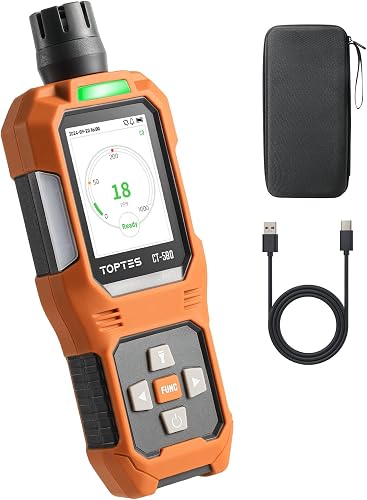
TOPTES CT-580 Portable Carbon Monoxide Detector
Best for portable CO inspection - 5
 Check it
Siterlink Carbon Monoxide Detectors Plug
Best for compact plug-in travel use - 6
 Check it
X-Sense Smoke Detector Carbon Monoxide Alarm Combo
Best for whole-home 3-pack coverage - 7
 Check it
Heiman Carbon Monoxide Detectors
Best for compact long-life placement - 8
 Check it
Heiman Carbon Monoxide Detectors
Best for low-level LCD warnings - 9
 Check it
SITERWELL Carbon Monoxide Detector 7 Year Product
Best for flexible LCD placement
How we chose the best carbon monoxide detector for home use
The best carbon monoxide detector for home use should offer a clear alarm, suitable power and a practical installation method. We compared the listed sensor types, power options, alarm signals, displays, battery designs, pack sizes and stated placement choices.
We gave higher scores to products that solve common home needs with fewer compromises. Plug-in power with backup, sealed long-life batteries, smoke and CO combination sensing, or clear LCD warnings can each matter more than a single extra feature.
Our score weighs specs, features and buyer feedback against what you're shopping for. We did not perform direct product testing, and the product summaries below stay within the stated product details.
Quick comparison of the best carbon monoxide detectors
| Product | Best for | Power | Alarm | Model | Our score |
|---|---|---|---|---|---|
| Kidde Carbon Monoxide Detector | plug-in home protection | Plug-in with 2-AA backup | 85 dB audible | KN-COB-DP2 | 9.7 |
| Kidde Carbon Monoxide Detector | portable battery power | 2-AA battery powered | KN-COPP-B-LPM | 9.7 | |
| X-Sense Smoke Detector Carbon Monoxide Detector Combo | sealed 10-year power | 10-year sealed battery | SC07 | 9.5 | |
| TOPTES CT-580 Portable Carbon Monoxide Detector | portable CO inspection | Rechargeable battery with USB-C charging | CT-580 | 9.3 | |
| Siterlink Carbon Monoxide Detectors Plug | compact plug-in travel use | AC plug-in with battery backup | A4602A-7 | 9.2 | |
| X-Sense Smoke Detector Carbon Monoxide Alarm Combo | whole-home 3-pack coverage | 10-year sealed battery | XP0H-SN | 9.0 | |
| Heiman Carbon Monoxide Detectors | compact long-life placement | Battery powered | C1-S | 8.8 | |
| Heiman Carbon Monoxide Detectors | low-level LCD warnings | 2-AA battery powered | HM-735ESY | 8.3 | |
| SITERWELL Carbon Monoxide Detector 7 Year Product | flexible LCD placement | Battery powered | GS828A | 8.1 |
The best carbon monoxide detectors for home use
The right pick depends first on power and placement. A plug-in alarm is convenient near an outlet, while a battery or sealed-battery model works in more locations.
Kidde Carbon Monoxide Detector: Best for plug-in home protection
- 120V plug-in power
- 2-AA battery backup
- 85 dB alarm
- Peak level memory
This Kidde detector suits homes that want outlet power with battery protection during an outage. Peak level memory and a Test-Hush button add useful day-to-day controls.
Pros
- Plug-in setup
- AA battery backup
- Peak level memory
Cons
- Needs a nearby 120V outlet
- Not a sealed-battery design
The Kidde Carbon Monoxide Detector is the best overall fit for a home with standard outlets near the rooms that need coverage. It plugs into a 120V outlet and adds 2-AA battery backup, so the alarm can continue operating during a power failure.
That backup matters in daily use because an outage is when heating, generators and other fuel burning equipment may be running. You still get a wired primary source, plus batteries when the outlet goes dark.
Its 85 dB alarm gives a clear audible warning, while the LED status indicators show the unit condition at a glance. Peak level memory records the last time carbon monoxide was detected or the last time the unit was tested.
The Test-Hush button supports routine testing and can silence a false alarm without switching the unit off. Kidde also describes an electrochemical sensor, a digital display that updates every 15 seconds, and a Smart-Hush period of about 8 minutes.
Choose this model when you want outlet power without giving up backup batteries. It is less flexible than a battery-only alarm if the room has no suitable outlet.
Kidde Carbon Monoxide Detector: Best for portable battery power
- 2-AA battery power
- Electrochemical sensor
- 85 dB alarm
- Wall or tabletop placement
This battery-powered Kidde works where you do not want wiring or an outlet. Its compact design can sit on a tabletop or mount on a wall.
Pros
- No wiring required
- Portable design
- Peak level memory
Cons
- Requires battery changes
- No plug-in power
The battery-powered Kidde Carbon Monoxide Detector suits homes, travel and rooms without convenient outlet access. It uses 2-AA batteries, needs no wiring and can sit on a tabletop or mount on a wall.
That freedom helps in hallways, bedrooms and rental spaces where outlets are already in use. You can place the alarm where people sleep or pass through, rather than where a plug happens to be free.
An electrochemical sensor detects carbon monoxide, while the 85 dB alarm and red LED indicate a CO event. The green LED shows power, and peak level memory records the last detected level or test time.
The Test-Hush button lets you test the alarm and temporarily silence the low-battery chirp. Its compact dimensions make it easier to move than a plug-in model, but you need to keep replacement batteries available.
Choose this Kidde when portable battery operation matters most. For a sealed battery that avoids regular battery changes, compare the X-Sense SC07 below and our guide to the best X-Sense carbon monoxide detector.
X-Sense Smoke Detector Carbon Monoxide Detector Combo: Best for sealed 10-year power
- 10-year sealed lithium battery
- Smoke and CO detection
- Electrochemical CO sensor
- 85 dB alarm
The X-Sense SC07 combines smoke and carbon monoxide detection in one standalone alarm. Its sealed battery removes routine battery replacement, while the included mounting hardware supports wall or ceiling installation.
Pros
- 10-year sealed battery
- 2-in-1 detection
- UL 217 and UL 2034 certified
Cons
- No wireless interconnection
- No Wi-Fi or base station connection
The X-Sense SC07 is the best choice here for a standalone smoke and carbon monoxide alarm with 10-year sealed lithium power. It uses a photoelectric smoke sensor and an electrochemical CO sensor in one unit.
That two in one design suits homes that want one device on a ceiling or wall instead of separate alarms. The smoke side is aimed at slow smoldering fires, while the CO side watches for carbon monoxide in the same location.
The SC07 includes a mounting bracket, screws and anchor plugs for wall or ceiling installation. Its 85 dB alarm and stated UL 217 and UL 2034 certification make it a useful option when you want both smoke and CO coverage from one alarm.
The main trade-off is connectivity. This is a basic standalone model with no wireless interconnection, Wi-Fi or base station connection.
Choose it when low maintenance matters more than replaceable batteries or connected alarms. Read how reliable carbon monoxide detectors are for more context on alarm care and placement.
TOPTES CT-580 Portable Carbon Monoxide Detector: Best for portable CO inspection
- 0–1000 PPM range
- Rechargeable battery
- Vibration, visual and audible alarms
- TFT color display
The TOPTES CT-580 is a handheld inspection tool for home, camping, travel, industrial and professional use. Its display and 3 alarm modes make it more suited to checking changing conditions than serving as a fixed wall alarm.
Pros
- Portable format
- 0–1000 PPM detection range
- Vibration alert
Cons
- Not a fixed plug-in alarm
- More controls than a basic home alarm needs
The TOPTES CT-580 is the best fit for portable CO inspection rather than ordinary fixed room coverage. It detects concentrations from 0 to 1000 PPM and shows readings on a TFT color display.
That wide range and live readout suit checking a space as conditions change. You can walk from room to room and see how levels rise or fall, instead of waiting for a fixed alarm to sound.
This rechargeable detector uses a high-sensitivity DDS sensor and has audible, visual and vibration alarms. The three alert modes can help when you are moving through a space, working in a noisy area or checking changing conditions.
Its ABS engineering plastic body includes adjustable screen brightness, auto screen-off, a built-in flashlight and USB-C charging. The box includes the CT-580, a protective case, a Type-C charging cable and a user manual.
Choose TOPTES for home checks, camping, travel, industrial or professional use. If you need an alarm mounted near bedrooms and operating continuously as part of your home layout, choose a fixed detector instead.
Siterlink Carbon Monoxide Detectors Plug: Best for compact plug-in travel use
- AC plug-in power
- 10-year replaceable battery backup
- Electrochemical sensor
- Foldable plug
Siterlink fits buyers who want a compact plug-in alarm that can also travel. The foldable plug and soft green status light suit bedrooms, hotels and other spaces where a small footprint matters.
Pros
- Foldable plug
- Electrochemical sensor
- Battery backup
Cons
- Requires an outlet for normal operation
- Backup description needs careful checking before purchase
Siterlink is the best compact plug-in option for bedrooms, hotels and travel. It uses AC power from a standard outlet and has a 10-year replaceable battery backup for outages.
That mix suits a nightstand or hallway outlet where you want mains power most days. The backup is there for a blackout, so protection does not depend only on the wall socket.
The electrochemical sensor is intended to reduce false alarms, while the foldable plug makes the unit easier to pack. A soft breathing-style green status light is designed for bedroom use without a bright, steady light.
Setup is simple: unfold the plug and connect the unit to a standard outlet. Its compact format is useful when a larger detector would block nearby space.
Choose it when outlet power and travel size matter. Confirm the backup battery details and replacement process before relying on it as your only alarm.
X-Sense Smoke Detector Carbon Monoxide Alarm Combo: Best for whole-home 3-pack coverage
- 3-pack
- 10-year sealed lithium batteries
- Smoke and CO detection
- LCD with real-time CO levels
This X-Sense 3-pack helps cover several levels or sleeping areas with smoke and carbon monoxide detection. The LCD shows CO levels and battery life, while the units remain standalone rather than wireless-connected.
Pros
- Three alarms in one pack
- 10-year sealed batteries
- LCD display
Cons
- No wireless interconnection
- Photoelectric sensor data is for the smoke side
The X-Sense XP0H-SN is the best choice for covering several rooms with a 3-pack of smoke and carbon monoxide alarms. Each unit uses a 10-year sealed lithium battery, so routine battery replacement is not part of normal use.
That pack format helps when you need coverage on more than one level or near more than one bedroom. You can spread the three standalone units through the home without buying them one at a time.
The combination alarm includes a photoelectric sensor for smoke and a CO detection function. Its LCD shows real-time CO levels and battery life, and the display stays off during standby before lighting for an alarm or test.
A large 5.7 in mounting bracket can cover old screw holes or ceiling marks. The units are standalone, with no wireless interconnection, Wi-Fi or base station connection.
Choose this pack when you need three alarms and want sealed power. For a pack with low-level CO warnings and replaceable AA batteries, compare the Heiman HM-735ESY.
Heiman Carbon Monoxide Detectors: Best for compact long-life placement
- 10-year battery life
- Electrochemical FIGARO sensor
- 85 dB audible alarm
- Wall, ceiling or desktop placement
The Heiman C1-S is a small standalone detector for bedrooms, living rooms, kitchens, basements and other suitable areas. Its battery operation avoids outlet planning, and the Test/Silence button supports routine checks.
Pros
- Compact 2.75 in design
- 10-year battery life
- Audible and visual alarm
Cons
- Single-unit pack
- No plug-in power
The Heiman C1-S is best for compact battery-powered placement in bedrooms, living rooms, kitchens, basements and other suitable areas. Its 10-year battery life removes the need for a nearby outlet.
That long battery life suits homes where ceiling alarms are hard to reach. You can focus on placement and testing, rather than on yearly battery swaps.
An electrochemical FIGARO sensor detects carbon monoxide, and the 85 dB alarm provides an audible warning with an LED for visual indication. The one-touch Test/Silence button supports routine checks and temporary silencing.
The ABS+PC housing measures 2.75 in in diameter and supports wall, ceiling or desktop placement. That small size makes it easier to place near rooms where a larger alarm would be awkward.
Choose it when you want a small standalone detector with long battery life. For several rooms, consider a multipack such as the best bulk carbon monoxide detectors guide.
Heiman Carbon Monoxide Detectors: Best for low-level LCD warnings
- 3-pack
- 20–999 PPM display range
- 30 PPM early warning
- 2-AA battery power
This Heiman 3-pack suits buyers who want an LCD and graded low-level warnings across several rooms. It is tabletop or wall mountable, but it is not a plug-in alarm and is not intended for garages or workshops.
Pros
- Three-unit pack
- Real-time LCD
- 12-hour alarm memory
Cons
- Requires replaceable AA batteries
- Not for garages or workshops
The Heiman HM-735ESY is best for buyers who want low-level CO warnings and an LCD across several rooms. The 3-pack uses 2-AA batteries and is intended for tabletop or wall-mount installation.
That three unit format helps you cover bedrooms and living areas without moving one alarm from place to place. Each unit can sit where people spend the night or gather during the day.
Its display shows live readings from 20 to 999 PPM. The alarm system includes a 30 PPM early warning, an 85 dB danger alarm and 12-hour alarm memory.
The detector measures 4.09 in long, 2.89 in high and 1.43 in wide, and weighs 4.37 oz. A safety lock helps prevent the cover from closing without batteries, while the Test/Hush button supports weekly self-tests.
This model is not a plug-in alarm and is not for garages, workshops or locations directly under vehicle exhaust pipes. Choose it for suitable indoor areas where the LCD and 3-pack matter.
SITERWELL Carbon Monoxide Detector 7 Year Product: Best for flexible LCD placement
- Electrochemical sensor
- LCD with real-time CO levels
- 85 dB alarm
- Wall-mounted or free-standing
The SITERWELL GS828A gives you a portable, wall-mounted or free-standing format with an LCD and color-coded status lights. It fits homes, schools, hotels and garages where flexible placement is useful.
Pros
- LCD display
- Wall or tabletop placement
- Electrochemical sensor
Cons
- 7-year product life
- Single-unit pack
The SITERWELL GS828A is best for flexible placement where you want a display and can use either a wall-mounted or free-standing setup. It uses an electrochemical sensor and battery power.
That flexibility suits rooms where a ceiling mount is not practical or where you want to move the alarm between spaces. Battery power also means no outlet planning is needed for the chosen spot.
The LCD shows real-time CO levels, while red, green and yellow LED signals indicate alarm, power or fault conditions. The alarm reaches at least 85 dB at 3 m, according to the product details.
Its stated product life is 7 years, and the unit includes a built-in 2-AA alkaline battery arrangement. The plastic detector measures 3.3 in deep, 4.8 in wide and 1.7 in high.
Choose it when an LCD and flexible placement are more useful than sealed 10-year power. It is a single unit, so covering multiple levels may require more than one detector.
Should you choose a plug-in or battery carbon monoxide detector?
A plug-in carbon monoxide detector is best when a suitable outlet is near the room you want to protect. The Kidde KN-COB-DP2 and Siterlink add battery backup, while the battery-only Kidde works without an outlet.
Plug-in power can be a good fit for bedrooms and hallways. The alarm stays on mains power in normal use, and the backup batteries cover a power failure.
Battery-powered alarms are easier to place on walls or tabletops. They still need battery care, so choose a model with a clear low-battery signal and keep its replacement schedule in your home-maintenance notes.
That care is simple if you treat it like other household checks. Mark the install date on the unit or in a phone note, and test the alarm on the schedule in its instructions.
Sealed-battery models reduce routine battery changes. The X-Sense SC07 and XP0H-SN use 10-year sealed batteries, which can suit homes where reaching ceiling-mounted alarms is difficult.
The trade-off is that sealed designs are not maintained the same way as replaceable battery models. You still need to follow the stated product life and replace the whole alarm when that time comes.
Portable tools sit in a different category from fixed alarms. The TOPTES CT-580 is built for checking levels as you move, while fixed detectors are placed for continuous room coverage.
Your layout should drive the choice more than any single feature. Think about outlets, sleeping areas, fuel burning appliances and how often you will realistically test and maintain each unit.
A mix is often practical in a larger home. You might use plug-in alarms near outlets, battery models in rooms without outlets, and sealed battery units where access is awkward.
Whichever type you pick, placement matters as much as power. Put alarms on every level and near bedrooms, and make sure the sound can be heard where people sleep.
Are combination smoke and carbon monoxide alarms worth it?
Combination alarms make sense when you want smoke and CO detection in one device. The X-Sense SC07 provides one unit, while the XP0H-SN provides three standalone combination alarms.
A combination alarm does not replace proper placement for every level or sleeping area. Use the instructions for the exact model and compare the smoke sensor type, CO sensor type, alarm signal and power design.
If you are unsure whether you need a separate alarm, read do I need a carbon monoxide detector. For the difference between the terms, see carbon monoxide detector vs alarm.
Do carbon monoxide detectors detect CO2?
Carbon monoxide detectors do not detect carbon dioxide. CO and CO2 are different gases, so a CO alarm should not be treated as a carbon dioxide monitor.
Carbon monoxide is poisonous and forms when fuel does not burn completely. Carbon dioxide is a different gas, and some devices are made specifically to measure it.
An alarm that sounds for carbon monoxide will not give you a carbon dioxide reading. The reverse is also true for a carbon dioxide monitor that is not designed for carbon monoxide.
That distinction matters if you are shopping for general air quality. A CO detector, a CO2 monitor and a combined air sensor each answer a different question.
The products here are intended for carbon monoxide detection. Read do carbon monoxide detectors detect CO2 if you are comparing air sensors for another purpose.
Check the sensor type and the gases listed on the box before you buy. If your goal is carbon dioxide, choose a device made for that gas rather than relying on a CO alarm.
What does UL 2034 mean for a carbon monoxide detector?
UL 2034 is a safety standard associated with carbon monoxide alarms. Several products here reference UL 2034, including the Kidde KN-COB-DP2, X-Sense SC07, X-Sense XP0H-SN and Heiman models.
The standard is useful because it gives buyers a shared reference point. It helps you compare alarms that are built and listed to a recognized safety standard.
Certification language is only one part of the buying decision. You still need to check placement, power, replacement timing and whether the model fits your home layout.
A UL 2034 alarm still needs the right location in your home. It should be placed on every level and near bedrooms, following local rules and the maker instructions.
Power choice also matters day to day. A plug-in model with battery backup, a replaceable battery model and a sealed battery model each need a different care routine.
Replacement timing is just as important as the standard on the box. An alarm at the end of its stated life should be replaced, even if it still powers on.
Look at the whole picture before you decide. Compare sensor type, alarm signal, display features, pack size and the exact placement options for each model.
Our guide explains what UL 2034 means for carbon monoxide detectors.
Use that guide alongside the product details in this post. It can help you read certification claims with more context and avoid treating one label as the only factor.
How should you use and care for a home CO detector?
Install each alarm in a suitable location, follow the model instructions and use the test button on the recommended schedule. Keep battery-powered units supplied with the correct batteries, and replace alarms at the end of their stated product life.
Write down the install date when you set an alarm up. That small habit makes it easier to track battery changes and replacement dates later.
Test the alarm after installation and whenever you replace batteries. A regular test helps confirm that the alarm, lights and controls are working as intended.
Keep the area around the alarm clear and readable. Dust, paint or blocked vents can affect how well a detector works in daily use.
Do not silence an alarm and ignore it. If an alarm sounds, move to fresh air and follow local emergency guidance.
Treat a sounding alarm as serious until you know the cause. Ventilation or a quick hush should not replace getting people and pets to fresh air and seeking help.
For a product-focused comparison of Kidde options, see our Kidde carbon monoxide detector reviews. If you are considering a garage installation, use our guide to the best carbon monoxide detector for a garage.
Check garage guidance carefully before you place any model there. Some alarms in this post are not intended for garages or workshops, so the model instructions matter.
More guides on this topic
- Do Carbon Monoxide Detectors Detect Propane? This guide explains the difference between carbon monoxide and propane, and why a CO alarm is not a propane leak detector. It is a useful read if you heat or cook with propane and want to know what your alarm can and cannot sense.
- Do Carbon Monoxide Detectors Detect Natural Gas? This guide covers natural gas in the same practical way. It helps you separate a CO alarm from a gas leak detector, so you can choose the right device for the risk you are worried about.
- How to Choose a Carbon Monoxide Detector Made in the USA This guide is for buyers who care about where a detector is made. It explains what to check on the label and how country of origin fits alongside sensor type, power and placement.
Which best carbon monoxide detector for home should you buy?
Choose the Kidde KN-COB-DP2 if you want plug-in power, AA backup, an 85 dB alarm and peak level memory. Choose the battery-powered Kidde when you need a portable wall or tabletop option.
Pick the X-Sense SC07 for one standalone smoke and CO alarm with a sealed 10-year battery. Pick the XP0H-SN when you need three combination alarms, or the Heiman HM-735ESY when LCD readings and low-level warnings matter more.
For inspection away from a fixed wall location, the TOPTES CT-580 is the better match. If you want to compare carbon monoxide protection with another home air concern, read do home radon detectors work as a separate guide.
Our top 3 picks at a glance
-
1
-
2
-
3
Best for sealed 10-year power
X-Sense Smoke Detector Carbon Monoxide Detector Combo
9.5/10 our score
See it on Amazon
Frequently asked questions
What is the best carbon monoxide detector for home use?
The best carbon monoxide detector for home use depends on how you power and place it. The Kidde KN-COB-DP2 is the strongest general choice because it plugs into a 120V outlet, includes 2-AA battery backup, uses an 85 dB alarm and records peak level memory.
Choose a sealed-battery X-Sense if you want less battery maintenance, or a battery-powered Kidde when outlet access is limited.
Is an electrochemical carbon monoxide detector better?
An electrochemical carbon monoxide detector is designed to sense carbon monoxide with an electrochemical sensor. Several picks here use that sensor type, including both Kidde models, TOPTES, Siterlink and both Heiman detectors.
Sensor type is only one buying factor.
Also compare power, alarm signals, placement, display features and whether the unit is intended for fixed home coverage or portable inspection.
Where should carbon monoxide detectors go in a home?
Place carbon monoxide alarms on every level of the home and near bedrooms, following local rules and the alarm's instructions. A detector needs a suitable location where its alarm can be heard.
Use a tabletop model only where the design allows it.
Keep specialty portable tools separate from fixed alarms if you need continuous room coverage.
Do carbon monoxide detectors detect natural gas or propane?
A carbon monoxide detector detects carbon monoxide, not natural gas or propane. Carbon monoxide forms when fuel does not burn completely, but the gases need different detection methods.
Read our guides on whether carbon monoxide detectors detect propane and whether carbon monoxide detectors detect natural gas before choosing an alarm for a fuel leak.
How often should you test a carbon monoxide detector?
Test a carbon monoxide detector on the schedule in its instructions, and use the test button when you install it or replace its batteries. The Kidde and Heiman options here include test or Test-Hush controls.
A test checks the alarm function.
It does not replace correct placement, battery care or replacement at the end of the product's stated life.


